 Preview
 Send
Send Share
Share
 Details

 Download
 Similars
 X-Ray
X-Ray Diaporama
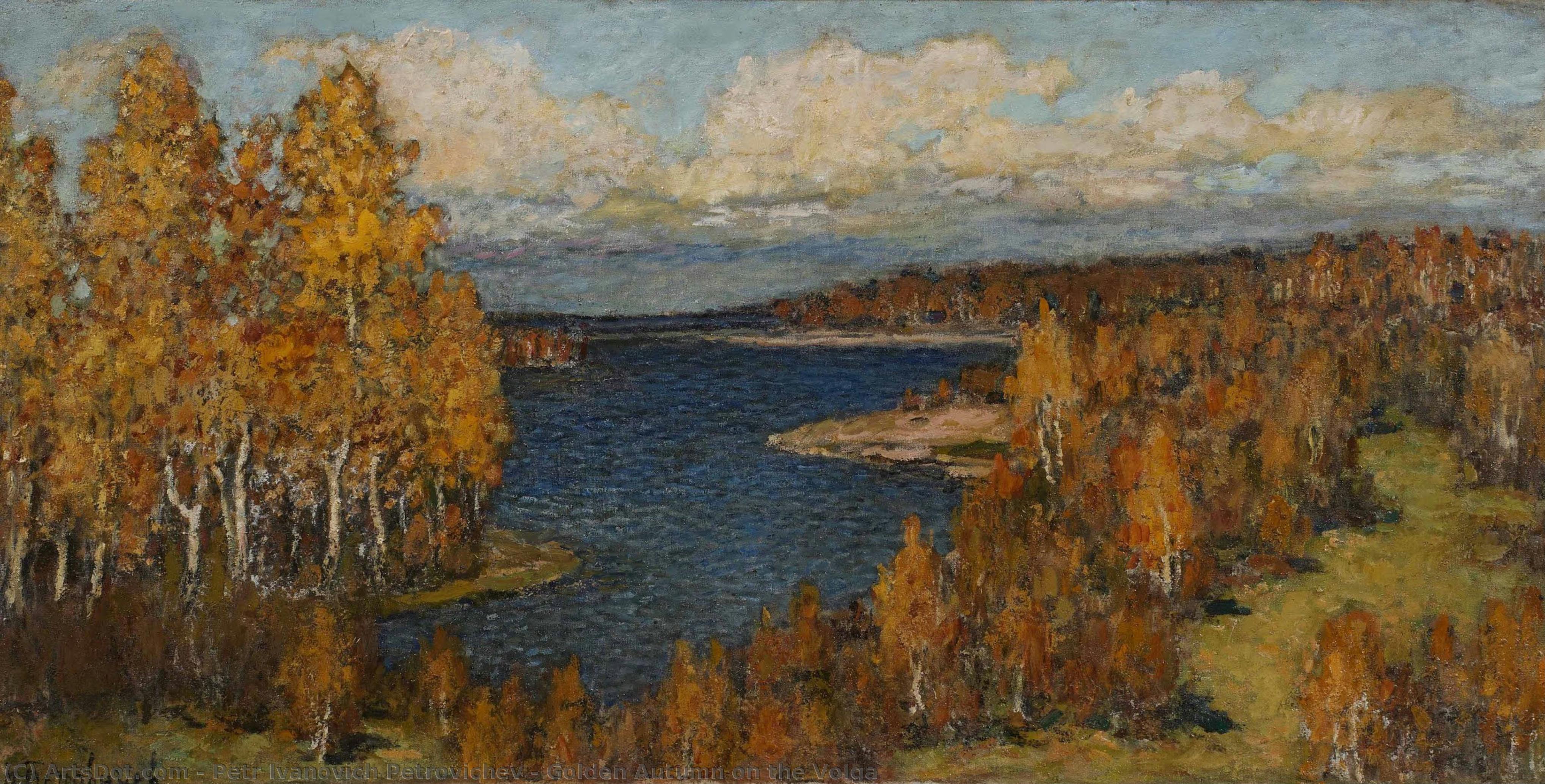
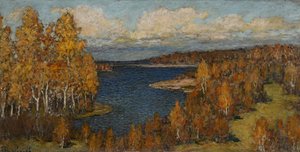
Golden Autumn on the Volga
 133.0 x 70.0 cm
 Read More
Giclée / Art Print
Museum-quality giclée or canvas print with fast production and flexible finish options. ( Buy Hand Made Painting Buy Image)




































Pick from our preset sizes that match the artwork's original proportions.

You may enter your own dimensions to fit a specific frame or space. If your selected size does not match the original image's proportions, we will either crop the artwork or extend the image with a mirrored or solid-fill edge. A digital mockup will be sent for your approval before production begins.
Please note that the on-screen preview does not reflect the actual cropping or extension. Only the mockup will accurately show the final composition.
While custom sizes are available, we recommend selecting a dimension from the predefined list to preserve the original proportions.
Worldwide Delivery () in 2 weeks instead of standard 4/5 weeks. (24 August)

Free Worldwide Express Shipping

High-Quality Linen Canvas

Full Shipping Insurance

Customs Tax Refund Guarantee

True Color Matching Guarantee

60-Day Return Policy (Defects Only)

100% Money-Back Guarantee

Bulk Discount Offer
 Glass option is only available in size under 110 CM

Golden Autumn on the Volga
Giclée / Art Print
Reproduction Size
-


Total Price
$ 63
Related Artworks








Artist Biography
Petr Ivanovich Petrovichev: A Quiet Master of Russian Still Life
Petr Ivanovich Petrovichev emerged from the fertile artistic landscape of late Imperial Russia, leaving behind a legacy primarily defined by his masterful depictions of flowers—particularly roses—and serene landscapes. Though not widely celebrated during his lifetime, Petrovichev’s work has gained recognition in recent decades as an exemplar of Russian Impressionism and Symbolism, reflecting the anxieties and aspirations of a nation grappling with rapid modernization while clinging to traditions rooted in folklore and spirituality. Born in 1874 in Vysotskoe, within the Yaroslavl region, his life spanned one of the most turbulent eras in human history, a period that deeply informed the emotional resonance found within his canvases.
The foundations of Petrovichev’s technique were laid through rigorous academic training. He studied at the Moscow College of Painting, Sculpture and Architecture between 1892 and 1903, a formative decade where he refined his ability to manipulate light and texture. During this time, he was shaped by the influence of legendary masters such as Isaak Iljitsch Levitan, the poet of the Russian landscape, and Walentin Alexandrowitsch Serov. These mentors instilled in him a profound appreciation for capturing fleeting moments of atmosphere—a characteristic that would permeate his subsequent artistic endeavors. His early academic success was marked by distinction, earning him a silver medal and the prestigious title of "best student artist," signaling the arrival of a significant talent.
The Language of Light and Bloom
As his style matured, Petrovichev moved beyond mere botanical representation to embrace a more symbolic approach to the still life. His breakthrough arrived with works like “Roses,” executed during the transformative years following the Russian Revolution. In these pieces, the rose becomes more than a subject; it serves as a poignant meditation on beauty amidst chaos. He skillfully employed muted palettes and delicate brushstrokes to convey not just visual accuracy but also a palpable sense of ephemeral grace, capturing the ethereal glow of sunlight filtering through translucent petals. This ability to imbende inanimate objects with a soul is what defines his contribution to the Symbolist tradition.
Beyond the intimate confines of floral arrangements, Petrovichev was also a gifted landscape painter. His works often captured the quiet majesty of the Russian countryside, such as his evocative “Golden Autumn on the Volga.” In these landscapes, one can observe the lingering influence of Impressionism, where the focus remains on the interplay of light and seasonal change. His compositions frequently featured:
- Atmospheric depth: A mastery of perspective that draws the viewer into the vastness of the Russian plains.
- Tonal harmony: The use of soft, blended colors to evoke the specific mood of a particular time of day.
- Architectural intimacy: Occasional views of rooftop buildings and urban vistas that provided a structural contrast to his naturalistic scenes.
Legacy and Historical Significance
Petrovichev’s career was marked by his active participation in the Russian art scene, including his membership in the Itinerants from 1906 through 1911. This connection to the movement of wandering artists placed him at the heart of a tradition dedicated to bringing art to the people and reflecting the true essence of Russian life. While the political upheavals of the early 20th century shifted the focus of the art world toward more radical avant-garde movements, Petrovichev remained a steadfast practitioner of a more lyrical, emotive style.
Today, his work stands as a testament to a vanished era of Russian elegance. His paintings offer a window into a period where the boundaries between Impressionist light and Symbolist meaning were beautifully blurred. Through his delicate handling of oil paint, Petrovichev ensured that even in the face of historical upheaval, the quiet beauty of a single rose or a sun-drenched riverbank would endure, preserved forever in the amber of his artistry.
petr ivanovich petrovichev
1879 - 1947 , Russia
Quick Facts
- Artistic Movement Or Style: Still life
- Date Of Birth: November 6, 1879
- Date Of Death: January 4, 1947
- Full Name: Petr Ivanovich Petrovichev
- Nationality: Russian
- Notable Artworks: ['Roses']
- Place Of Birth: Russia