 Preview
 Send
Send Share
Share
 Details

 Download
 Similars
 X-Ray
X-Ray Diaporama
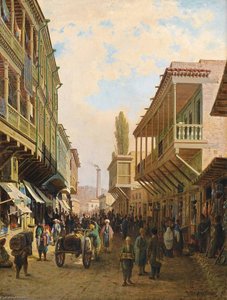
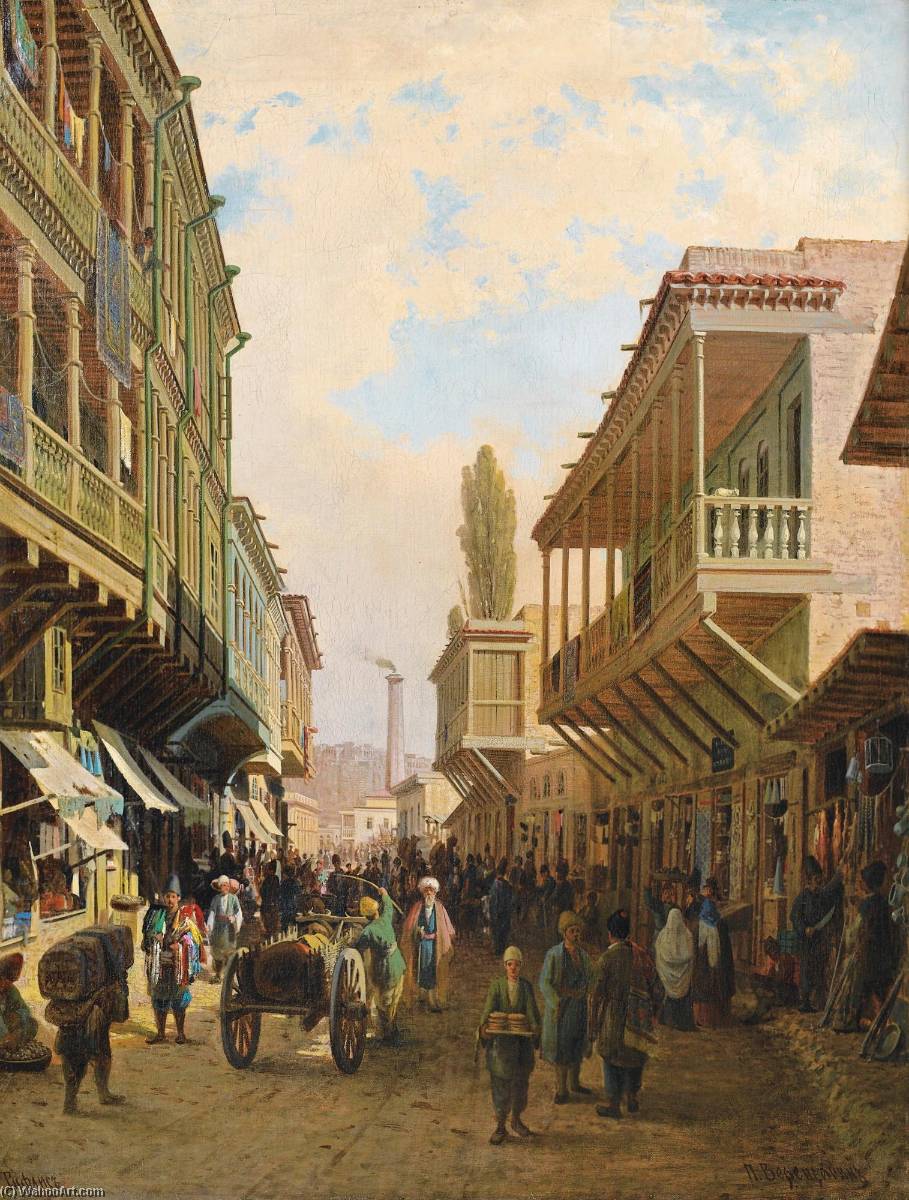
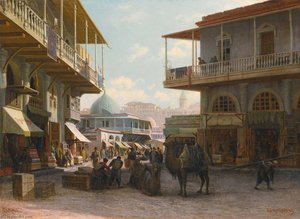
Street in Tiflis
 Read More
Hand Made Oil Reproduction
Hand-painted oil on canvas in your size and frame, made to order by our artists. ( Buy Print Buy Image)




































Pick from our preset sizes that match the artwork's original proportions.

You may enter your own dimensions to fit a specific frame or space. If your selected size does not match the original image's proportions, we will either crop the artwork or extend the painting with additional hand-painted elements. A digital mockup will be sent for your approval before production begins.
Please note that the on-screen preview does not reflect the actual cropping or extension. Only the mockup will accurately show the final composition.
While custom sizes are available, we recommend selecting a dimension from the predefined list to preserve the original proportions.
After order, ArtsDot.com team will email client for instructions and provide a mockup preview
Worldwide Delivery () in 3/4 weeks instead of standard 5 weeks. (21 August). No compromise on quality.

Free Worldwide Express Shipping

High-Quality Linen Canvas

Full Shipping Insurance

Customs Tax Refund Guarantee

True Color Matching Guarantee

60-Day Return Policy (Defects Only)

100% Money-Back Guarantee

Bulk Discount Offer
 Glass option is only available in size under 110 CM

Street in Tiflis
Reproduction Medium
Reproduction Size
-


Total Price
$ 263
Related Artworks
Artist Biography
Petr Petrovich Vereshchagin: A Pioneer of Russian Landscape
The world of 19th-century art is rich with figures who captured the essence of their time, and among them stands Petr Petrovich Vereshchagin – a name often overshadowed but one whose work reveals a profound connection to both the rugged beauty of Russia’s Ural Mountains and the burgeoning realism of his era. Born in Perm in 1834, Vereshchagin wasn't merely an artist; he was a documentarian of his homeland, a keen observer who translated the landscapes and people of Russia onto canvas with startling honesty and emotional depth. His legacy lies not just in his stunning paintings but also as one of the first Russian artists to truly embrace the concept of “plein air” – painting outdoors directly from nature – a revolutionary approach at the time.
Vereshchagin’s early life was steeped in artistic tradition. His father, Pyotr Prokopovich Vereshchagin, and his grandfather, Prokopy Danilovich, were both painters, instilling in young Petr a deep appreciation for visual representation. He initially received instruction from his father, followed by studies at the Imperial Academy of Arts in St. Petersburg, where he was mentored by Sokrat Vorobiev, a seasoned landscape painter who had spent considerable time absorbing the artistic traditions of Italy. This influence is evident in Vereshchagin’s later works – a subtle blending of Russian realism with Italianate techniques of light and color.
The Ural Landscapes: A New Vision
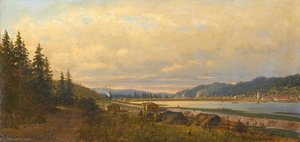
Vereshchagin's most significant contribution to art lies in his exploration of the Urals. Unlike many artists who depicted this region as a backdrop for historical events or romanticized wilderness, Vereshchagin sought to capture its raw, unvarnished reality. He ventured into the remote areas of the Ural Mountains, documenting the lives of miners, peasants, and the stark beauty of the landscape with an unprecedented level of detail and psychological insight. This was not simply a matter of recording scenery; he aimed to convey the spirit of these communities, their hardships, and their connection to the land.
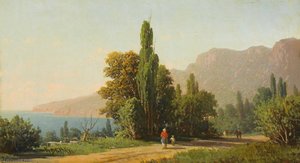
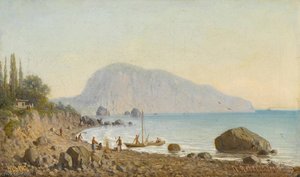
His early works, such as “View of Ayu Dag” (1872), demonstrate this shift in focus. The painting isn’t merely a depiction of a mountain; it's an intimate portrait of a solitary figure contemplating its grandeur – a moment of quiet reflection amidst the vastness of nature. This approach was groundbreaking for its time, moving beyond idealized representations and embracing a more nuanced and humanistic perspective.
From Cityscapes to War: A Broadening Palette
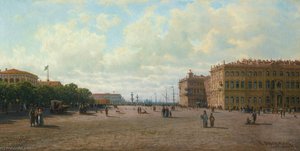
While Vereshchagin is most celebrated for his landscapes, his artistic range extended far beyond the Ural Mountains. He also produced compelling cityscapes, capturing the bustling energy of St. Petersburg and other Russian urban centers. His paintings of these cities are notable for their attention to detail, portraying the architecture, street life, and social dynamics with remarkable accuracy. “View of Palace Square” (1872) is a prime example – a vibrant snapshot of 19th-century St. Petersburg’s civic heart.
The artist's career took an unexpected turn during the Russo-Turkish War of 1877-1878. He joined the Russian army, documenting the conflict through a series of powerful paintings that offered a stark and unflinching portrayal of war’s brutality. His depictions of the battles and the suffering of civilians were particularly poignant, revealing a deep empathy for the human cost of conflict.
Legacy and Influence
Petr Petrovich Vereshchagin died in Perm in 1886, leaving behind a remarkable body of work that profoundly influenced subsequent generations of Russian artists. His pioneering use of “plein air” painting revolutionized landscape art, encouraging other artists to engage directly with nature. Furthermore, his unflinching realism and psychological depth set a new standard for portraiture and social commentary.
Vereshchagin’s legacy extends beyond the realm of fine art. He is remembered as a keen observer of Russian life, a chronicler of its landscapes and people, and a testament to the power of art to capture the essence of a time and place. His paintings continue to resonate with viewers today, offering a glimpse into a bygone era and reminding us of the enduring beauty and complexity of Russia’s cultural heritage.
petr petrovich vereshchagin
1834 - 1886
Quick Facts
- Artistic Movement Or Style: Academic Landscape
- Artists Who Influenced This Artist: ['Sokrat Vorobiev']
- Date Of Birth: January 14, 1834/36
- Date Of Death: January 16, 1886
- Full Name: Pyotr Petrovich Vereshchagin
- Nationality: Russian
- Notable Artworks:
- View of Palace Square
- View of Ayu Dag
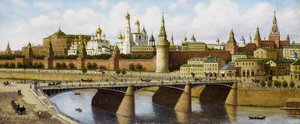
- View of the Kremlin
- Place Of Birth: Perm, Russia