

 Preview
 Send
Send Share
Share
 Details

 Download
 Similars
 X-Ray
X-Ray Diaporama
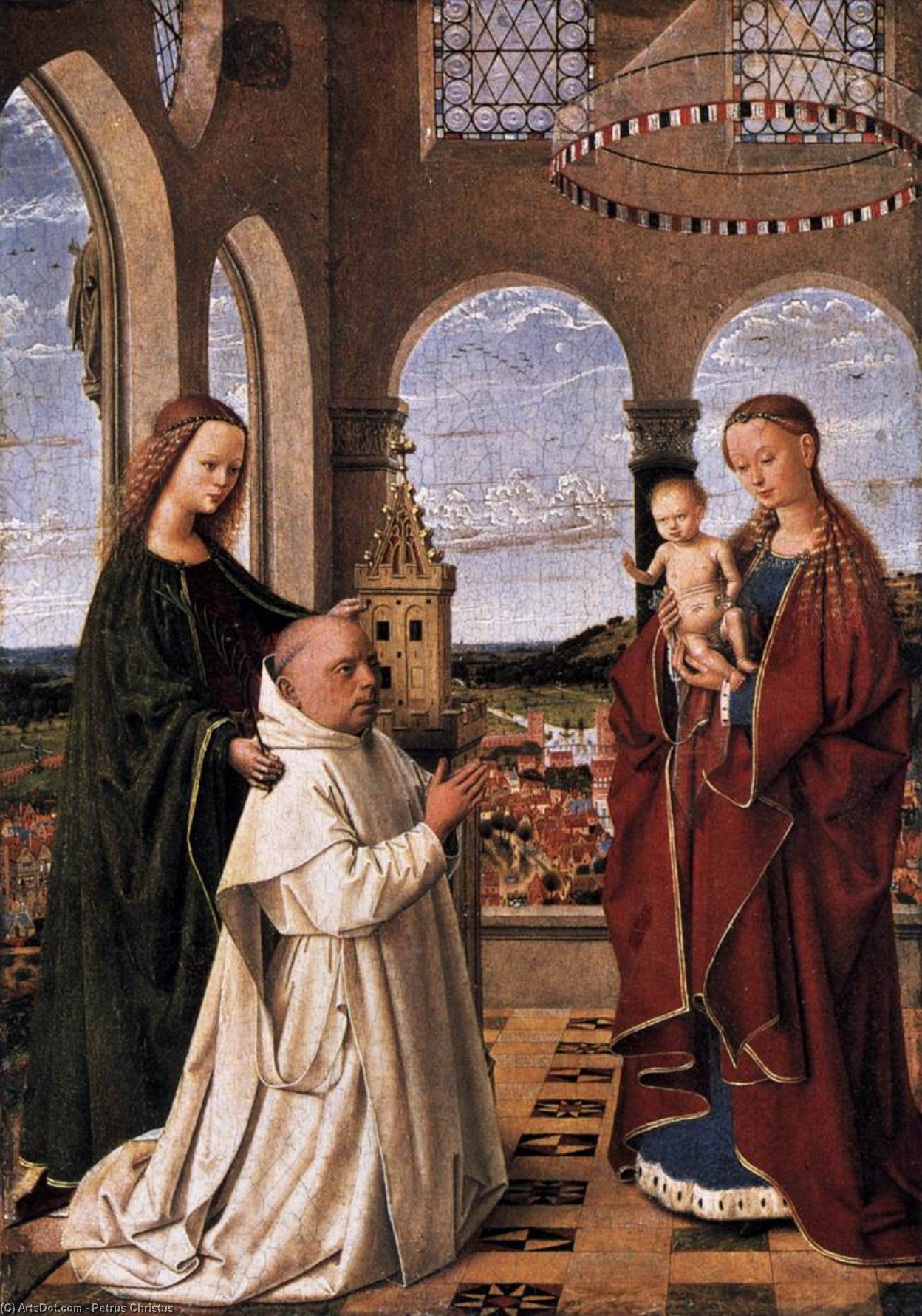
Madonna and Child
 Early Netherlandish Painting
 1450
1450 19.0 x 14.0 cm
 Staatliche Museen
 Read More
Purchase a high-resolution, enhanced digital image, far superior to the online preview.
Each file is meticulously prepared by our in-house specialists using advanced tools and expert manual retouching. We ensure every image has exceptional clarity, precise color accuracy, and fine detail.
The final file is delivered via email within 72 hours, optimized for immediate use in professional, editorial, and print environments. This is the same quality trusted by top-tier design studios, publishers, and galleries.
Digital Image
Download a high-resolution file for personal display, printing, and creative projects. ( Buy Print Buy Hand Made Painting)
Included in Every Digital Image Order
Expert Digital Delivery, Guaranteed
When you choose ArtsDot.com, you're not just getting an image - you're receiving a professionally enhanced digital artwork, crafted with precision and backed by a satisfaction guarantee. Here's everything that comes with your order, automatically:

Fast Email Delivery
Your high-resolution digital image file will be emailed to you within 72 hours of ordering - ready for immediate use.

AI-Enhanced Digital File
Your artwork is professionally optimized using advanced AI tools and manual editing, ensuring maximum detail, clarity, and color accuracy.

Free Lifetime Re-Delivery
Accidentally deleted or lost your file? No worries - we'll resend it to you anytime, free of charge.

No Import Fees - Ever
Enjoy your artwork instantly with zero customs, duties, or delivery fees - digital downloads are always tax-free.

Color Accuracy Guarantee
We ensure your digital image reflects the original colors as closely as possible using professional tools and color management.

60-Day Satisfaction Guarantee
If you're not satisfied with your digital image, we'll revise it or refund 100% within 60 days - no questions asked.

100% Money-Back Guarantee
Not satisfied? Get a full refund within 60 days of receiving your digital file - no questions asked.

Bulk Order Discounts
Buy 3 images, save 10% - Buy 5, save 15% - Buy 10+, save 20%. Great for creative projects, galleries, and agencies.
Collectible Description
A Timeless Portrait of Maternal Grace
Petrus Christus’s Madonna and Child, painted around 1450 in the heart of Bruges, stands as a pivotal work within the burgeoning landscape of Early Netherlandish painting. More than simply a devotional image, it represents a crucial step towards realism and psychological depth – a shift that would profoundly influence generations of artists to come. Christus, a relatively young painter at the time, masterfully blends elements of Italian Renaissance portraiture with the established conventions of Northern European religious art, creating an intimate scene brimming with quiet dignity and profound emotion.
The painting immediately draws the viewer in through its remarkably lifelike depiction of Mary and the Christ Child. Unlike earlier representations where the Virgin often appeared ethereal or distant, Christus presents her as a fully realized woman – a mother caught in a moment of serene contemplation. Her posture is relaxed yet alert, her gaze directed outwards with an almost palpable tenderness. The baby Jesus, nestled securely against her breast, possesses a remarkable sense of presence; his features are delicately rendered, conveying both innocence and nascent divinity. The subtle modeling of the flesh, achieved through meticulous layering of thin glazes – a hallmark of Christus’s technique – imbues the figures with an astonishingly tactile quality.
A Synthesis of Influences: Style and Technique
Christus's style is a fascinating synthesis of influences. He was deeply impacted by Jan van Eyck, the dominant painter in Bruges at the time, particularly evident in his masterful use of oil paint and his meticulous attention to detail. However, he also absorbed elements from Italian Renaissance portraiture, notably in the way he renders Mary’s face – capturing a sense of individual personality rarely seen in Northern European religious art. The painting's composition is carefully balanced, utilizing linear perspective to create a believable spatial environment. The background landscape, though somewhat simplified, provides a grounding element and subtly directs the viewer’s eye towards the central figures.
Christus’s technique is characterized by an extraordinary level of precision and control. He employed a layering method known as ‘glazing,’ applying thin, translucent layers of oil paint to build up color and form gradually. This process allowed him to achieve remarkable luminosity and depth, capturing the subtle nuances of light and shadow with astonishing accuracy. The use of gold leaf in the halos and decorative elements further enhances the painting’s richness and splendor.
Symbolism and Context: A Window into the 15th Century
The Madonna and Child is rich in symbolic meaning, reflecting the religious beliefs and cultural values of its time. The setting – a modest interior with a glimpse of a castle in the distance – suggests a domestic scene, emphasizing the intimate relationship between Mary and Jesus. The presence of other figures in the background—a man standing to the left, another behind Mary, and two further back—likely represents members of Mary’s family or attendants. The inclusion of a castle symbolizes the Virgin's royal lineage and her role as Queen of Heaven.
Painted during a period of significant religious and social change, the Madonna and Child reflects the growing importance of private devotion in Northern Europe. It was likely commissioned for personal use by a wealthy patron—perhaps a merchant or member of the nobility—who sought to adorn their home with a work of art that would inspire piety and reflection. The painting’s small size suggests it was intended as a devotional object, meant to be viewed and cherished in a private setting.
A Legacy of Influence
Petrus Christus's Madonna and Child is more than just a beautiful painting; it is a landmark achievement in the history of art. It marked a crucial transition towards greater realism, psychological depth, and individual expression in religious painting. Its influence can be seen in the works of subsequent artists, including Hans Memling and Jan van Eyck, who built upon Christus’s innovations. Today, the painting continues to captivate viewers with its timeless beauty, profound emotion, and remarkable technical skill – a testament to the genius of one of Early Netherlandish art's most important figures.
Related Artworks
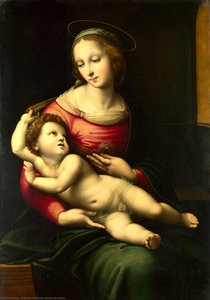
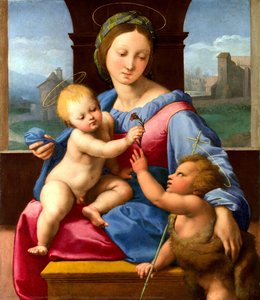
Artist Biography
A Master of Bruges: The Life and Art of Petrus Christus
Petrus Christus, a name perhaps less immediately recognizable than his contemporaries Jan van Eyck or Rogier van der Weyden, nevertheless occupies a pivotal position in the development of Early Netherlandish painting. Born around 1465 in Baarle-Hertog, a small duchy straddling the border between Belgium and the Netherlands, Christus emerged as one of the leading artists working in Bruges during a period of unprecedented artistic innovation. While biographical details remain scarce – a common fate for many painters of the era – his surviving works speak volumes about his technical prowess, intellectual curiosity, and profound understanding of both religious symbolism and the burgeoning possibilities of oil paint. He wasn’t merely a follower in the footsteps of Van Eyck; he was an innovator who subtly yet significantly pushed the boundaries of realism and perspective, leaving an indelible mark on the artistic landscape of the 15th century.Early Career and Artistic Foundations
Christus first appears in historical records in 1444 as a master painter in Bruges, suggesting he underwent a thorough apprenticeship – though the identity of his teacher remains unknown. What *is* clear is that he quickly established himself within the city’s thriving artistic community. Following the death of Jan van Eyck in 1441, Christus stepped into a void, becoming one of the most sought-after artists in Bruges. His early work demonstrates a keen awareness of Van Eyck's techniques – the meticulous detail, the luminous quality of oil paint, and the symbolic richness embedded within seemingly ordinary objects. However, he wasn’t simply imitating his predecessor. Christus began to develop a distinctive style characterized by a greater emphasis on clarity, architectural settings, and an increasingly sophisticated understanding of linear perspective. He absorbed influences from Rogier van der Weyden as well, particularly in his ability to convey emotional depth and spiritual intensity.Innovations in Perspective and Realism
Christus’s most significant contribution lies in his masterful application of linear perspective. While Van Eyck had employed a degree of spatial recession in his work, Christus took it further, creating paintings with a remarkably convincing sense of depth and three-dimensionality. This is particularly evident in works like the Virgin Mary with the Child, now housed at the National Gallery, where the architectural backdrop recedes into the distance with mathematical precision. He didn’t simply create realistic spaces; he used perspective to draw the viewer *into* the scene, fostering a more intimate connection with the subject matter. This wasn't merely a technical exercise; it served to heighten the painting’s spiritual impact, inviting contemplation and devotion. His meticulous technique – layering thin glazes of oil paint to achieve unparalleled luminosity and detail – further enhanced this sense of realism. Every texture, from the folds of fabric to the gleam of metal, is rendered with astonishing accuracy.Major Works and Symbolic Language
Beyond the Virgin Mary with the Child, Christus produced a number of other notable works that showcase his artistic skill and intellectual depth. The Portrait of a Young Man, currently at the Museo Thyssen-Bornemisza, is a particularly compelling example of his ability to capture human character. The sitter’s gaze is direct and engaging, conveying a sense of intelligence and self-awareness. The painting also reveals Christus's subtle use of symbolism – the single lit candle may represent Christ as the light of the world, while the orange on the windowsill could allude to purity and virtue. He frequently incorporated such symbolic elements into his paintings, enriching their meaning beyond the purely visual. Another important work is The Last Judgment, a complex composition that demonstrates his skill in depicting multiple figures within a dynamic space.Legacy and Historical Significance
Petrus Christus died in Bruges in 1476, leaving behind a relatively small but profoundly influential body of work. His innovations with linear perspective and meticulous technique had a lasting impact on subsequent generations of painters. While he didn’t found a large workshop or attract numerous followers, his style was absorbed by other artists working in the region, contributing to the broader development of Northern Renaissance painting. He bridged the gap between the International Gothic style and the more naturalistic tendencies of the 15th century, paving the way for artists like Hans Memling and Hugo van der Goes. Today, Petrus Christus is recognized as a key figure in Early Netherlandish art – a master craftsman whose paintings continue to captivate viewers with their beauty, realism, and intellectual depth. His work offers a unique window into the artistic and religious world of 15th-century Bruges, reminding us of the power of painting to both reflect and shape our understanding of reality.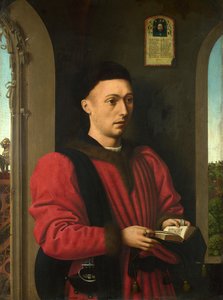
petrus christus
1465 - 1476 , Belgium
Quick Facts
- Artistic Movement Or Style: Early Netherlandish Art
- Artists Or Movements Influenced By This Artist:
- Jan van Eyck
- Rogier van der Weyden
- Artists Who Influenced This Artist:
- Jan van Eyck
- Rogier van der Weyden
- Date Of Birth: 1465
- Date Of Death: 1476
- Full Name: Petrus Christus
- Nationality: Belgian
- Notable Artworks:
- Virgin Mary with the Child
- Portrait of a Young Man
- Place Of Birth: Baarle-Hertog, Belgium

