

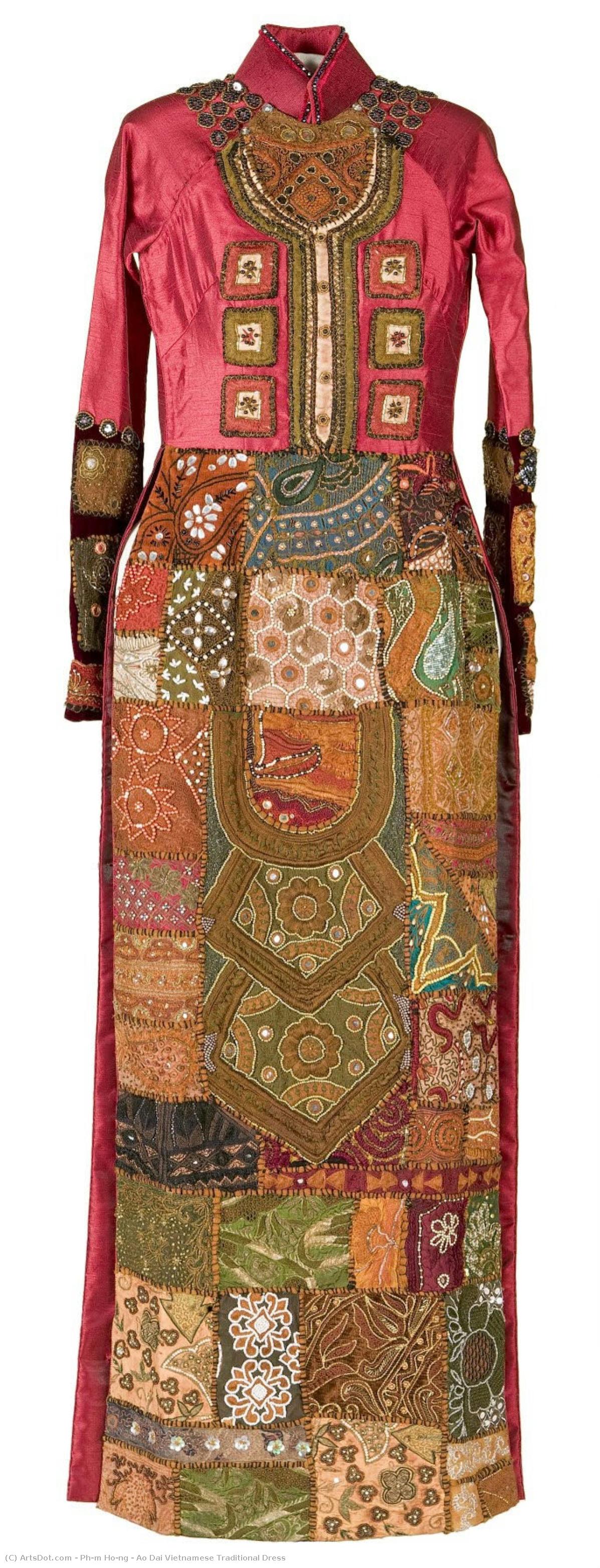
 Preview
 Send
Send Share
Share
 Details

 Download
 Similars
 X-Ray
X-Ray Diaporama
Ao Dai Vietnamese Traditional Dress


 Read More
Purchase a high-resolution, enhanced digital image, far superior to the online preview.
Each file is meticulously prepared by our in-house specialists using advanced tools and expert manual retouching. We ensure every image has exceptional clarity, precise color accuracy, and fine detail.
The final file is delivered via email within 72 hours, optimized for immediate use in professional, editorial, and print environments. This is the same quality trusted by top-tier design studios, publishers, and galleries.
Digital Image
Download a high-resolution file for personal display, printing, and creative projects. ( Buy Print Buy Hand Made Painting)
Included in Every Digital Image Order
Expert Digital Delivery, Guaranteed
When you choose ArtsDot.com, you're not just getting an image - you're receiving a professionally enhanced digital artwork, crafted with precision and backed by a satisfaction guarantee. Here's everything that comes with your order, automatically:

Fast Email Delivery
Your high-resolution digital image file will be emailed to you within 72 hours of ordering - ready for immediate use.

AI-Enhanced Digital File
Your artwork is professionally optimized using advanced AI tools and manual editing, ensuring maximum detail, clarity, and color accuracy.

Free Lifetime Re-Delivery
Accidentally deleted or lost your file? No worries - we'll resend it to you anytime, free of charge.

No Import Fees - Ever
Enjoy your artwork instantly with zero customs, duties, or delivery fees - digital downloads are always tax-free.

Color Accuracy Guarantee
We ensure your digital image reflects the original colors as closely as possible using professional tools and color management.

60-Day Satisfaction Guarantee
If you're not satisfied with your digital image, we'll revise it or refund 100% within 60 days - no questions asked.

100% Money-Back Guarantee
Not satisfied? Get a full refund within 60 days of receiving your digital file - no questions asked.

Bulk Order Discounts
Buy 3 images, save 10% - Buy 5, save 15% - Buy 10+, save 20%. Great for creative projects, galleries, and agencies.
Related Artworks







Artist Biography
Jan van Eyck: A Pioneer of Northern Renaissance Realism
Born around 1430 in Bruges, a thriving center of commerce and art during the Early Netherlandish period, Jan van Eyck stands as one of the most pivotal figures in European painting. While his exact birthdate remains uncertain, he emerged as a master artist alongside his brother Hubert, shaping the visual landscape of 15th-century Flanders with an unprecedented level of detail, realism, and technical innovation. Unlike many artists of his time who focused primarily on religious subjects, van Eyck’s work frequently explored secular themes – portraits, landscapes, and scenes of daily life – often imbued with a profound sense of observation and psychological depth.
Van Eyck's early training is shrouded in some mystery. He likely apprenticed under Jan Gossaert in Brussels before moving to Bruges around 1436. There, he honed his skills alongside Hubert van Eyck, developing a shared artistic vision characterized by meticulous observation and a revolutionary approach to oil painting. The prevailing belief is that they both studied with the master painter Rogier van der Weyden, though direct evidence remains elusive. It’s widely accepted that van Eyck was deeply involved in the development of oil paint techniques, pushing beyond the limitations of traditional tempera and fresco methods. His mastery of this medium allowed him to achieve an astonishing level of luminosity, depth, and textural complexity previously unattainable.
The Techniques of a Master: Light, Detail, and Innovation
Van Eyck’s artistic legacy rests fundamentally on his groundbreaking use of oil paint. He didn't simply apply the pigment; he meticulously built up layers of translucent glazes, creating an effect of shimmering light and atmospheric perspective that was revolutionary for its time. This technique allowed him to capture the subtle nuances of color, texture, and reflection with unparalleled accuracy. His meticulous attention to detail is evident in every brushstroke – from the intricate folds of clothing to the delicate veins in a hand or the glint of metal.
Consider his iconic work, “The Arnolfini Portrait” (1434). The painting’s realism is astonishing; every object—the dog, the chandelier, the oranges on the windowsill—is rendered with painstaking precision. Furthermore, van Eyck employed a sophisticated understanding of optics and perspective, creating an illusion of three-dimensionality that was remarkably convincing for its time. He also utilized a convex mirror in the background, cleverly extending the space of the painting and drawing the viewer into the scene.
Secular Subjects and Portraiture: Expanding Artistic Horizons
While van Eyck’s religious works are undeniably impressive, it is his portraits that have cemented his place as a pioneering figure. He elevated portraiture to an art form, capturing not just physical likeness but also revealing the personality and social status of his subjects. “Old Man and a Boy” (c. 1434), now in the Louvre, exemplifies this approach. The painting’s realism is brutally honest; the old man's weathered face and the boy’s youthful features are depicted with unflinching detail, conveying a sense of both vulnerability and dignity.
His portraits were not merely representations of individuals; they were windows into their lives. Van Eyck frequently included symbolic elements within his paintings – objects that held specific meanings related to the subject's profession, social standing, or personal beliefs. This practice reflects a growing interest in secular themes and a desire to capture the complexities of human experience beyond the confines of religious dogma.
Legacy and Historical Significance
Jan van Eyck’s influence on subsequent generations of artists is immeasurable. His innovations in oil painting techniques, his mastery of detail, and his ability to convey psychological depth profoundly impacted the development of Northern Renaissance art. Artists like Robert Campin (Master Bertram) and Rogier van der Weyden were undoubtedly influenced by his work, building upon his foundations and pushing the boundaries of artistic expression.
Despite dying in 1449, at a relatively young age, Van Eyck’s legacy endures. His paintings continue to captivate viewers with their technical brilliance, emotional resonance, and profound insights into the human condition. He remains a towering figure in art history – a true pioneer who transformed the way artists saw and represented the world around them.

phạm hoằng
1449 - 1449 , China
Quick Facts
- Artistic Movement Or Style: Early Netherlandish
- Artists Or Movements Influenced By This Artist:
- Hieronymus Bosch
- Renaissance painting
- Artists Who Influenced This Artist:
- Robert Campin
- Rogier van der Weyden
- Date Of Birth: 1449
- Full Name: Jan van Eyck
- Nationality: Flemish
- Notable Artworks:
- Arnolfini Portrait
- Ghent Altarpiece
- Virgin with Canon van der Paele
- Place Of Birth: Bruges, Flanders

