 Preview
 Send
Send Share
Share
 Details

 Download
 Similars
 X-Ray
X-Ray Diaporama
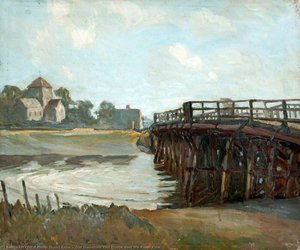
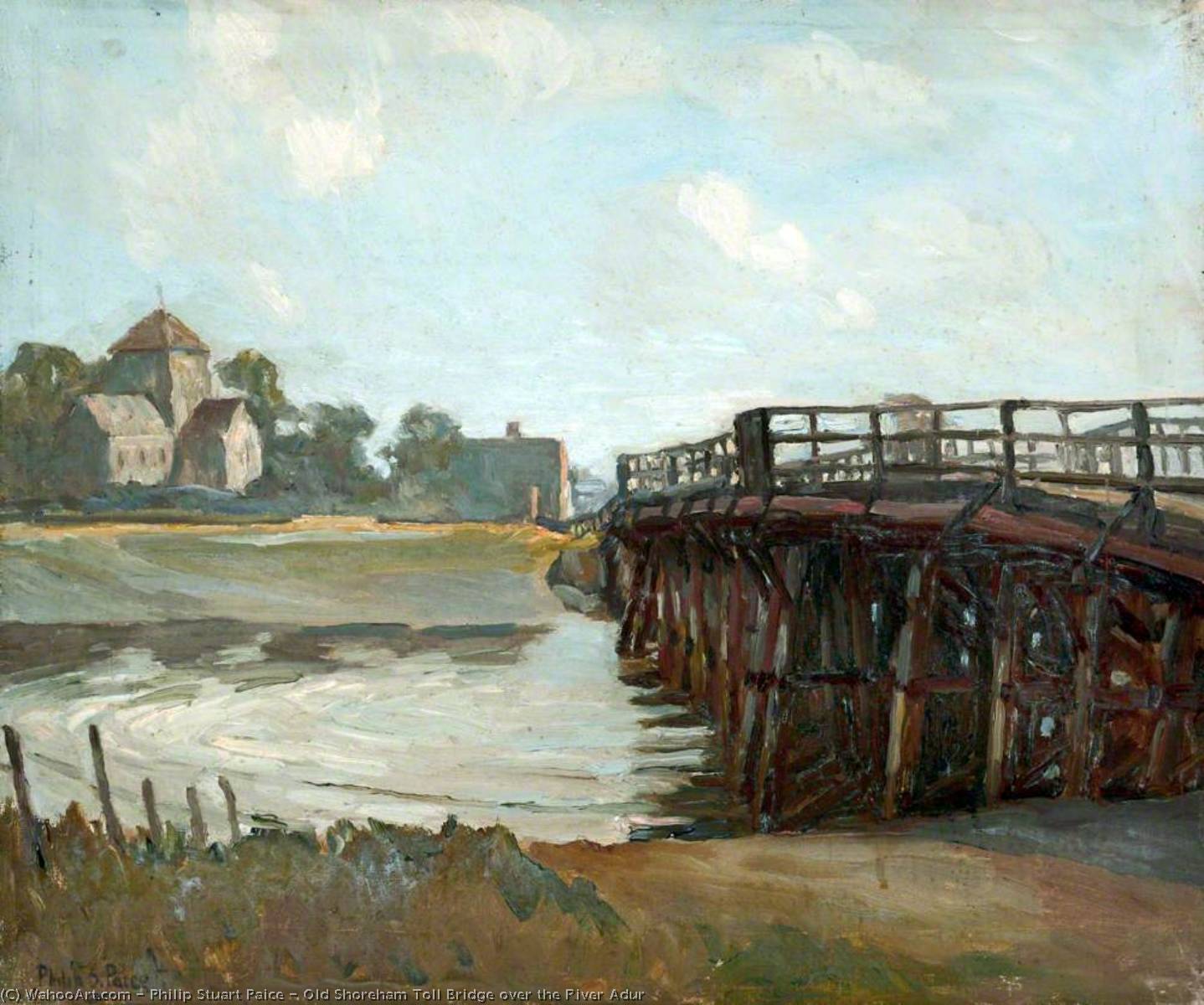
Old Shoreham Toll Bridge over the River Adur
 51.0 x 61.0 cm
 Read More
Giclée / Art Print
Museum-quality giclée or canvas print with fast production and flexible finish options. ( Buy Hand Made Painting Buy Image)




































Pick from our preset sizes that match the artwork's original proportions.

You may enter your own dimensions to fit a specific frame or space. If your selected size does not match the original image's proportions, we will either crop the artwork or extend the image with a mirrored or solid-fill edge. A digital mockup will be sent for your approval before production begins.
Please note that the on-screen preview does not reflect the actual cropping or extension. Only the mockup will accurately show the final composition.
While custom sizes are available, we recommend selecting a dimension from the predefined list to preserve the original proportions.
Worldwide Delivery () in 2 weeks instead of standard 4/5 weeks. (27 August)

Free Worldwide Express Shipping

High-Quality Linen Canvas

Full Shipping Insurance

Customs Tax Refund Guarantee

True Color Matching Guarantee

60-Day Return Policy (Defects Only)

100% Money-Back Guarantee

Bulk Discount Offer
 Glass option is only available in size under 110 CM

Old Shoreham Toll Bridge over the River Adur
Giclée / Art Print
Reproduction Size
-


Total Price
$ 63
Related Artworks









Artist Biography
The Luminous Landscapes of Philip Stuart Paice
In the quiet, mist-laden corners of the British landscape, the works of Philip Stuart Paice (1884–1940) linger like a soft memory. A master of watercolor, Paice possessed a rare ability to bridge the gap between the industrial reality of his upbringing and the ethereal beauty of the natural world. Born in Birkenhead, Cheshire, his early years were shaped by the rugged, hardworking atmosphere of Merseyside. Yet, beneath the surface of this industrial heritage lay an artist deeply attuned to the subtle shifts of light and the tranquil rhythms of the coast. His oeuvre serves as a poignant window into a bygone era of England, capturing not just topography, but the very soul of the landscape.
Paice’s artistic foundation was laid at the Birkenhead School of Art, where he studied under the esteemed William Henry Hayter. It was here that he began to master the delicate complexities of watercolor, learning to manipulate water and pigment to achieve a sense of atmospheric depth. His education provided him with more than just technical skill; it instilled in him a reverence for perspective and the way light interacts with the environment. As his style matured, he moved beyond mere representation, drawing profound inspiration from the Impressionist movement and the Neo-Romantic tradition. The works of Claude Monet and JMW Turner acted as guiding lights, teaching him that the true essence of a scene lies in its fleeting moments—the way a sunbeam pierces through a cloud or how moisture hangs heavy over a riverbank.
Technique and the Art of Atmosphere
What distinguishes a Paice watercolor is the unmistakable luminosity of his surfaces. He developed a signature technique characterized by layered washes of color, applied with such precision that they seem to glow from within. Rather than relying on harsh outlines, he allowed colors to bleed and blend softly, creating a sense of movement and air. This method was particularly effective in his depictions of coastal vistas and bridges, where the boundary between water, sky, and stone becomes beautifully blurred.
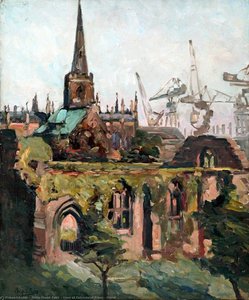
His explorations of the Wirral peninsula and the surrounding coastlines reveal an artist obsessed with the interplay of light and texture. In his paintings of the Birkenhead Docklands or the rugged cliffs near Bidston Church, one can sense the dampness of the salt air and the weight of the stone. His work often features:
- Coastal Vistas: Meticulous renderings of the sea's edge, where light dances upon the waves.
- Architectural Grace: A fascination with structures like the Wirral Bridge, blending structural integrity with atmospheric grandeur.
- Nostalgic Landscapes: Scenes that evoke a sense of longing and memory, often focusing on the quietude of rural England.
Legacy and Historical Significance
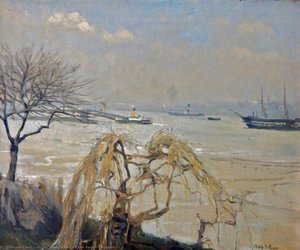
Though his life was relatively short, Philip Stuart Paice left behind a body of work that resonates with a profound sense of peace and permanence. His ability to find beauty in the intersection of the man-made and the natural—such as the way a bridge spans a river or how a quarry sits within a hillside—marks him as a significant voice in early 20th-century British watercolor. His paintings, such as A View of the Mersey from Rock Ferry and View of Birkenhead Priory, are more than mere records of geography; they are emotional landscapes that invite the viewer to pause and reflect.
Today, Paice’s work remains a cherished part of the British artistic heritage. He stands as a testament to the power of the watercolor medium to capture the ephemeral, leaving us with a legacy of light, color, and an enduring love for the English countryside. Through his eyes, we continue to witness the quiet majesty of a landscape caught in a moment of eternal stillness.
philip stuart paice
1884 - 1940
Quick Facts
- Artistic Movement Or Style: Watercolor painting
- Artists Or Movements Influenced By This Artist: ['Romanticism']
- Artists Who Influenced This Artist:
- John Constable
- George Frederic Leighton
- Date Of Death: 1940
- Full Name: Philip Stuart Paice
- Nationality: British
- Notable Artworks:
- Rock Ferry Bridge
- A Windmill
- Bidston Church
- Place Of Birth: Wirral, Cheshire