 Preview
 Send
Send Share
Share
 Details

 Download
 Similars
 X-Ray
X-Ray Diaporama
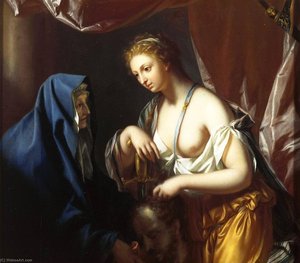
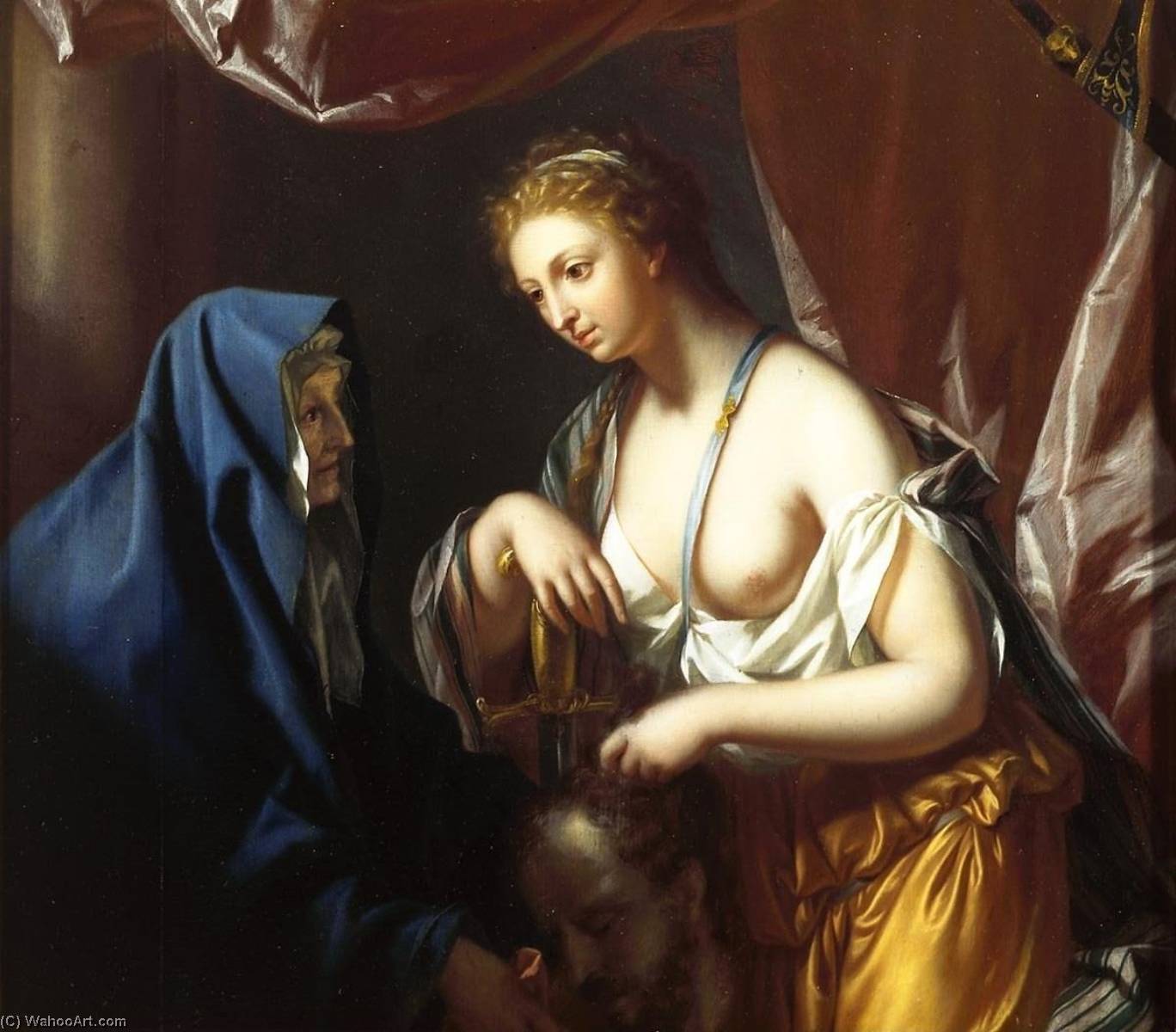
Judith with the head of Holofernes


 Read More
Giclée / Art Print
Museum-quality giclée or canvas print with fast production and flexible finish options. ( Buy Hand Made Painting Buy Image)




































Pick from our preset sizes that match the artwork's original proportions.

You may enter your own dimensions to fit a specific frame or space. If your selected size does not match the original image's proportions, we will either crop the artwork or extend the image with a mirrored or solid-fill edge. A digital mockup will be sent for your approval before production begins.
Please note that the on-screen preview does not reflect the actual cropping or extension. Only the mockup will accurately show the final composition.
While custom sizes are available, we recommend selecting a dimension from the predefined list to preserve the original proportions.
Worldwide Delivery () in 2 weeks instead of standard 4/5 weeks. (21 August)

Free Worldwide Express Shipping

High-Quality Linen Canvas

Full Shipping Insurance

Customs Tax Refund Guarantee

True Color Matching Guarantee

60-Day Return Policy (Defects Only)

100% Money-Back Guarantee

Bulk Discount Offer
 Glass option is only available in size under 110 CM

Judith with the head of Holofernes
Giclée / Art Print
Reproduction Size
-


Total Price
$ 63
Collectible Description
The Story Behind the Painting
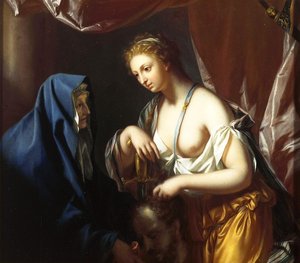
The story of Judith and Holofernes is a famous biblical tale that has been depicted by many artists throughout history. According to the story, Judith, a beautiful and brave woman, beheads the Assyrian general Holofernes to save her city from destruction. In Philip Van Dijk's version of the painting, Judith is shown holding the head of Holofernes, while her maid looks on in horror. The use of chiaroscuro in the painting creates a dramatic effect, with the light source coming from the left side of the composition. The colors used are muted, with a focus on earth tones and rich fabrics. The overall effect is one of drama and tension, as if the viewer has stumbled upon a private moment in time.Other Works by Philip Van Dijk
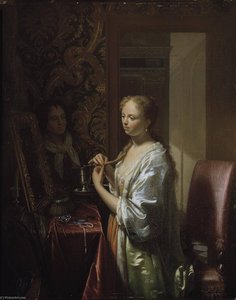
Philip Van Dijk was a prolific artist, and his works can be found in many museums and galleries around the world. Some of his other notable paintings include Lady attending to her toilet, which is also housed at the Mauritshuis Royal Picture Gallery. To learn more about Philip Van Dijk and his works, visit the ArtsDot.com website.- Judith with the Head of Holofernes is a prime example of Dutch Golden Age art
- The painting is housed at the Mauritshuis Royal Picture Gallery in The Hague, Netherlands
- Philip Van Dijk was a prolific artist with many notable works
To see more paintings by Philip Van Dijk, including Judith with the Head of Holofernes, visit the ArtsDot.com website. You can also learn more about the artist and his works on Wikipedia.
Related Artworks







Artist Biography
The Master of Light and Lineage: The Life of Philip van Dijk
In the grand tapestry of the Dutch Baroque, few threads are woven with as much elegance and courtly grace as those left by Philip van Dijk. Born in the vibrant artistic hub of Haarlem on January 10, 1683, Van Dijk emerged during an era when the Dutch Republic was transitioning from the rugged realism of the Golden Age into a more refined, sophisticated aesthetic. His journey was one of constant movement and prestigious associations, shaped by the shadows of masters and the bright lights of royal courts. From his early training under Arnold Boonen in Amsterdam to the transformative influence of Adriaen van der Werff in Rotterdam, Van Dijk developed a stylistic language that balanced meticulous precision with an evocative, psychological depth.
The artist’s development was deeply rooted in the rigorous traditions of the Dutch guilds. After marrying in 1708, he joined the prestigious Guild of St. Luke in Middelburg, a move that signaled his arrival as a professional of significant standing. His talent soon earned him membership in the Confrerie Pictura, where his reputation flourished among the artistic elite. This period of his life was marked by an increasing ability to capture not just the physical likeness of his subjects, and even their social status, but the very essence of their character through a delicate interplay of light and texture.
A Journey Through Royal Courts and Artistic Legacy
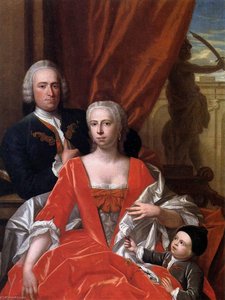
The true zenith of Van Dijk’s career was reached when his brush moved beyond the merchant classes of the Netherlands to serve the highest echelons of European nobility. In 1726, a decade-long departure from The Hague saw him travel to Kassel, where he assumed the prestigious role of court painter for William VIII, Landgrave of Hesse-Cassel. It was in this setting of aristocratic splendor that his mastery of portraiture truly blossomed. He captured the dignity of Landgravine Marie Louise of Hesse-Kassel and her family with a grandeur that solidified his place in the annals of Baroque history.
His influence and reach were not confined to Germany alone; by 1750, he had returned to The Hague to serve as court painter to William IV, Prince of Orange. This appointment to the House of Orange-Nassau cemented his legacy as a chronicler of royal lineage. His work remains a vital window into the social fabric of the 18th century, characterized by:
- Technical Precision: A profound ability to render the tactile qualities of silk, lace, and skin, inherited from the refined style of Adriaen van der Werff.
- Psychological Nuance: The capacity to imbue formal portraits with a sense of quiet introspection and human presence.
- Cultural Iconography: His ability to weave symbols of status—such as hunting dogs, fine linens, or classical architecture—into the narrative of his subjects.
Beyond the halls of power, Van Dijk’s impact resonated through the generations of artists he mentored at the drawing academy, including Jan Augustini and Hendrik Pothoven. Perhaps most charmingly, his artistic reach extended into the everyday lives of the Dutch people; his depiction of a Lute Player was so iconic that it served as the inspiration for the design of the Dutch 100 guilder banknote centuries later. When he passed away on February 2, 1753, he left behind a body of work that continues to resonate with the timeless beauty of the Baroque spirit.
Philip van Dijk
1683 - 1753
Quick Facts
- Artistic Movement Or Style: Baroque
- Artists Or Movements Influenced By This Artist: ['Dutch Baroque']
- Artists Who Influenced This Artist:
- Arnold Boonen
- Adriaen van der Werff
- Date Of Birth: 1683
- Date Of Death: 1753
- Full Name: Philip van Dijk
- Nationality: Dutch
- Notable Artworks:
- Judith with the head of Holofernes
- François Fagel III
- Place Of Birth: Netherlands