 Preview
 Send
Send Share
Share
 Details

 Download
 Similars
 X-Ray
X-Ray Diaporama
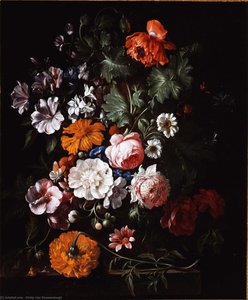
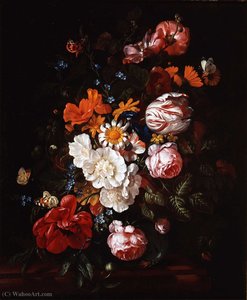
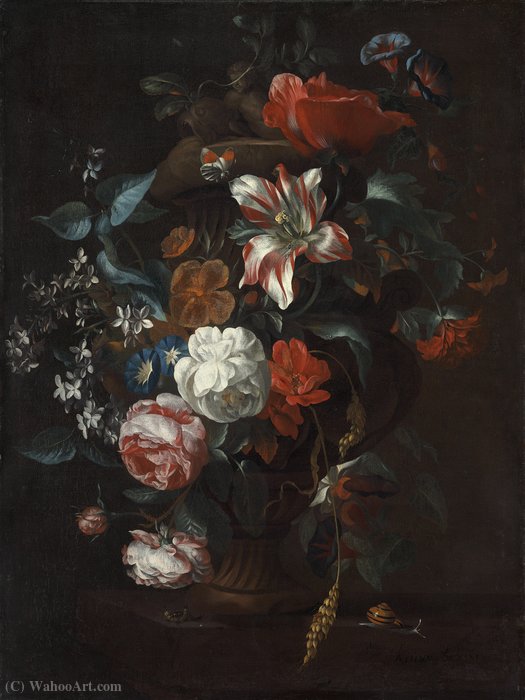
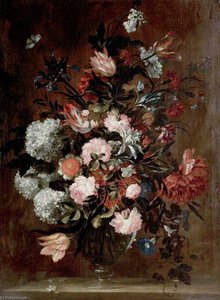
Flowers in a Vase (about (67 x 51) (Washington, Nat. Gallery) (1700))
 Read More
Giclée / Art Print
Museum-quality giclée or canvas print with fast production and flexible finish options. ( Buy Hand Made Painting Buy Image)




































Pick from our preset sizes that match the artwork's original proportions.

You may enter your own dimensions to fit a specific frame or space. If your selected size does not match the original image's proportions, we will either crop the artwork or extend the image with a mirrored or solid-fill edge. A digital mockup will be sent for your approval before production begins.
Please note that the on-screen preview does not reflect the actual cropping or extension. Only the mockup will accurately show the final composition.
While custom sizes are available, we recommend selecting a dimension from the predefined list to preserve the original proportions.
Worldwide Delivery () in 2 weeks instead of standard 4/5 weeks. (31 August)

Free Worldwide Express Shipping

High-Quality Linen Canvas

Full Shipping Insurance

Customs Tax Refund Guarantee

True Color Matching Guarantee

60-Day Return Policy (Defects Only)

100% Money-Back Guarantee

Bulk Discount Offer
 Glass option is only available in size under 110 CM

Flowers in a Vase (about (67 x 51) (Washington, Nat. Gallery) (1700))
Giclée / Art Print
Reproduction Size
-


Total Price
$ 63
Related Artworks
Artist Biography
The Silent Elegance of Philip van Kouwenbergh
In the grand, sweeping narrative of the Dutch Golden Age, where names like Rembrandt and Vermeer shine with unparalleled brilliance, there exist quieter, more intimate voices that capture the fleeting essence of life. Philip van Kouwenbergh (1671–1729) is precisely such a voice. An artist of profound delicacy, his presence in art history is marked not by a vast catalog of works, but by the exquisite quality of the few that remain. Though his known oeuvre may comprise fewer than twenty paintings, each canvas serves as a window into a meticulously observed world, where the ephemeral beauty of a single petal or the subtle crawl of an insect is elevated to the level of high art.
Born in the vibrant, bustling atmosphere of Amsterdam around 1671, Van Kouwenbergh was immersed in a culture that found divinity in the details of the natural world. His artistic journey began under the tutelage of Elias van den Broeck, a respected master of floral still life. This apprenticeship was foundational, instilling in him a reverence for botanical accuracy and a technical command over the medium of oil on canvas. From his mentor, he inherited the ability to transform a simple arrangement of flora into a complex, breathing composition, blending the scientific curiosity of the era with a deeply poetic sensibility.
A Symphony of Light and Botanical Detail
The work of Van Kouwenbergh is characterized by an extraordinary devotion to the nuances of nature. He did not merely paint flowers; he documented the very soul of them. His compositions often feature a dramatic, diagonal arrangement of blossoms—roses, poppies, lilies, and morning glories—that seem to surge toward the viewer with a life of their own. Yet, within these lush displays, there is always a deeper layer of narrative. He frequently integrated elements of natural history, weaving stalks of wheat, butterflies, snails, and various insects into his floral arrangements. These small, often overlooked creatures serve as memento mori, subtle reminders of the transient nature of beauty and the inevitable passage of time.
Technically, Van Kouwenbergh was a master of chiaroscuro. He utilized the dramatic interplay between light and shadow to sculpt his subjects, giving a tactile, three-dimensional quality to the velvety texture of a petal or the hard, reflective surface of an earthenware urn. This manipulation of light creates a sense of profound depth and luminosity, pulling the viewer into a space that feels both intimate and monumental. His ability to render tonal gradations allowed him to capture the subtle shifts in color within a wilting leaf or the translucent glow of a morning glory, making his still lifes feel less like static objects and more like captured moments of biological vitality.
Legacy of an Enigmatic Master
While history may remember him as a relatively unknown figure compared to the titans of the Dutch Republic, the significance of Van Kouwenbergh’s contribution lies in his pure dedication to the genre of floral still life. He represents the pinnacle of the late Baroque aesthetic, where the goal was to evoke awe through the perfection of representation and the orchestration of visual drama. His paintings remain vital testaments to the 18th-century fascination with the natural sciences and the decorative elegance of the period.
Today, his surviving masterpieces, such as those held in the National Gallery of Art, continue to captivate collectors and historians alike. They stand as enduring examples of how an artist can achieve immortality through precision, passion, and a singular focus on the magnificent, fleeting wonders of the earth. To look upon a Van Kouwenbergh is to be reminded that even the smallest blossom holds a universe of complexity, waiting to be discovered by a watchful eye.
philip van kouwenbergh
1671 - 1729
Quick Facts
- Artistic Movement Or Style: Golden Age Dutch Art
- Artists Or Movements Influenced By This Artist: ['Jan van Goyen']
- Artists Who Influenced This Artist: ['Elias van den Broeck']
- Date Of Death: 1729
- Full Name: Philip van Kouwenbergh
- Nationality: Dutch
- Notable Artworks: ['Flowers in a Vase']
- Place Of Birth: Amsterdam