 Preview
 Send
Send Share
Share
 Details

 Download
 Similars
 X-Ray
X-Ray Diaporama
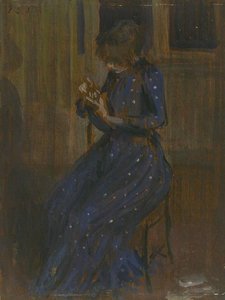
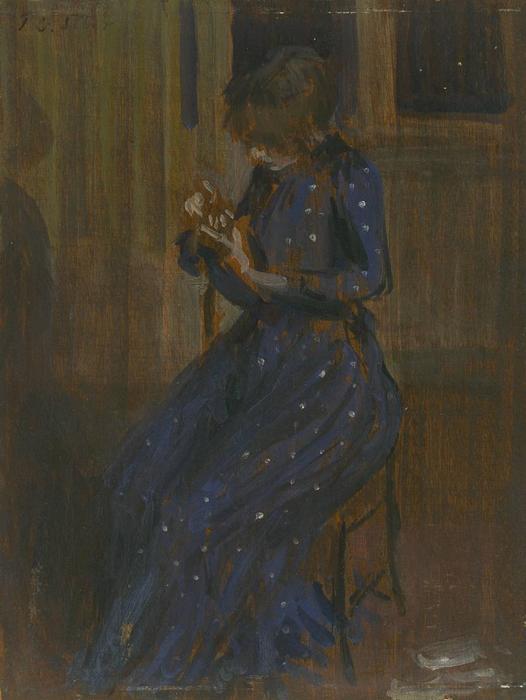
Girl in a Blue Dress


 Read More
Hand Made Oil Reproduction
Hand-painted oil on canvas in your size and frame, made to order by our artists. ( Buy Print Buy Image)




P118B $10

P118H $10

P118W $10

P438Z $10

P508JH $12

P508YH $12

P805H $10

P805Z $10

P919BZ $10

P919G $10

P919XJ $10

P959ZH $10

P968JZ $12

W106C $8

W218G $10

W218JH $8

W218Y $10

W307PJ $10

W316G $10

W316PJ $8

W316Y $10

W398PJ $8

W4111J $10

W500HY $15

W500JH $15

W692G $12

W849H $8

W940BG $15

W953PJ $8




Pick from our preset sizes that match the artwork's original proportions.

You may enter your own dimensions to fit a specific frame or space. If your selected size does not match the original image's proportions, we will either crop the artwork or extend the painting with additional hand-painted elements. A digital mockup will be sent for your approval before production begins.
Please note that the on-screen preview does not reflect the actual cropping or extension. Only the mockup will accurately show the final composition.
While custom sizes are available, we recommend selecting a dimension from the predefined list to preserve the original proportions.
After order, ArtsDot.com team will email client for instructions and provide a mockup preview
Worldwide Delivery () in 3/4 weeks instead of standard 5 weeks. (16 August). No compromise on quality.

Free Worldwide Express Shipping

High-Quality Linen Canvas

Full Shipping Insurance

Customs Tax Refund Guarantee

True Color Matching Guarantee

60-Day Return Policy (Defects Only)

100% Money-Back Guarantee

Bulk Discount Offer
 Glass option is only available in size under 110 CM

Girl in a Blue Dress
Reproduction Medium
Reproduction Size
-


Total Price
$ 263
Artwork Description
A Moment Frozen in Blue: Philip Wilson Steer’s ‘Girl in a Blue Dress’
Philip Wilson Steer's “Girl in a Blue Dress,” painted around 1891, isn’t merely a portrait; it’s a carefully constructed tableau of quiet contemplation and subtle emotion. The painting captures a young woman seated on a simple wooden chair, bathed in the diffused light of an interior space – likely a study or parlor – that hints at both domestic comfort and a certain melancholic restraint. It's a work that speaks volumes through its restraint, inviting viewers to ponder her thoughts and the story hinted at within this single, frozen moment.
Steer, a pivotal figure in British Impressionism, was deeply influenced by the artistic currents of Paris during his formative years. He absorbed the techniques of artists like Manet and Monet, particularly their ability to capture fleeting moments of light and atmosphere. However, Steer developed a distinctly personal style, characterized by a luminous palette, delicate brushwork, and an acute sensitivity to the psychological nuances of his subjects. “Girl in a Blue Dress” exemplifies this approach perfectly – it’s not a dramatic depiction but rather a subtle exploration of mood and character.
The Language of Color and Light
Steer masterfully employs color to establish the painting's atmosphere. The dominant hue, of course, is blue—a rich, velvety shade that envelops the figure and the surrounding space. This isn’t a bright, cheerful blue; it’s muted, almost somber, suggesting introspection or perhaps a hint of sadness. The interplay of light and shadow is equally crucial. The soft illumination, seemingly emanating from an unseen window, casts gentle highlights on the girl's dress and hands, drawing attention to her delicate features while simultaneously obscuring details, creating a sense of mystery. Notice how Steer uses broken color—small dabs and strokes rather than solid blocks—to create a shimmering effect, mimicking the play of light on fabric.
The technique itself is remarkably refined. Steer’s brushwork is loose yet controlled, conveying both spontaneity and precision. He employs short, broken strokes to build up form and texture, particularly in the folds of the dress. The layering of paint creates a remarkable sense of depth and luminosity, as if the scene were imbued with an inner light. This attention to detail—the subtle variations in tone, the delicate rendering of fabric—is what elevates “Girl in a Blue Dress” beyond a simple likeness.
A Portrait of Quietude and Symbolism
The girl herself is remarkably enigmatic. She’s not gazing directly at the viewer; instead, she's absorbed in a small book or perhaps a collection of photographs – an object that hints at her interests and inner life. Her posture is relaxed yet poised, suggesting a quiet confidence and self-awareness. The simple wooden chair, the muted colors, and the lack of overt ornamentation all contribute to the painting’s sense of understated elegance.
Some art historians have suggested that the blue dress itself holds symbolic significance, perhaps representing melancholy or introspection – fitting with the overall mood of the piece. The book she holds could be interpreted as a window into her thoughts and dreams, offering a glimpse beyond the surface appearance. The presence of another figure partially visible in the background adds to this sense of mystery, suggesting a hidden narrative or a complex relationship.
A Timeless Appeal
“Girl in a Blue Dress” is more than just a beautiful painting; it’s a poignant meditation on beauty, solitude, and the complexities of human emotion. Steer's ability to capture such subtle nuances of feeling through his masterful use of color, light, and brushwork has ensured its enduring appeal. It remains a captivating work that continues to resonate with viewers today, inviting us to contemplate the quiet moments of our own lives.
Reproductions of this exquisite painting offer a wonderful opportunity to bring Steer’s evocative vision into your home or office. ArtsDot provides high-quality hand-painted reproductions that faithfully capture the original's luminous beauty and emotional depth, allowing you to experience the magic of “Girl in a Blue Dress” for years to come.
Related Artworks

Artist Biography
Early Life and Artistic Foundations
Philip Wilson Steer, born in Birkenhead in 1860, emerged from a family deeply rooted in the artistic world—his father was both a portrait painter and a dedicated art teacher. This early exposure proved formative, nurturing a sensibility that would define his life’s path. A relocation to Whitchurch near Monmouth when he was just three years old instilled a connection with the British countryside that would resonate throughout his oeuvre. His formal education began at Hereford Cathedral School, providing a foundational grounding before he wholeheartedly pursued his artistic ambitions. Steer's training continued at the Gloucester School of Art and the South Kensington Drawing Schools, but it was his sojourn to Paris between 1880 and 1884 that proved truly transformative. Studying at the Académie Julian and later under Alexandre Cabanel at the École des Beaux Arts, he encountered a world brimming with new ideas and approaches to painting.The Embrace of Impressionism and a Distinctive Style
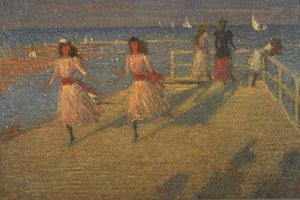
Paris became a crucible for Steer’s artistic development. He was profoundly moved by the works of Édouard Manet and James McNeill Whistler, absorbing their innovative techniques in capturing light, color, and atmosphere. This exposure ignited within him a passion for Impressionism, yet he never simply replicated it. Steer skillfully blended these French influences with his inherent English sensibilities, forging a style uniquely his own. His paintings are characterized by a remarkable ability to seize fleeting moments—the play of sunlight on water, the ephemeral quality of coastal air. He employed loose brushstrokes and vibrant colors not merely to depict scenes but to evoke emotions and create an immersive sense of immediacy. Recurring themes in his work include beach scenes and seascapes, often bathed in silvery, translucent light, demonstrating a mastery of depicting the freshness and luminosity of these environments. Works like The Music Room, early in his career, showcase his burgeoning skill with composition and light, while pieces such as Girls Running: Walberswick Pier burst with the energy and vibrancy of a Suffolk coastal town.A Champion of Modern Art and Etaples Influence
Steer wasn’t content to simply paint; he actively shaped the artistic landscape of Britain. He played a pivotal role in establishing the New English Art Club, an organization dedicated to championing modern artistic expression—a bold move at a time when traditional tastes still held sway. Through this platform and regular exhibitions at the Royal Academy, including participation in the groundbreaking London Impressionist Exhibition of 1889, he helped introduce new ideas and challenge conventional norms. His time spent at the Etaples art colony in 1887 further refined his artistic vision. This vibrant community of artists provided a stimulating environment for experimentation and collaboration, solidifying his ability to capture light and atmosphere with increasing nuance and skill. Steer drew inspiration from a diverse range of masters—John Constable, J.M.W. Turner, and even François Boucher—but always filtered these influences through his own unique perspective.Legacy, Recognition, and Enduring Influence
Philip Wilson Steer continued to paint prolifically until health issues forced him to stop in 1940, passing away two years later at the age of 81. His contributions were widely recognized during his lifetime, culminating in an Order of Merit. Today, his works are held in prestigious collections worldwide, including the Tate Gallery and even the Uffizi Gallery—a testament to his international acclaim. Beyond his paintings themselves, Steer’s legacy extends through his long tenure as a painting tutor at the Slade School of Art. For many years, he profoundly influenced generations of young artists, imparting not only technical skills but also a deep appreciation for observation and artistic integrity. His contribution to the development and acceptance of Impressionism in Britain is undeniable, solidifying his place as a significant figure in British art history—a painter who successfully bridged the gap between tradition and modernity, leaving an enduring mark on the landscape of British art. Notable works like Convalescent, with its rich textures and evocative gaze, and The Teme at Ludlow, highlighting serene beauty and masterful brushwork, continue to captivate audiences today, demonstrating the timeless quality of his artistic vision.
Philip Wilson Steer
1860 - 1942 , United Kingdom
Quick Facts
- Artistic Movement Or Style: Impressionism
- Artists Or Movements Influenced By This Artist: British Impressionism
- Artists Who Influenced This Artist:
- Manet
- Whistler
- Constable
- Turner
- Boucher
- Date Of Birth: 1860
- Date Of Death: 1942
- Full Name: Philip Wilson Steer
- Nationality: British
- Notable Artworks:
- The Music Room
- Girls Running
- Convalescent
- The Teme at Ludlow
- Mother and Daughter
- Place Of Birth: Birkenhead, UK
Related Articles
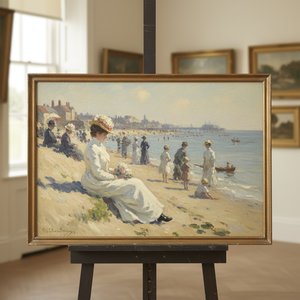
Philip Wilson Steer: Capturing Modern Life & British Impressionism's Essence
Explore the life & art of Philip Wilson Steer, a leading British Impressionist painter. Discover his coastal scenes, influences, and legacy. Expert analysis & high-quality reproductions at ArtsDot.

Slate Blue Masterpieces: 10 Iconic Paintings & Timeless Home Decor Ideas
Immerse yourself in the captivating world of slate blue! Explore 10 iconic paintings by Monet, Van Gogh & Renoir. Discover their stories, techniques & find museum-quality art reproductions for your home at .

Serene Blue Backgrounds: Discover Soulful Art to Transform Your Space with Timeless Elegance
Transform your home with soulful blue art. From serene Monet impressions to modern textured sculptures, discover curated masterpieces designed to inspire calm. Explore expert art consultations and bespoke hand-painted reproductions to create your personal sanctuary.
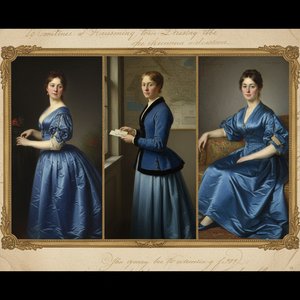
Azure Visions: Exploring Representations of the Blue Dress in Western Art History
Explore the rich history of the blue dress in Western art! Discover its symbolism, from Renaissance masterpieces to modern interpretations by artists like Martin & Schiele. Uncover cultural meanings and artistic techniques.
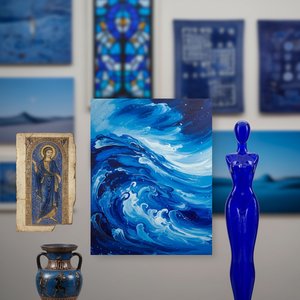
The Allure of Azure: Exploring the Symbolic & Aesthetic Depths of Blue in Art History
Explore the rich history of blue in art! Discover its symbolism, from ancient pigments to modern masterpieces by Kandinsky & Seurat. Uncover the psychological impact and cultural meanings behind this captivating hue.