 Preview
 Send
Send Share
Share
 Details

 Download
 Similars
 X-Ray
X-Ray Diaporama
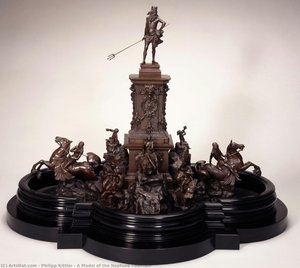
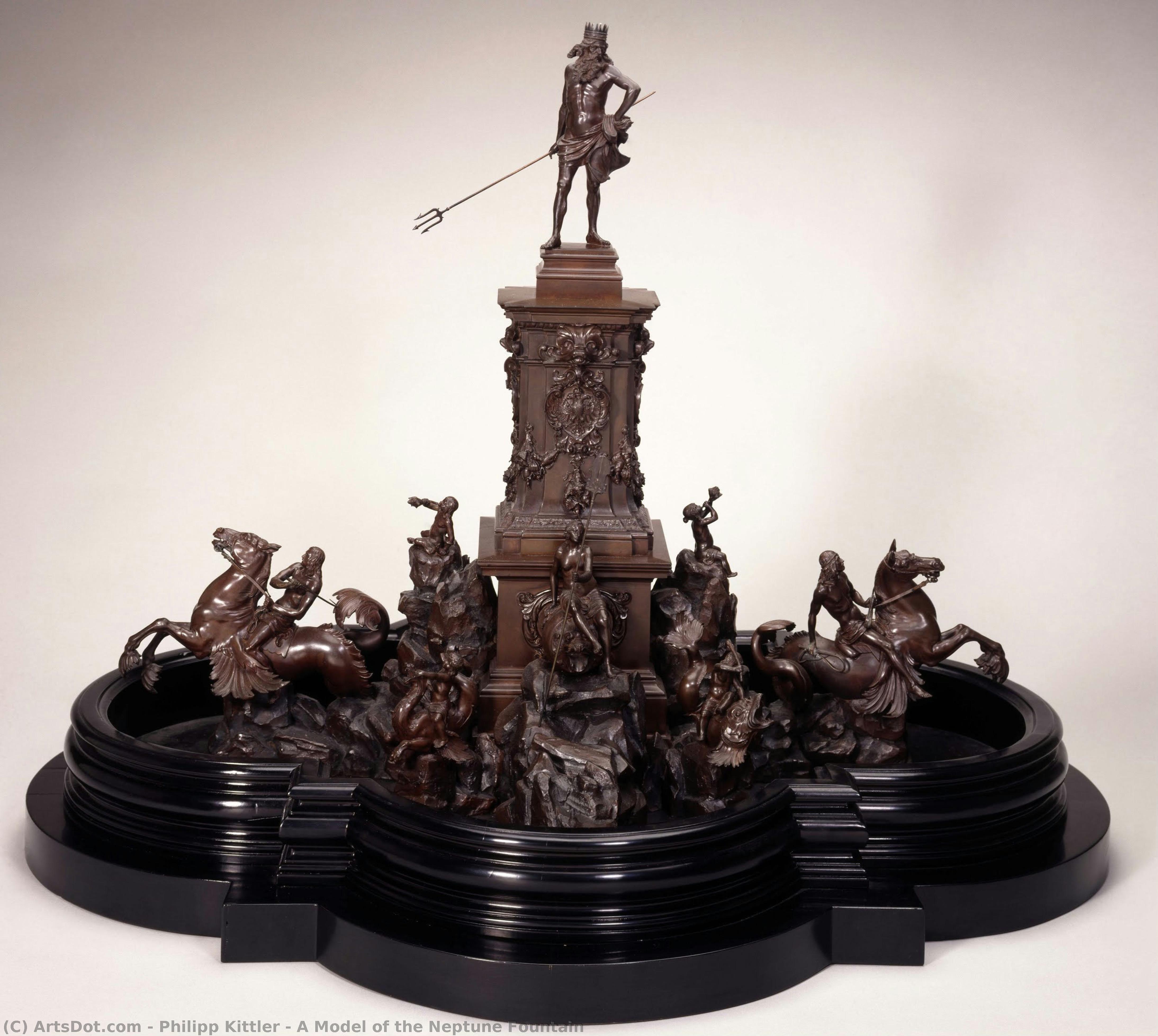
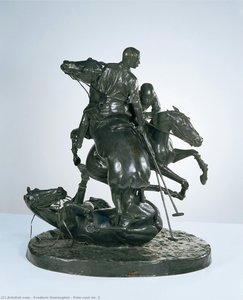
A Model of the Neptune Fountain


 Read More
Hand Made Oil Reproduction
Hand-painted oil on canvas in your size and frame, made to order by our artists. ( Buy Print Buy Image)




































Pick from our preset sizes that match the artwork's original proportions.

You may enter your own dimensions to fit a specific frame or space. If your selected size does not match the original image's proportions, we will either crop the artwork or extend the painting with additional hand-painted elements. A digital mockup will be sent for your approval before production begins.
Please note that the on-screen preview does not reflect the actual cropping or extension. Only the mockup will accurately show the final composition.
While custom sizes are available, we recommend selecting a dimension from the predefined list to preserve the original proportions.
After order, ArtsDot.com team will email client for instructions and provide a mockup preview
Worldwide Delivery () in 3/4 weeks instead of standard 5 weeks. (31 August). No compromise on quality.

Free Worldwide Express Shipping

High-Quality Linen Canvas

Full Shipping Insurance

Customs Tax Refund Guarantee

True Color Matching Guarantee

60-Day Return Policy (Defects Only)

100% Money-Back Guarantee

Bulk Discount Offer
 Glass option is only available in size under 110 CM

A Model of the Neptune Fountain
Reproduction Medium
Reproduction Size
-


Total Price
$ 263
Related Artworks



Artist Biography
Frederic Remington: A Chronicle of the American West
Born in Canton, New York, in 1861, Frederic Sackrider Remington’s life and art were inextricably linked to the vast, rapidly changing landscape of the American West. His early years, steeped in the traditions of his family – a prominent lineage of hardware merchants and newspaper publishers – instilled within him a deep appreciation for storytelling and observation. More significantly, his father's service as a Union Army colonel during the Civil War ignited a fascination with frontier life, tales of cowboys, Native Americans, and the rugged cavalrymen who shaped the destiny of the region. This early exposure would profoundly influence Remington’s artistic vision, transforming him from a budding artist into one of the most celebrated chroniclers of the Old West.
Remington's formal art training was surprisingly limited. He eschewed a traditional college education after his father’s death in 1880, opting instead to travel and immerse himself in the very subject he sought to depict. His artistic journey began with drawing soldiers in uniform on horseback – a skill honed during his brief stint at Highland Military Academy in Massachusetts. Crucially, he spent three months studying at the Art Students League in New York City in 1886, an experience that provided him with invaluable instruction in watercolor and oil painting techniques. This relatively informal training, combined with his extensive travels and firsthand experiences, formed the bedrock of his distinctive style.
The Rise of a Western Illustrator
Remington’s career truly took flight when he began contributing illustrations to *Harper’s Weekly* in 1885. His evocative depictions of cowboys, Native Americans, and cavalrymen captivated readers across America, establishing him as a leading voice in portraying the West. He quickly mastered the art of capturing dramatic narratives and anecdotal details, often drawing upon his own observations and experiences. His illustrations weren’t merely representations; they were carefully constructed stories, imbued with a romanticized yet undeniably powerful sense of the frontier spirit.
During this period, Remington's work was heavily influenced by French academic painters like Ernest Meissonier and Édouard Detaille, whose dramatic historical scenes demonstrated a mastery of light and composition. However, he also embraced watercolor painting, showcasing his works at the American Water-Color Society, further expanding his artistic repertoire. His subject matter consistently reflected a nostalgic, almost mythic, view of the disappearing frontier – a landscape undergoing rapid transformation due to transcontinental transportation, Native American displacement, immigration, and industrialization. Theodore Roosevelt famously described Remington as “one of America’s greatest artists,” recognizing his ability to capture the essence of the West.
Sculpting the Frontier
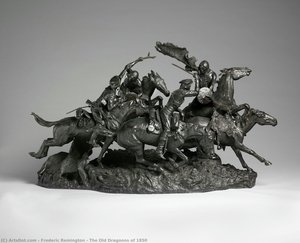
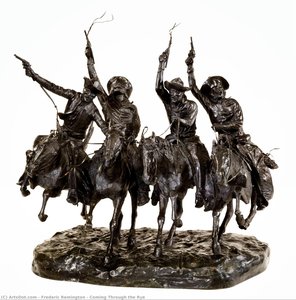
While renowned for his paintings and illustrations, Remington also made a significant contribution to sculpture during the late 1890s and early 1900s. Initially experimenting with sand casting techniques, he quickly adopted the lost wax method, allowing him to create remarkably detailed and lifelike bronze figures. His sculptures often depicted iconic Western subjects – cowboys, Native Americans, and cavalrymen – capturing their strength, resilience, and spirit. Works like *Bronco Buster* (1893) exemplify his ability to translate the dynamism of a scene onto three-dimensional form.
Remington’s artistic output extended beyond visual art; he also wrote extensively about his experiences in the West, publishing articles, short stories, and even two novels. His war correspondence during the Spanish-American War further solidified his reputation as a skilled observer and storyteller. His work was widely published in prestigious magazines such as *Century Magazine*, *Collier’s*, and *Harper's Weekly*, reaching a vast audience across America and beyond. The influence of Remington’s imagery can be seen even today, notably in John Ford’s film “She Wore a Yellow Ribbon,” which drew inspiration from his illustrations.
Legacy and Influence
Frederic Remington died unexpectedly in 1909 at the age of forty-eight, leaving behind a remarkable body of work that continues to captivate audiences. His paintings, sculptures, and writings offer a unique and enduring portrait of the American West – a region defined by both hardship and heroism, conflict and beauty. Remington’s legacy extends beyond his artistic achievements; he played a crucial role in shaping public perception of the West, romanticizing its frontier spirit while also acknowledging the complex realities of Native American life and the challenges faced by settlers. His work remains a powerful testament to the enduring fascination with the American West and its place in national identity.
philipp kittler
1861 - 1944 , Germany
Quick Facts
- Artistic Movement Or Style: Western American Art
- Artists Or Movements Influenced By This Artist:
- George Catlin
- Theodore Roosevelt
- Artists Who Influenced This Artist:
- Ernest Meissonier
- Édouard Detaille
- Date Of Birth: October 4, 1861
- Date Of Death: December 26, 1909
- Full Name: Frederic Sackrider Remington
- Nationality: American
- Notable Artworks:
- A Dash for the Timber
- The Bronco Buster
- Place Of Birth: Canton, New York, USA