

 Preview
 Send
Send Share
Share
 Details

 Download
 Similars
 X-Ray
X-Ray Diaporama
Times of Day: Evening
 Print
Print- WallArt
- German Romanticism
 1805
1805- 19th Century
 712.0 x 475.0 cm
 Кабінет графіки
 Read More
Purchase a high-resolution, enhanced digital image, far superior to the online preview.
Each file is meticulously prepared by our in-house specialists using advanced tools and expert manual retouching. We ensure every image has exceptional clarity, precise color accuracy, and fine detail.
The final file is delivered via email within 72 hours, optimized for immediate use in professional, editorial, and print environments. This is the same quality trusted by top-tier design studios, publishers, and galleries.
Digital Image
Download a high-resolution file for personal display, printing, and creative projects. ( Buy Print Buy Hand Made Painting)
Included in Every Digital Image Order
Expert Digital Delivery, Guaranteed
When you choose ArtsDot.com, you're not just getting an image - you're receiving a professionally enhanced digital artwork, crafted with precision and backed by a satisfaction guarantee. Here's everything that comes with your order, automatically:

Fast Email Delivery
Your high-resolution digital image file will be emailed to you within 72 hours of ordering - ready for immediate use.

AI-Enhanced Digital File
Your artwork is professionally optimized using advanced AI tools and manual editing, ensuring maximum detail, clarity, and color accuracy.

Free Lifetime Re-Delivery
Accidentally deleted or lost your file? No worries - we'll resend it to you anytime, free of charge.

No Import Fees - Ever
Enjoy your artwork instantly with zero customs, duties, or delivery fees - digital downloads are always tax-free.

Color Accuracy Guarantee
We ensure your digital image reflects the original colors as closely as possible using professional tools and color management.

60-Day Satisfaction Guarantee
If you're not satisfied with your digital image, we'll revise it or refund 100% within 60 days - no questions asked.

100% Money-Back Guarantee
Not satisfied? Get a full refund within 60 days of receiving your digital file - no questions asked.

Bulk Order Discounts
Buy 3 images, save 10% - Buy 5, save 15% - Buy 10+, save 20%. Great for creative projects, galleries, and agencies.
Collectible Description
A Symphony of Light and Shadow: Philipp Otto Runge’s “Times of Day: Evening”
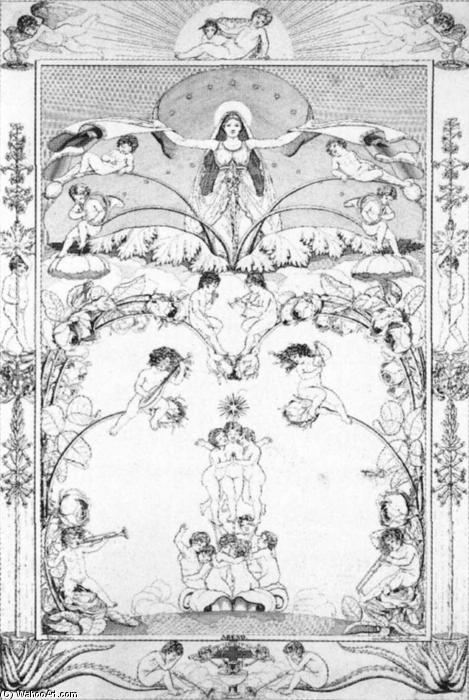
Philipp Otto Runge's "Times of Day: Evening," painted in 1805, is not merely a depiction of twilight; it’s an immersive experience, a carefully constructed meditation on the cyclical nature of existence and the profound connection between humanity and the natural world. This remarkable print, now housed within the collection of the Kunsthalle Hamburg, stands as a cornerstone of German Romanticism, embodying the movement's fascination with symbolism, emotion, and the sublime beauty of the landscape. Runge’s work transcends simple representation, inviting viewers to contemplate themes of birth, death, and renewal through a meticulously orchestrated interplay of light, color, and form.
The print itself is a testament to Runge's innovative approach to engraving. Executed with astonishing precision on wove paper, it showcases his mastery of hatching and cross-hatching techniques—methods he’d honed during his early work as a silhouette artist. These meticulous lines don’t merely outline forms; they generate an incredible range of tonal values, creating a palpable sense of depth and atmosphere. The composition is strikingly symmetrical, drawing the eye towards a central female figure bathed in a soft, ethereal glow – often interpreted as a personification of inspiration or the Muse herself. Surrounding her are a host of cherubic figures engaged in various artistic pursuits: musicians playing instruments, painters sketching, and artisans crafting—all contributing to a vibrant tableau of creative energy.
The Language of Symbolism
Runge’s “Times of Day” is profoundly symbolic, reflecting his deep engagement with the philosophical ideas of his time. The central female figure, often referred to as the Muse, embodies artistic inspiration and divine grace. Her elevated position suggests her role as a catalyst for creativity, while the surrounding figures represent the various disciplines involved in the production of art. Notice the prominent musical instruments – harps and lutes—symbolizing harmony and beauty, alongside tools like brushes and palettes representing craftsmanship. The inclusion of nature elements—stylized foliage and a subtle sun motif on her headdress—further reinforces the interconnectedness between humanity and the natural world, a core tenet of Romantic thought.
The “Evening” itself is not simply a visual representation of sunset; it’s a metaphor for transition, decay, and the passage of time. The subdued colors – predominantly grays and browns—evoke a sense of melancholy and introspection, while the soft lighting suggests a gentle surrender to darkness. Runge deliberately avoided bright, saturated hues, favoring instead a palette that emphasizes mood and atmosphere. This deliberate restraint is characteristic of his Romantic aesthetic, prioritizing emotional resonance over literal representation.
A Bridge Between Neoclassicism and Romanticism
“Times of Day: Evening” occupies a fascinating space between the formal rigor of Neoclassicism and the passionate individualism of Romanticism. Runge’s meticulous draftsmanship and symmetrical composition echo the classical tradition, while his incorporation of symbolic imagery and emotional intensity firmly places him within the burgeoning Romantic movement. He sought to move beyond the rationalism of Enlightenment thought, embracing intuition, imagination, and the subjective experience of beauty. This synthesis is evident in the print's ability to simultaneously evoke a sense of order and chaos, reason and emotion.
Capturing the Essence of a Moment
Beyond its symbolic richness, “Times of Day: Evening” possesses a remarkable emotional impact. The soft lighting, intricate details, and carefully orchestrated composition create an atmosphere of serene contemplation. It’s a scene that invites viewers to pause, reflect, and connect with their own inner world. Runge's work is not simply observed; it’s experienced—a testament to his profound understanding of the power of art to evoke emotion and inspire wonder. Reproductions of this masterpiece offer a tangible connection to this extraordinary vision, allowing us to appreciate its beauty and complexity in our own homes.
Related Artworks
Artist Biography
A Life Illuminated by Inner Vision
Philipp Otto Runge, a name resonating with the burgeoning spirit of German Romanticism, was an artist whose tragically short life belied the profound depth and originality of his vision. Born in 1777 in Wolgast, then part of Swedish Pomerania, into a family steeped in shipbuilding and connected to Prussian nobility, Runge’s early years were marked by illness, fostering a contemplative nature that would deeply inform his artistic pursuits. This period of physical fragility also nurtured an early talent for *scissor-cut silhouettes*, a practice he continued throughout his life—a testament to his innate ability to distill form and emotion with remarkable precision. His formal training began later than most, initially through a commercial apprenticeship in Hamburg at his brother Daniel’s firm. However, the pull of artistic expression proved too strong, leading him to Copenhagen in 1799 to study painting under Jens Juel. This marked the true beginning of Runge's journey toward becoming one of Germany’s most innovative and spiritually driven artists.The Dawn of Romantic Symbolism
Runge’s artistic development was profoundly shaped by his move to Dresden in 1801, where he encountered pivotal figures like Caspar David Friedrich and Ludwig Tieck. It was also here that he met Pauline Bassenge, whom he married in 1804. This period witnessed a growing fascination with the mystical writings of Jakob Böhme, whose philosophical explorations of the universe’s hidden harmonies resonated deeply with Runge's own spiritual inclinations. A pivotal moment arrived in 1803 when he unexpectedly met Johann Wolfgang von Goethe in Weimar, forging a friendship built on shared interests in color theory and artistic expression. This encounter proved transformative, encouraging Runge to delve further into the symbolic language of art and explore the interconnectedness of all things. His early works began to reflect this burgeoning Romantic sensibility, moving away from Neoclassical restraint toward emotionally charged landscapes and portraits imbued with personal meaning. The *Hülsenbeck Children* (1805), for example, is not merely a portrait but a poignant depiction of familial intimacy and the innocence of childhood, rendered with an almost ethereal quality.Color as Cosmic Language
Runge’s most enduring legacy lies in his groundbreaking work on color theory. He believed that color was not simply a visual phenomenon but a fundamental force shaping our perception of reality and reflecting divine order. This conviction led to the development of his *Farben-Kugel* (Color Sphere), published in 1810, shortly before his untimely death from tuberculosis at the age of thirty-three. The Color Sphere was not merely a scientific treatise; it was an attempt to map the entire spectrum of color onto a three-dimensional form, with white and black representing opposing poles and the primary colors—blue, yellow, and red—symbolizing the Christian Trinity. Blue represented God and the night, red symbolized morning, evening, and Jesus, while yellow embodied the Holy Spirit. Runge’s meticulous disk color mixture experiments were an attempt to provide empirical support for his theoretical framework, demonstrating how colors could be harmoniously blended to create a vast range of hues. This exploration wasn't isolated; it was interwoven with his artistic practice, informing the symbolic use of color in his paintings and drawings.The Unfinished Symphony of ‘Times of Day’
Runge envisioned a *Gesamtkunstwerk*—a total work of art—that would fuse painting, poetry, music, and architecture into a unified sensory experience. This ambition found its most ambitious expression in his series *Tageszeiten* (Times of Day), begun in 1803. The project comprised four monumental paintings representing morning, midday, evening, and night, each designed to be viewed within a specially constructed building accompanied by music and poetry. While only two versions of “Morning” were completed, the drawings for the entire cycle reveal Runge’s profound understanding of symbolism and his desire to capture the spiritual essence of time itself. These works marked a departure from traditional landscape painting, imbuing nature with religious and emotional significance. He sought not merely to depict the external world but to convey its inner harmony and divine presence. The concept was revolutionary for its time, anticipating later developments in abstract art and multimedia installations.A Lasting Influence
Though his career was cut short by illness, Philipp Otto Runge’s impact on German Romanticism and the development of modern art is undeniable. His exploration of color theory influenced generations of artists, including those associated with the Bauhaus movement. His emphasis on symbolism and emotional expression paved the way for later Expressionist painters. Runge's unique blend of scientific inquiry, spiritual conviction, and artistic innovation continues to captivate and inspire. He remains a pivotal figure in art history—a visionary artist who dared to explore the hidden depths of human perception and the mysteries of the universe through the language of color, form, and symbolism. His works are not merely paintings; they are windows into a world illuminated by inner vision, inviting us to contemplate the profound interconnectedness of all things.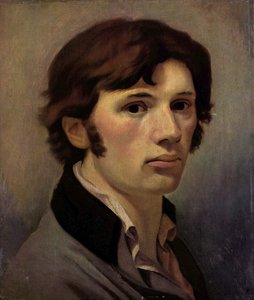
Philipp Otto Runge
1777 - 1810 , Germany
Quick Facts
- Artistic Movement Or Style: Romanticism
- Artists Or Movements Influenced By This Artist: ['Caspar David Friedrich']
- Artists Who Influenced This Artist:
- Jakob Böhme
- Johann Wolfgang von Goethe
- Date Of Birth: 1777
- Date Of Death: 1810
- Full Name: Philipp Otto Runge
- Nationality: German
- Notable Artworks:
- The Hülsenbeck Children
- The Great Morning
- Color Sphere
- Place Of Birth: Wolgast, Germany

