 Preview
 Send
Send Share
Share
 Details

 Download
 Similars
 X-Ray
X-Ray Diaporama
Le vrai jeu de la drogue


 Read More
Hand Made Oil Reproduction
Hand-painted oil on canvas in your size and frame, made to order by our artists. ( Buy Print Buy Image)




P118B $10

P118H $10

P118W $10

P438Z $10

P508JH $12

P508YH $12

P805H $10

P805Z $10

P919BZ $10

P919G $10

P919XJ $10

P959ZH $10

P968JZ $12

W106C $8

W218G $10

W218JH $8

W218Y $10

W307PJ $10

W316G $10

W316PJ $8

W316Y $10

W398PJ $8

W4111J $10

W500HY $15

W500JH $15

W692G $12

W849H $8

W940BG $15

W953PJ $8




Pick from our preset sizes that match the artwork's original proportions.

You may enter your own dimensions to fit a specific frame or space. If your selected size does not match the original image's proportions, we will either crop the artwork or extend the painting with additional hand-painted elements. A digital mockup will be sent for your approval before production begins.
Please note that the on-screen preview does not reflect the actual cropping or extension. Only the mockup will accurately show the final composition.
While custom sizes are available, we recommend selecting a dimension from the predefined list to preserve the original proportions.
After order, ArtsDot.com team will email client for instructions and provide a mockup preview
Worldwide Delivery () in 3/4 weeks instead of standard 5 weeks. (21 August). No compromise on quality.

Free Worldwide Express Shipping

High-Quality Linen Canvas

Full Shipping Insurance

Customs Tax Refund Guarantee

True Color Matching Guarantee

60-Day Return Policy (Defects Only)

100% Money-Back Guarantee

Bulk Discount Offer
 Glass option is only available in size under 110 CM

Le vrai jeu de la drogue
Reproduction Medium
Reproduction Size
-


Total Price
$ 263
Artwork Description
A Moment Frozen in Time: The Lively Spirit of Le vrai jeu de la drogue
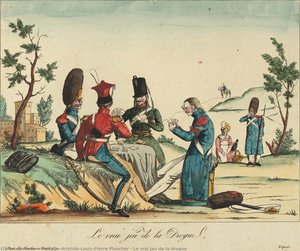
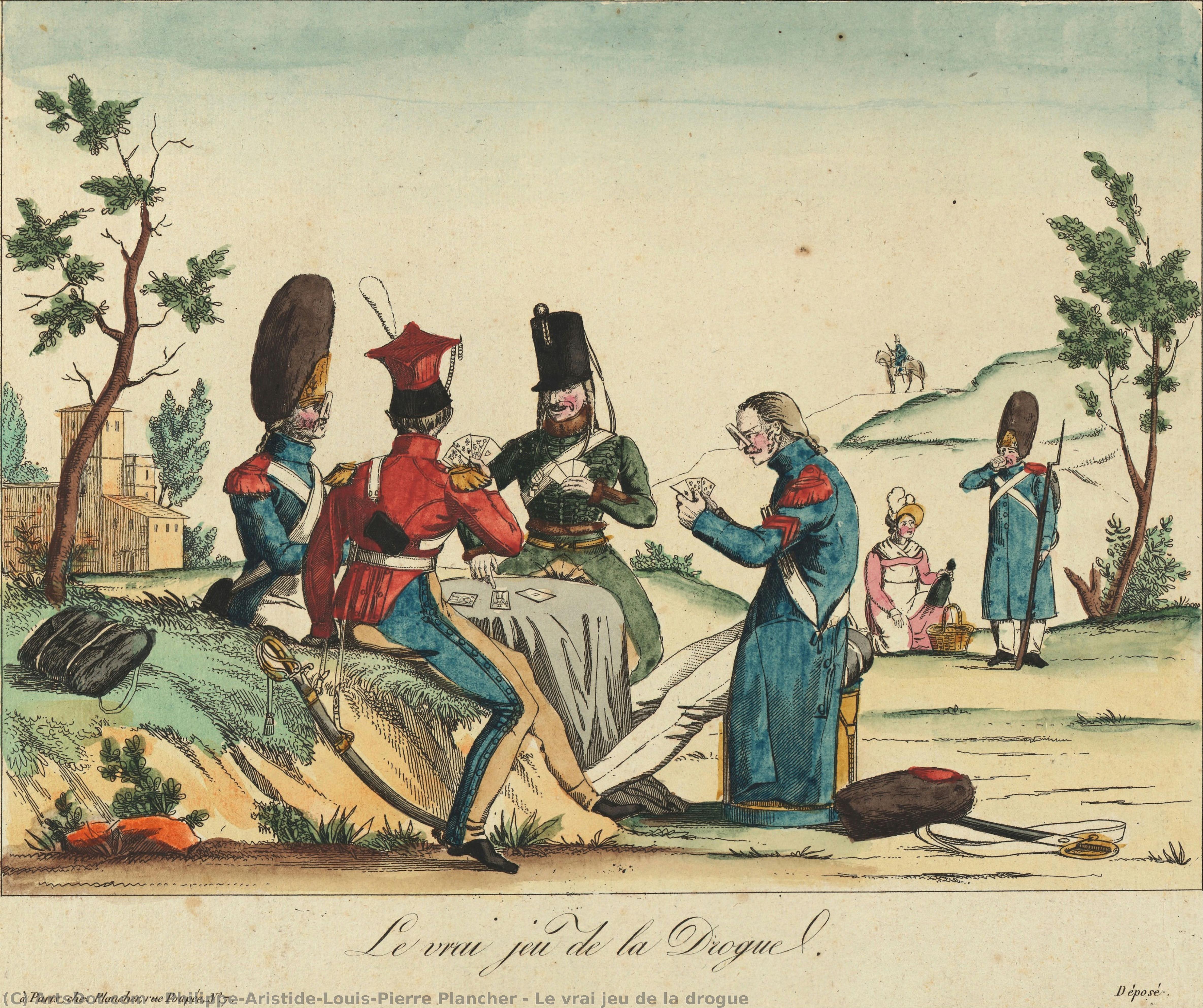
In the evocative masterpiece Le vrai jeu de la drogue, painted in 1815 by Philippe-Aristide-Louis-Pierre Plancher, we are invited to step into a world of intimate social connection and rustic charm. The canvas captures a profound sense of communal life, centered around a table where the boundaries between strangers and companions seem to dissolve. At the heart of this composition sits a figure of authority, perhaps a military officer, whose presence anchors the scene amidst the surrounding movement. Around him, a diverse group of individuals is caught in a candid moment of shared experience—some leaning in with whispered intensity, others observing the proceedings with quiet curiosity. The atmosphere is thick with the palpable energy of a gathering where food, drink, and conversation weave a tapestry of human connection.
The artist employs a masterful touch to render the tactile reality of the scene. Every element on the table—the humble bowls, the glint of a knife, the weight of ceramic cups, and the solitary bottle—is treated with a precision that brings the setting to life. Through subtle shifts in light and shadow, Plancher creates a sense of depth that pulls the viewer into the very center of the circle. The technique reflects a profound understanding of genre painting, where the mundane is elevated to the monumental. There is a rhythmic quality to the arrangement of the figures, a visual melody that guides the eye from the seated patriarch to the standing observers, ensuring that no detail is lost in the lively bustle of the room.
Beyond its surface beauty, the painting serves as a poignant window into the social fabric of the early 19th century. It captures a period of transition, where the echoes of Napoleonic era discipline meet the timeless, unpretentious joys of communal dining. The symbolism lies not in grand allegories, but in the quiet dignity of the everyday; the shared meal becomes a symbol of stability and social cohesion. For the discerning collector or interior designer, this work offers more than mere decoration. It provides a focal point of warmth and narrative depth, making it an exquisite addition to a space that values storytelling and historical resonance. To possess a reproduction of this piece is to bring a fragment of history’s heartbeat into one's own home, offering a timeless invitation to reflect on the enduring beauty of human togetherness.
Related Artworks

Artist Biography
William Hogarth: A Moralist of the Brush
William Hogarth, born in London in 1697 and tragically dying at the relatively young age of 66 in 1764, stands as a pivotal figure in British art history. More than simply an artist, he was a social commentator, a satirist, and a pioneer of sequential narrative – techniques that would profoundly influence generations of artists to come. His legacy isn’t defined by grand landscapes or idealized portraits; instead, it resides within the sharply observed, often unsettling, scenes depicted in his engravings and paintings, particularly his series *Marriage A-la-Mode*, *The Busy Market*, *Gin Lane*, and *Beer Street*. These works weren't intended for quiet contemplation but rather to provoke thought and, crucially, to advocate for social reform. Hogarth’s early life offered little indication of the artistic path he would ultimately forge. His father, a classical scholar burdened by financial difficulties, instilled in him a respect for learning while simultaneously exposing him to the frustrations of dealing with unscrupulous printers and publishers – experiences that fueled his lifelong distrust of the art establishment and shaped his critical perspective. Rather than pursuing a formal academic education, Hogarth apprenticed himself to a silversmith, a decision he later lamented as a missed opportunity but one that ultimately provided him with invaluable skills in engraving and design. This unconventional training fostered his independence and allowed him to develop his own distinctive style – characterized by meticulous detail, sharp contrasts of light and shadow, and a remarkable ability to capture the nuances of human behavior. Crucially, he learned to work independently, a skill vital for navigating the often-exploitative world of printmaking at the time. Hogarth’s artistic journey began with satirical depictions of fashionable society, mirroring the style of his predecessor, William Hogarth (no relation). His *Industry and Idleness* (1730-32) offered a biting critique of London's elite, exposing their vanity, extravagance, and moral decay. However, recognizing the limitations of this approach – namely, its lack of impact on social change – he shifted his focus to addressing more pressing societal issues. This marked a significant turning point in his career, moving him away from mere caricature towards a deliberate attempt to expose and challenge the ills of his time. His friend, Henry Fielding, author of *Tom Jones*, recognized this shift and encouraged Hogarth to tackle broader social problems alongside his prints. The most enduring and impactful of Hogarth’s works is undoubtedly *Gin Lane* (1751) and its companion piece, *Beer Street* (also 1751). These two engravings, issued jointly in support of the Gin Act of 1751, offer a starkly contrasting portrayal of London life. *Gin Lane* depicts the horrifying consequences of gin consumption – rampant poverty, prostitution, infanticide, and despair – while *Beer Street* presents a seemingly idyllic scene of healthy, industrious citizens enjoying a modest pint of beer. However, Hogarth’s genius lies in revealing the subtle connections between these two worlds. He suggests that the prosperity depicted in *Beer Street* is inextricably linked to the misery portrayed in *Gin Lane*, implying that the demand for gin was fueled by poverty and social inequality. The prints weren't simply moralistic warnings; they were meticulously constructed arguments for reform, designed to expose the systemic problems underlying London’s social ills. The detail—the decaying buildings, the gaunt faces of the poor, the overflowing gutters—is relentlessly realistic and profoundly unsettling. Beyond his social commentary, Hogarth was a master of sequential narrative – a technique that allowed him to tell stories through a series of interconnected images. *Marriage A-la-Mode* (1735), for example, chronicles the disastrous marriage of Sir Roger de Coverly and Lady Mary Merely, depicting their increasingly scandalous affairs with shocking detail and unflinching honesty. This innovative approach, anticipating the development of comic strips and film serials, demonstrated Hogarth’s remarkable understanding of visual storytelling and his ability to engage the viewer on a deeply emotional level. His work also reflects the broader intellectual currents of his time, particularly the influence of Shaftesbury's concept of natural law and the growing interest in empirical observation and social reform. William Hogarth’s legacy extends far beyond his individual works. He established a new standard for satirical art, demonstrating how visual imagery could be used to expose social injustice and advocate for change. His pioneering use of sequential narrative paved the way for future artists who sought to tell complex stories through images. Furthermore, his meticulous attention to detail and his commitment to realism influenced generations of engravers and painters. While he never achieved the widespread recognition he deserved during his lifetime – hampered by financial difficulties and a lack of patronage – William Hogarth’s work continues to resonate today as a powerful testament to the enduring relevance of social commentary and the transformative potential of art.Key Characteristics & Artistic Style
- Moral Satire: Hogarth's primary goal was to expose moral failings within society, particularly concerning poverty, vice, and corruption.
- Sequential Narrative: He masterfully employed a series of interconnected images to tell complex stories, often depicting the consequences of immoral behavior.
- Realism & Detail: His works are characterized by meticulous observation and an unflinching portrayal of reality, including its unpleasant aspects.
- Contrast & Light/Shadow: He skillfully used chiaroscuro (strong contrasts between light and dark) to create dramatic effects and emphasize key details.
- Engraving Technique: Hogarth was a highly skilled engraver, known for his precision and ability to reproduce intricate detail in monochrome prints.
Major Works
- *Industry and Idleness* (1730-32) – A satirical critique of London’s elite.
- *Marriage A-la-Mode* (1735) – A series depicting the scandalous affairs of a wealthy couple.
- *The Busy Market* (1738) – A depiction of London's bustling marketplace, exposing its social inequalities.
- *Gin Lane* (1751) – A powerful indictment of gin consumption and its devastating consequences.
- *Beer Street* (1751) – A contrasting portrayal of a prosperous community reliant on beer production.
Influence & Legacy
Hogarth’s influence is profound, shaping the development of:- Social Commentary in Art: He established a precedent for using art to address social issues and advocate for reform.
- Sequential Narrative: His innovative use of sequential images paved the way for comic strips, film serials, and other forms of visual storytelling.
- Realist Art: His meticulous attention to detail and his commitment to realism influenced generations of artists.
Historical Context
Hogarth’s work is deeply rooted in the social and political context of 18th-century London:- The Gin Craze: The widespread consumption of gin fueled social problems, leading to calls for regulation.
- Social Inequality: London was a city of stark contrasts, with immense wealth alongside abject poverty.
- Enlightenment Ideals: Hogarth’s work reflects the Enlightenment emphasis on reason, observation, and social reform.
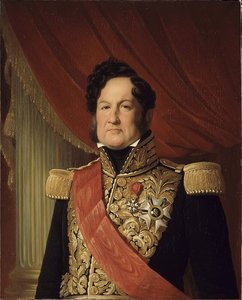
philippe-aristide-louis-pierre plancher
1751 - 1815 , France
Quick Facts
- Artistic Movement Or Style: Moral & satirical engravings/paintings
- Artists Or Movements Influenced By This Artist: ['Rococo']
- Artists Who Influenced This Artist: ['Jacques Callot']
- Date Of Birth: November 10, 1697
- Date Of Death: October 26, 1764
- Full Name: William Hogarth
- Nationality: English
- Notable Artworks:
- Beer Street
- Gin Lane
- Marriage A-la-Mode
- Place Of Birth: London, England
Related Articles
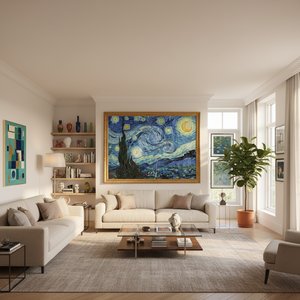
Top 10 Masterpieces for Your Living Room: Iconic Paintings & Art Decor Ideas |
Transform your living room with iconic art! Explore our guide to the Top 10 most famous paintings – from Van Gogh's Starry Night to Mona Lisa. Discover artist stories, techniques & find museum-quality reproductions for timeless decor. Explore the full collection on
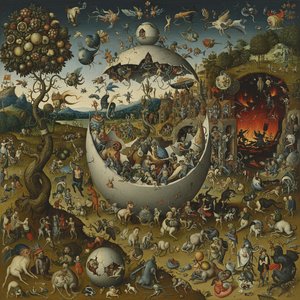
Hieronymus Bosch's Masterpieces: 25 Visions of Art & Morality | ArtsDot
Delve into the enigmatic world of Hieronymus Bosch! Explore 25 iconic paintings – from 'The Garden of Earthly Delusions' to his haunting triptychs. Discover the symbolism, history & artistry behind these Renaissance masterpieces. Find museum-quality art reproductions at ArtsDot.com.

Rembrandt's Masterpieces: Explore 25 Iconic Paintings & Prints | ArtsDot
Journey through Rembrandt van Rijn's 25 most iconic paintings & etchings. Explore Dutch Golden Age masterpieces, dramatic chiaroscuro, and timeless portraits. Find museum-quality art reproductions to elevate your home decor on ArtsDot.com.
F.A.Q.: Multi-Panel Group Set Art – A Sophisticated Decor Solution for Elite Collectors
Discover 's exquisite multi-panel art sets – a sophisticated decor solution for elite collectors. Custom designs, premium reproductions & expert guidance. Elevate your space with lasting beauty.
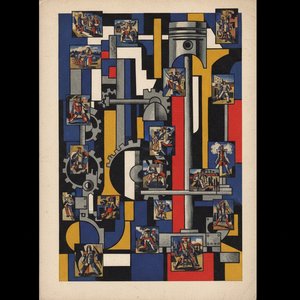
Fernand Léger's Masterpieces: 25 Iconic Paintings & The Machine Age Aesthetic | ArtsDot
Explore 25 iconic Fernand Léger paintings that defined the Machine Age & Cubism. Discover the stories behind his bold colors, geometric forms & avant-garde style. Find museum-quality art reproductions on ArtsDot.com.