 Preview
 Send
Send Share
Share
 Details

 Download
 Similars
 X-Ray
X-Ray Diaporama
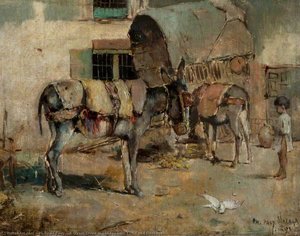
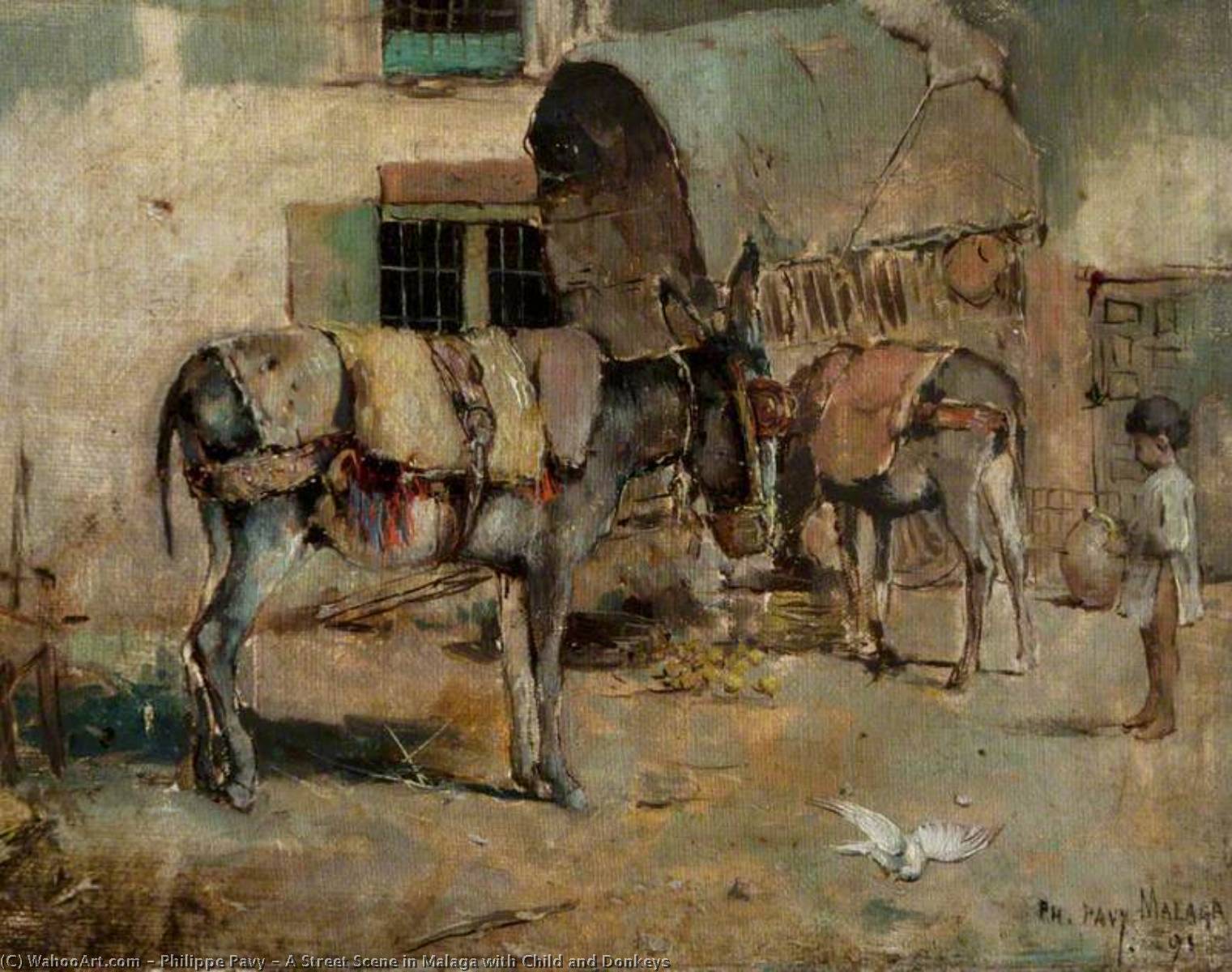
A Street Scene in Malaga with Child and Donkeys
 1891
1891 17.0 x 23.0 cm
 The National Trust For Scotland
 Read More
Giclée / Art Print
Museum-quality giclée or canvas print with fast production and flexible finish options. ( Buy Hand Made Painting Buy Image)




































Pick from our preset sizes that match the artwork's original proportions.

You may enter your own dimensions to fit a specific frame or space. If your selected size does not match the original image's proportions, we will either crop the artwork or extend the image with a mirrored or solid-fill edge. A digital mockup will be sent for your approval before production begins.
Please note that the on-screen preview does not reflect the actual cropping or extension. Only the mockup will accurately show the final composition.
While custom sizes are available, we recommend selecting a dimension from the predefined list to preserve the original proportions.
Worldwide Delivery () in 2 weeks instead of standard 4/5 weeks. (30 August)

Free Worldwide Express Shipping

High-Quality Linen Canvas

Full Shipping Insurance

Customs Tax Refund Guarantee

True Color Matching Guarantee

60-Day Return Policy (Defects Only)

100% Money-Back Guarantee

Bulk Discount Offer
 Glass option is only available in size under 110 CM

A Street Scene in Malaga with Child and Donkeys
Giclée / Art Print
Reproduction Size
-


Total Price
$ 63
Related Artworks










Artist Biography
The Luminous World of Philippe Pavy
To step into the world of Philippe Pavy is to wander through a tapestry of light, culture, and profound human connection. A master of the late nineteenth-century aesthetic, Pavy occupied a unique space in the French art scene, bridging the gap between the meticulous precision of classical realism and the vibrant, exotic allure of Orientalism. While his contemporaries often sought the avant-garde, Pavy found his soul in the detailed observation of life, whether it was the quiet dignity of a rural landscape or the bustling, sun-drenched energy of a North African marketplace. His work serves as a window into an era of discovery, capturing moments of stillness and movement with an almost tactile intimacy.
Born in 1860, Pavy’s artistic journey was deeply intertwined with the shifting cultural tides of France. He emerged during a period when European artists were increasingly captivated by the "Orient," finding inspiration in the landscapes and customs of North Africa and the Near East. Alongside his brother Eugène, Pavy embarked on transformative travels through these regions during the 1870s and 1880s. These journeys were not merely for sightseeing but served as the foundational bedrock of his oeuvre. The sights of Tangier, the vibrant commerce of Cairo, and the rhythmic daily lives of Nubian soldiers and street vendors became his primary muses, allowing him to translate the heat, dust, and splendor of these distant lands onto wood panels and canvas.
Technique and the Art of Observation
The true brilliance of Pavy’s work lies in his unparalleled command over color theory and light. He possessed a rare ability to manipulate pigments to reproduce the natural hues of the Mediterranean and African sun, creating works that seem to glow from within. His technique often utilized oil on panel, a medium that allowed for an incredible level of fine detail and textural richness. In masterpieces such as A Cairo Market, one can almost feel the weight of the woven baskets, the freshness of the oranges, and the dry heat of the afternoon air. This meticulous approach was not merely about imitation; it was about capturing the psychological essence of a scene.
Pavy’s compositions are characterized by a sophisticated balance of ethnographic detail and artistic grace. He did not simply document subjects; he elevated them. Whether depicting a man smoking in an Orientalist interior or the quiet grazing of sheep near a cliffside, his brushwork conveys a deep respect for his subjects. His ability to weave complex narratives—incorporating figures playing board games, water-carriers at their toil, or merchants tending to their wares—ensured that each painting was a living story. This dedication to anatomical accuracy and tonal gradation placed him among the most skilled practitioners of his time, capable of evoking both the grandeur of a civilization and the intimacy of a single human gesture.
Legacy and Historical Significance
The historical significance of Philippe Pavy extends beyond the mere beauty of his paintings. He stands as a vital figure in the history of Orientalist painting, representing a period when art served as a primary medium for cultural exchange and exploration. While some aspects of the genre were purely sensationalist, Pavy’s work often leaned toward a more nuanced, observational style that celebrated the dignity of everyday life. His presence in major exhibition venues in Paris and London helped shape the European perception of the Middle East and North Africa during the late nineteenth century.
Today, the works of Philippe Pavy continue to resonate with collectors and historians alike. His paintings are not merely relics of a bygone era but are enduring studies in light, texture, and human resilience. Through his eyes, we revisit the vibrant marketplaces and tranquil landscapes of the past, finding beauty in the fleeting moments he so masterfully preserved. His legacy remains etched in the rich, saturated colors and the profound sense of peace that defines his most celebrated canvases.
Quick Facts
- Artistic Movement Or Style: Realism
- Artists Or Movements Influenced By This Artist: ['Impressionism']
- Artists Who Influenced This Artist:
- Gustave Courbet
- Jean-François Millet
- Date Of Birth: Living
- Full Name: Philippe Pavy
- Nationality: French
- Notable Artworks:
- La Ferme à Dijon
- Les Champs Élysées
- Place Of Birth: Dijon, France