 Preview
 Send
Send Share
Share
 Details

 Download
 Similars
 X-Ray
X-Ray Diaporama
 Stats
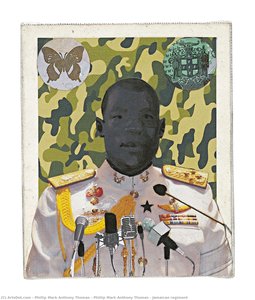
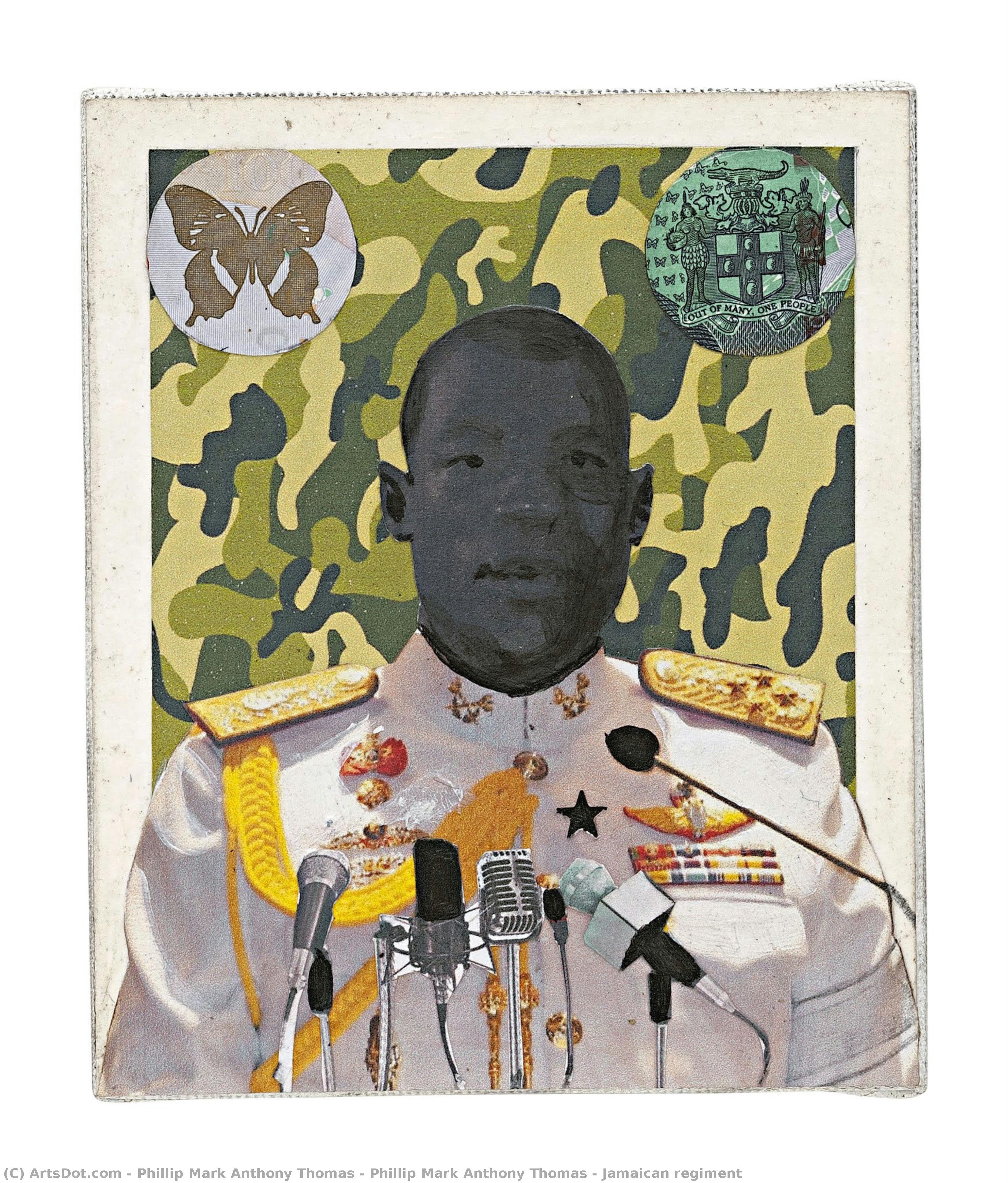
StatsPhillip Mark Anthony Thomas - Jamaican regiment

 Read More
Hand Made Oil Reproduction
Hand-painted oil on canvas in your size and frame, made to order by our artists. ( Switch to Print Switch to Digital Image)




































Pick from our preset sizes that match the artwork's original proportions.

You may enter your own dimensions to fit a specific frame or space. If your selected size does not match the original image's proportions, we will either crop the artwork or extend the painting with additional hand-painted elements. A digital mockup will be sent for your approval before production begins.
Please note that the on-screen preview does not reflect the actual cropping or extension. Only the mockup will accurately show the final composition.
While custom sizes are available, we recommend selecting a dimension from the predefined list to preserve the original proportions.
After order, ArtsDot.com team will email client for instructions and provide a mockup preview
Worldwide Delivery () in 3/4 weeks instead of standard 5 weeks. (8 September). No compromise on quality.

Free Worldwide Express Shipping

High-Quality Linen Canvas

Full Shipping Insurance

Customs Tax Refund Guarantee

True Color Matching Guarantee

100-Day Return Policy (Defects Only)

100% Money-Back Guarantee

Bulk Discount Offer
 Glass option is only available in size under 110 CM

Phillip Mark Anthony Thomas - Jamaican regiment
Reproduction Medium
Reproduction Size
-


Total Price
$ 263
Related Artworks









Artist Biography
Phillip Mark Anthony Thomas: A Caribbean Voice in the Grain
Phillip Mark Anthony Thomas, a Jamaican artist born in Kingston, is more than simply a painter; he’s a cartographer of memory and experience, meticulously charting the complex landscape of his homeland and its diasporic echoes. His work, often characterized by a potent blend of realism and surrealism, isn't about replicating reality but rather excavating it – unearthing layers of history, social commentary, and deeply personal narratives embedded within seemingly familiar scenes. Thomas’s journey is one of constant negotiation between tradition and modernity, colonial legacy and vibrant cultural identity, all rendered with a distinctive visual language that speaks volumes without uttering a single word.
Thomas's artistic education began at Edna Manley College of the Visual and Performing Arts in Kingston, where he honed his foundational skills. Crucially, he supplemented this formal training with a Master’s degree from the New York Academy of Art, an experience that profoundly shaped his approach to painting. This transatlantic sojourn wasn’t merely a pursuit of academic credentials; it was a deliberate immersion into a different artistic ecosystem, exposing him to diverse perspectives and challenging his preconceived notions about representation. The influence of European masters – Turner, Ribera, Velázquez – isn't presented as homage but rather as a critical lens through which he interrogates the historical baggage carried by Western art traditions.
- Early Influences: Thomas cites David Channon, a classical guitarist who provided early instruction, and the Beatles as key formative influences. These seemingly disparate sources – the precision of classical technique and the melodic accessibility of pop music – contribute to the unique texture of his work.
- The CHASE Grant & Cobb Family Foundation: Receiving these prestigious grants underscored Thomas’s potential and provided crucial support during his studies in New York, allowing him to fully dedicate himself to his artistic development.
- Aaron Matalon Award: Winning this award at the National Biennial of Jamaica recognized his emerging talent and established him as a significant voice within the Jamaican art scene.
The Language of Materials: A Hybrid Approach
What distinguishes Thomas’s work isn't solely its subject matter but also the innovative techniques he employs. He deliberately disrupts traditional painting practices, incorporating unconventional materials – tar, bauxite earth, and fragments of found objects – into his compositions. This deliberate juxtaposition creates a visual dialogue between the established conventions of oil painting and the raw materiality of Caribbean life. It’s as if he's attempting to translate the complexities of cultural experience into a tangible form, acknowledging the inherent contradictions and tensions within that process.
Thomas describes this approach as “manufacturing cultural reliquaries,” objects designed to preserve and communicate aspects of Caribbean culture. He isn’t simply depicting scenes; he’s constructing narratives through carefully chosen materials and techniques. The visible seams and imperfections in his paintings – the deliberate lack of seamless integration between disparate elements – serve as a metaphor for the fragmented nature of identity and the ongoing process of cultural negotiation.
Caribbean Identity: Colonial Echoes and Contemporary Voices
At the heart of Thomas’s work lies an exploration of Caribbean identity, particularly its complex relationship with colonialism. His paintings frequently depict scenes that evoke both the grandeur of European heritage and the realities of social inequality within Jamaica. He doesn't shy away from confronting uncomfortable truths about classism, racial dynamics, and the lingering effects of historical oppression.
Thomas’s use of “Master Copies” – reproductions of iconic paintings by Turner, Ribera, and Velázquez – is a deliberate act of subversion. Rather than simply imitating these masters, he employs them as points of departure for his own explorations, layering them with contemporary imagery and social commentary. This creates a dynamic dialogue between the past and present, suggesting that colonial legacies continue to shape Caribbean societies today.
Recognition and Legacy
Phillip Mark Anthony Thomas’s work has garnered significant recognition within Jamaica and internationally. He's been featured in numerous exhibitions, including the National Biennial of Jamaica, the Super Plus Under 40 Artist of the Year competition, and a solo show at the Olympia Gallery. His paintings have been acquired by prestigious institutions, including the World Bank, signifying his growing influence as an artist and cultural commentator.
More than just an artist, Thomas is a vital voice in contemporary Caribbean art – one who challenges conventional notions of representation, embraces hybridity, and confronts difficult truths with both sensitivity and conviction. His work invites viewers to engage in a critical dialogue about history, identity, and the ongoing struggle for social justice.
phillip mark anthony thomas
Jamaica
Quick Facts
- Artistic Movement Or Style: Mixed media drawings
- Artists Or Movements Influenced By This Artist: ['Western art history']
- Artists Who Influenced This Artist:
- Turner
- Ribera
- Velazquez
- Full Name: Phillip Mark Anthony Thomas
- Nationality: Jamaican
- Notable Artworks: ['Phillip Mark Anthony Thomas - Jamaican regiment']
- Place Of Birth: Kingston, Jamaica