

 Preview
 Send
Send Share
Share
 Details

 Download
 Similars
 X-Ray
X-Ray Diaporama
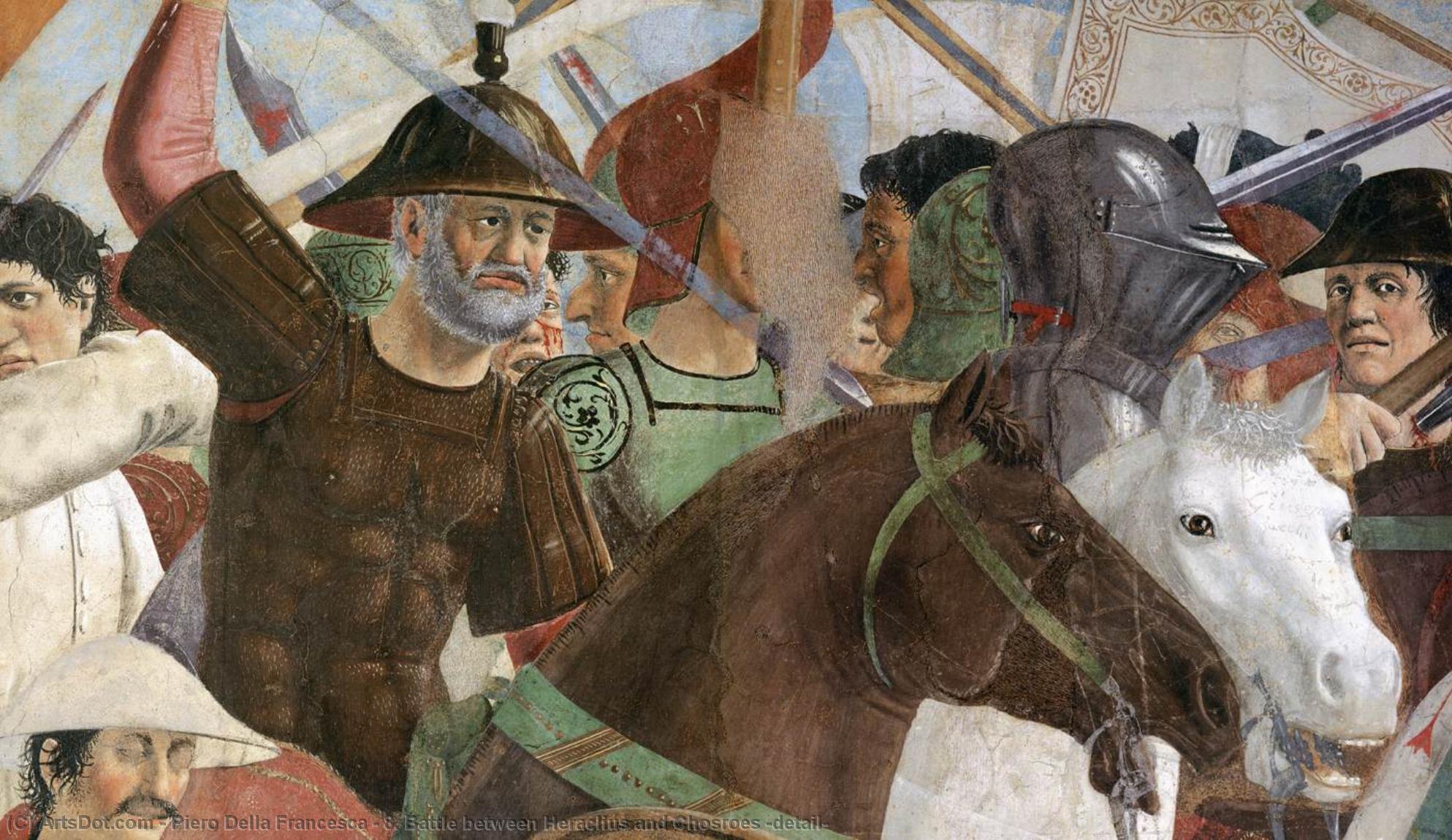
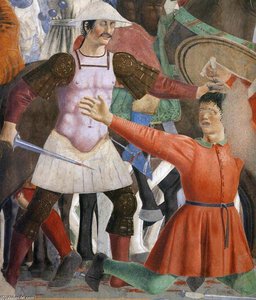
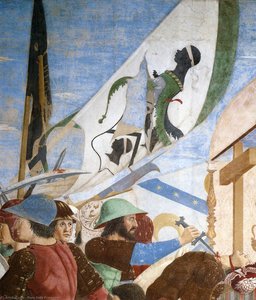
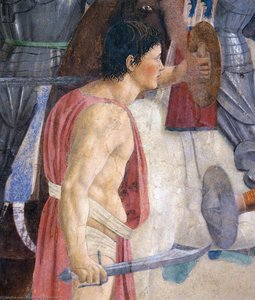
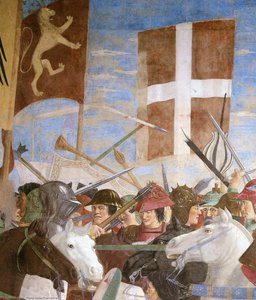
8. Battle between Heraclius and Chosroes (detail)


 Read More
Purchase a high-resolution, enhanced digital image, far superior to the online preview.
Each file is meticulously prepared by our in-house specialists using advanced tools and expert manual retouching. We ensure every image has exceptional clarity, precise color accuracy, and fine detail.
The final file is delivered via email within 72 hours, optimized for immediate use in professional, editorial, and print environments. This is the same quality trusted by top-tier design studios, publishers, and galleries.
Digital Image
Download a high-resolution file for personal display, printing, and creative projects. ( Buy Print Buy Hand Made Painting)
Included in Every Digital Image Order
Expert Digital Delivery, Guaranteed
When you choose ArtsDot.com, you're not just getting an image - you're receiving a professionally enhanced digital artwork, crafted with precision and backed by a satisfaction guarantee. Here's everything that comes with your order, automatically:

Fast Email Delivery
Your high-resolution digital image file will be emailed to you within 72 hours of ordering - ready for immediate use.

AI-Enhanced Digital File
Your artwork is professionally optimized using advanced AI tools and manual editing, ensuring maximum detail, clarity, and color accuracy.

Free Lifetime Re-Delivery
Accidentally deleted or lost your file? No worries - we'll resend it to you anytime, free of charge.

No Import Fees - Ever
Enjoy your artwork instantly with zero customs, duties, or delivery fees - digital downloads are always tax-free.

Color Accuracy Guarantee
We ensure your digital image reflects the original colors as closely as possible using professional tools and color management.

60-Day Satisfaction Guarantee
If you're not satisfied with your digital image, we'll revise it or refund 100% within 60 days - no questions asked.

100% Money-Back Guarantee
Not satisfied? Get a full refund within 60 days of receiving your digital file - no questions asked.

Bulk Order Discounts
Buy 3 images, save 10% - Buy 5, save 15% - Buy 10+, save 20%. Great for creative projects, galleries, and agencies.
Collectible Description
A Clash of Empires: Piero della Francesca’s Dramatic Depiction of Heraclius and Chosroes
Piero della Francesca's "Battle between Heraclius and Chosroes (detail)," painted in 1452, isn’t merely a historical record; it’s a meticulously constructed tableau of power, conflict, and the calculated beauty of Renaissance art. Housed within the Basilica of San Francesco in Arezzo, Italy – alongside his monumental “Legend of the True Cross” – this fresco fragment offers a profound glimpse into the political and artistic landscape of its time. The scene unfolds with an arresting dynamism, capturing not just the physical violence of the battle between the Byzantine Emperor Heraclius and the Sassanian King Chosroes, but also the strategic maneuvering and psychological weight inherent in such a confrontation. The detail itself is remarkable; it’s a concentrated burst of narrative energy, a microcosm of a larger historical drama rendered with astonishing precision.
Masterful Composition and Pioneering Perspective
Piero della Francesca's genius lies not just in his subject matter but in the way he presents it. The composition is remarkably balanced, drawing the eye through a carefully orchestrated arrangement of figures and elements. He employs a sophisticated understanding of linear perspective – a technique still relatively new to Italian painting at this time – creating an illusion of depth that pulls the viewer directly into the heart of the fray. Notice how the larger, more detailed figures in the foreground dominate our attention, while those receding into the distance are subtly diminished, conveying a sense of spatial recession and strategic importance. The placement of the banners, billowing against the sky, adds to this feeling of vastness and movement, mirroring the scale of the conflict itself. The use of light is equally masterful; it’s not merely illuminating the scene but shaping our perception, highlighting key figures and emphasizing the drama unfolding before us.
Symbolism Woven into a Historical Narrative
Beyond its immediate depiction of battle, “Heraclius and Chosroes” is rich in symbolic meaning. The clash between these two empires represented a pivotal moment in Late Antiquity, a struggle for religious dominance and control over the Holy Land. The presence of the horses – symbols of power and military might – underscores the brutal nature of the conflict. The armor worn by the soldiers speaks to their preparedness and dedication, while the scattered weaponry hints at the chaos and destruction inherent in war. Even the dogs present in the scene are not incidental; they often symbolize loyalty or vigilance, adding another layer of interpretation to this complex historical tableau. The stolen wood of the True Cross, central to the narrative, is a potent symbol of faith and divine authority – a prize fiercely contested by both empires.
A Renaissance Masterpiece: Technique and Emotional Resonance
Piero della Francesca’s technique is characterized by its clarity, restraint, and intellectual rigor. He eschewed the emotional excesses of some of his contemporaries, opting instead for a more objective and analytical approach to representation. His figures are rendered with an almost sculptural quality, their forms defined by precise lines and subtle modeling. The color palette is restrained – dominated by earthy tones—contributing to the fresco’s overall sense of solemnity and gravitas. Yet, despite this apparent detachment, the painting possesses a powerful emotional resonance. The intensity of the battle, the vulnerability of the soldiers, and the weight of historical consequence all combine to create an image that is both captivating and deeply moving. It's a testament to Piero’s ability to convey complex narratives through masterful technique and carefully considered composition.
ArtsDot offers exquisite, hand-painted reproductions of this extraordinary fresco detail, allowing you to bring the drama and intellectual depth of Piero della Francesca’s “Battle between Heraclius and Chosroes” into your home or studio. Explore our collection today and experience a timeless masterpiece firsthand.
Related Artworks
![The Arezzo Cycle - Battle Between Heraclius And Chosroes (detail) [01] — Piero Della Francesca, Early Renaissance](/media/artworks/images/thumbnails/56/34/56340c8d40584593b4b5d631a8d314cf.jpg)
![The Arezzo Cycle - Battle Between Heraclius And Chosroes (detail) [04] — Piero Della Francesca, Early Renaissance](/media/artworks/images/thumbnails/49/ca/49ca3a0803bc4919a549aea75bf266eb.jpg)
![Stanze Vaticane - The Liberation Of St Peter (detail) [01] — Raphael, High Renaissance](/media/artworks/images/thumbnails/01/72/01722379cc97471e9146fa80b9b83e3b.jpg)
Artist Biography
A Tuscan Visionary: The Life and Art of Piero della Francesca
Born around 1415 in the quiet Umbrian town of Sansepolcro, Piero di Benedetto de’ Franceschi – known to history as Piero della Francesca – emerged from a relatively obscure background to become one of the most intellectually rigorous and profoundly influential painters of the Early Renaissance. Unlike many of his contemporaries whose lives are richly documented, Piero remains somewhat enigmatic; details about his family and early training are scarce. What *is* certain is that he possessed an extraordinary mind, equally captivated by the emerging artistic currents of Florence and the precise languages of mathematics and geometry. His father was a shoemaker and tanner, providing Piero with a stable if unostentatious upbringing, and it’s believed his initial artistic education occurred locally, absorbing the traditions of central Italian painting before the seismic shifts initiated by Masaccio and Brunelleschi. This early grounding would prove crucial in shaping his unique synthesis of Gothic grace and Renaissance innovation.
Florence and the Dawn of a New Aesthetic
Around 1439, Piero journeyed to Florence, a city then pulsating with artistic energy. This period proved transformative. He collaborated with Domenico Veneziano on frescoes for the church of Sant’Egidio, an experience that exposed him directly to the burgeoning Florentine style. More importantly, he immersed himself in the study of Masaccio's groundbreaking frescoes in the Brancacci Chapel – a revelation in naturalism and spatial illusion. The influence of Brunelleschi’s architectural innovations, particularly his mastery of linear perspective, also deeply impacted Piero’s artistic development. He didn’t merely adopt these techniques; he *analyzed* them, dissecting their underlying mathematical principles. This analytical approach would become the hallmark of his work, setting him apart from many of his peers. He absorbed the Florentine emphasis on realism and anatomy but filtered it through a distinctly personal lens, one characterized by stillness, clarity, and an almost austere beauty. Upon returning to Sansepolcro in the 1440s, Piero began establishing himself as a leading artist, though he continued to travel and work throughout Italy for decades.
Masterpieces of Light and Geometry
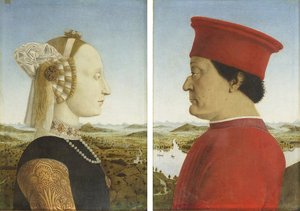
Piero della Francesca’s artistic legacy rests on a relatively small but exceptionally powerful body of work. Perhaps his most celebrated achievement is the fresco cycle *The History of the True Cross* in the church of San Francesco, Arezzo. This monumental narrative unfolds with remarkable clarity and serenity, depicting scenes from the legend of the wood of the cross with an unprecedented sense of spatial depth and psychological insight. The figures are not merely representations of biblical characters; they are imbued with a quiet dignity and contemplative stillness that elevates them to archetypal forms. The *Montefeltro Altarpiece*, now in Milan’s Brera Gallery, showcases his mastery of oil painting and refined portraiture, featuring striking depictions of Federico da Montefeltro and Battista Sforza – portraits celebrated for their psychological acuity and meticulous detail. The *Baptism of Christ* in the National Gallery, London, is another testament to his skill; its elegant composition, luminous colors, and subtle exploration of light create an atmosphere of profound spiritual resonance. His style consistently demonstrates a commitment to geometric precision, balanced compositions, and a restrained palette, utilizing light and shadow not merely for aesthetic effect but as tools for defining form and creating a sense of palpable volume.
Beyond the Brush: A Mathematician’s Vision
What truly distinguishes Piero della Francesca is his unique intellectual breadth. He was not simply an artist; he was also a mathematician, geometer, and author. His treatise *De Prospectiva Pingendi* (On Perspective Painting) stands as one of the earliest formal treatises on perspective, demonstrating his profound understanding of mathematical principles and their application to art. This work wasn’t merely theoretical; it informed every aspect of his painting. He meticulously calculated spatial relationships, employed geometric constructions to organize compositions, and used light not just to illuminate but to define form with scientific precision. His interest in optics further enhanced his ability to create illusions of depth and realism. This fusion of artistic sensibility and mathematical rigor is what gives Piero’s work its enduring power and intellectual weight. He believed that beauty resided in order and proportion, and he sought to translate these principles into visual form.
A Lasting Legacy
Piero della Francesca died in 1492, leaving behind a legacy that would not be fully appreciated for centuries. Though not as prolific as some of his contemporaries like Leonardo da Vinci or Michelangelo, his surviving works exerted a subtle but profound influence on generations of artists. Leonardo himself studied Piero’s techniques and admired his mastery of light and shadow. Raphael, too, drew inspiration from his compositions and spatial arrangements. In the 20th century, art historians rediscovered Piero's work, recognizing him as a pivotal figure in the development of Renaissance art – a bridge between the International Gothic style and the High Renaissance. His emphasis on mathematical perspective, realistic representation, and serene humanism continues to resonate with artists and viewers alike, solidifying his place as one of the most important and enduring masters of the Italian Renaissance. His paintings are not merely beautiful objects; they are windows into a world where art, science, and spirituality converge in harmonious balance.
Piero della Francesca
1415 - 1492 , Italy
Quick Facts
- Artistic Movement Or Style: Early Renaissance
- Artists Or Movements Influenced By This Artist:
- Leonardo da Vinci
- Raphael
- Artists Who Influenced This Artist:
- Masaccio
- Domenico Veneziano
- Date Of Birth: c. 1415
- Date Of Death: 1492
- Full Name: Piero della Francesca
- Nationality: Italian
- Notable Artworks:
- The Resurrection
- Montefeltro Altarpiece
- Baptism of Christ
- True Cross frescoes
- Place Of Birth: Sansepolcro, Italy

