 Preview
 Send
Send Share
Share
 Details

 Download
 Similars
 X-Ray
X-Ray Diaporama
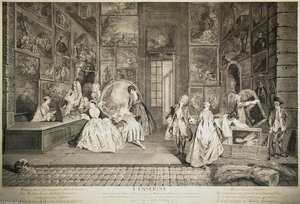
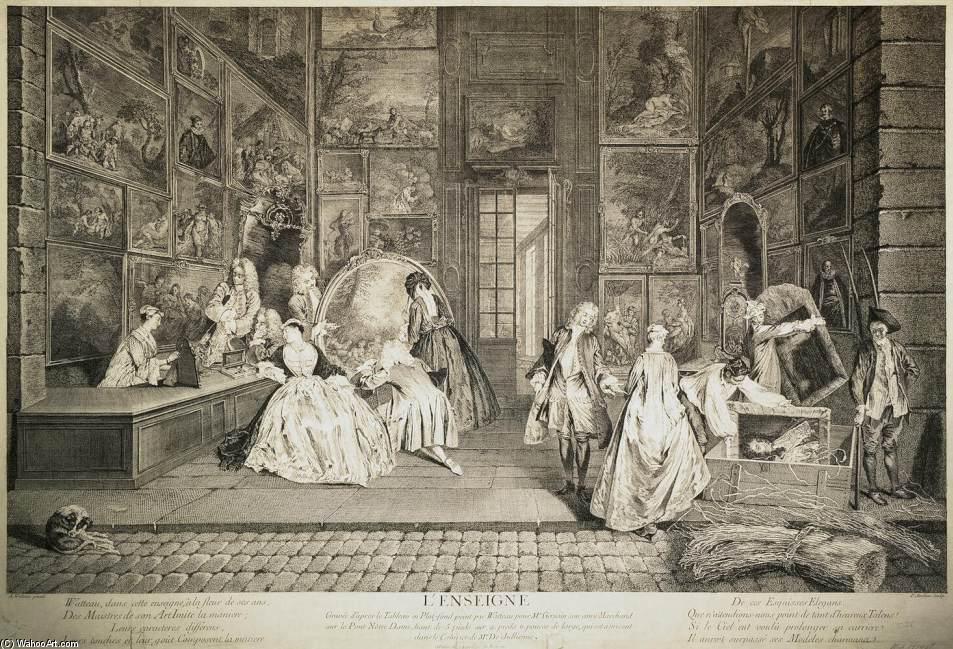
The Signboard of the Gersaint Gallery
 1732
1732 587.0 x 865.0 cm
 Hermitage Museum
 Read More
Hand Made Oil Reproduction
Hand-painted oil on canvas in your size and frame, made to order by our artists. ( Buy Print Buy Image)




































Pick from our preset sizes that match the artwork's original proportions.

You may enter your own dimensions to fit a specific frame or space. If your selected size does not match the original image's proportions, we will either crop the artwork or extend the painting with additional hand-painted elements. A digital mockup will be sent for your approval before production begins.
Please note that the on-screen preview does not reflect the actual cropping or extension. Only the mockup will accurately show the final composition.
While custom sizes are available, we recommend selecting a dimension from the predefined list to preserve the original proportions.
After order, ArtsDot.com team will email client for instructions and provide a mockup preview
Worldwide Delivery () in 3/4 weeks instead of standard 5 weeks. (29 August). No compromise on quality.

Free Worldwide Express Shipping

High-Quality Linen Canvas

Full Shipping Insurance

Customs Tax Refund Guarantee

True Color Matching Guarantee

60-Day Return Policy (Defects Only)

100% Money-Back Guarantee

Bulk Discount Offer
 Glass option is only available in size under 110 CM

The Signboard of the Gersaint Gallery
Reproduction Medium
Reproduction Size
-


Total Price
$ 263
Related Artworks





Artist Biography
Pierre-Alexandre Aveline: The Echoes of Watteau and the Pursuit of Precision
Born in the heart of Paris in 1702, Pierre-Alexandre Aveline emerged from a lineage steeped in artistic tradition. His father, Pierre Aveline – himself a respected engraver – and brother, Antoine Aveline, established a family legacy deeply intertwined with the burgeoning world of printmaking in France. This familial connection provided Aveline with an invaluable foundation, immersing him in the techniques and aesthetic sensibilities that would define his own career. While often overshadowed by his more prominent siblings, Pierre-Alexandre carved out a distinct niche for himself, primarily through his meticulous reproductions of masterworks – a practice that reveals both his technical skill and his profound appreciation for the artistic canon.
Aveline’s journey began within the structured environment of the Académie de peinture et de sculpture in Paris. Joining this prestigious institution in 1737, he honed his skills primarily with copperplate engraving, a medium that demanded both precision and sensitivity. This choice reflects a deliberate approach – Aveline wasn't simply replicating images; he was meticulously translating them onto paper, striving for an accuracy of detail that bordered on obsessive. His work quickly gained recognition, particularly for his ability to faithfully reproduce the delicate brushstrokes and nuanced compositions of other artists, most notably Antoine Watteau and François Boucher.
The Reproduction as Art: Aveline’s Unique Contribution
Aveline's true significance lies not in his original creations – he produced portraits, illustrations, and decorative plates – but rather in his extraordinary skill at reproducing the works of others. This practice was far from mere copying; it represented a significant artistic undertaking. He didn’t merely trace an image; he dissected it, analyzing its structure, color palette, and tonal values before painstakingly rendering them anew. His most celebrated achievement is undoubtedly “The Signboard of the Gersaint Gallery” (1737), a remarkably detailed reproduction of Watteau's iconic painting. This work demonstrates Aveline’s mastery of chiaroscuro, his ability to capture the subtle interplay of light and shadow, and his unwavering commitment to accuracy.
The act of reproducing art was itself a complex process in the 18th century. It required considerable skill, patience, and an understanding of both the original artwork and the limitations of the engraving medium. Aveline’s reproductions were not simply decorative; they served as valuable visual records, allowing collectors and scholars to study and appreciate masterpieces that might otherwise have been inaccessible. Furthermore, his work played a crucial role in disseminating artistic styles and trends throughout Europe.
Influences and Artistic Style
Aveline’s style is deeply rooted in the Rococo aesthetic – characterized by its elegance, grace, and playful use of color. He was profoundly influenced by the works of Watteau and Boucher, both leading figures of the Rococo movement. Watteau's emphasis on atmosphere and fleeting moments, combined with Boucher’s masterful handling of light and form, clearly shaped Aveline’s approach to engraving. His reproductions often retain a sense of the original’s charm and vivacity, while simultaneously showcasing his own technical prowess.
Beyond these key influences, Aveline's work also reflects the broader artistic trends of the time. The rise of printmaking as a popular art form during the 18th century created a demand for skilled engravers capable of producing high-quality reproductions. Aveline’s success demonstrates his ability to meet this demand while simultaneously pushing the boundaries of the medium.
Legacy and Historical Significance
Pierre-Alexandre Aveline died in Paris in 1760, leaving behind a substantial body of work that continues to be admired for its technical skill and artistic sensitivity. While he may not have achieved the same level of fame as his contemporaries, his contributions to the world of printmaking are undeniable. His reproductions played a vital role in preserving and disseminating the works of Watteau, Boucher, and other masters, ensuring their continued appreciation by future generations.
Furthermore, Aveline’s dedication to meticulous reproduction highlights the importance of craftsmanship and attention to detail in the creation of art. His work serves as a testament to the power of observation, analysis, and technical skill – qualities that remain essential to all forms of artistic expression.
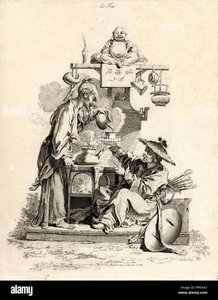
pierre alexandre aveline
1702 - 1760 , France
Quick Facts
- Artistic Movement Or Style: Rococo engraving
- Artists Or Movements Influenced By This Artist:
- Watteau
- Boucher
- Artists Who Influenced This Artist: ['Pierre Aveline (father)']
- Date Of Birth: 1702 Paris, France
- Date Of Death: 1760 Paris, France
- Full Name: Pierre-Alexandre Aveline
- Nationality: French
- Notable Artworks:
- The Signboard of Gersaint
- Water, from The Four Elements
- Place Of Birth: Paris, France