 Preview
 Send
Send Share
Share
 Details

 Download
 Similars
 X-Ray
X-Ray Diaporama
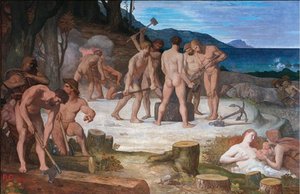
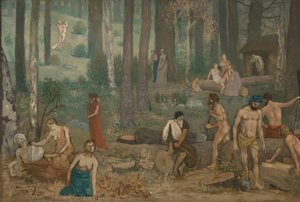
The Woodcutters
 Oil On Canvas
- WallArt
- Symbolism
 1873
1873- 19th Century
 76.0 x 111.0 cm
 San Antonio Museum of Art
 Read More
Hand Made Oil Reproduction
Hand-painted oil on canvas in your size and frame, made to order by our artists. ( Buy Print Buy Image)




P118B $10

P118H $10

P118W $10

P438Z $10

P508JH $12

P508YH $12

P805H $10

P805Z $10

P919BZ $10

P919G $10

P919XJ $10

P959ZH $10

P968JZ $12

W106C $8

W218G $10

W218JH $8

W218Y $10

W307PJ $10

W316G $10

W316PJ $8

W316Y $10

W398PJ $8

W4111J $10

W500HY $15

W500JH $15

W692G $12

W849H $8

W940BG $15

W953PJ $8




Pick from our preset sizes that match the artwork's original proportions.

You may enter your own dimensions to fit a specific frame or space. If your selected size does not match the original image's proportions, we will either crop the artwork or extend the painting with additional hand-painted elements. A digital mockup will be sent for your approval before production begins.
Please note that the on-screen preview does not reflect the actual cropping or extension. Only the mockup will accurately show the final composition.
While custom sizes are available, we recommend selecting a dimension from the predefined list to preserve the original proportions.
After order, ArtsDot.com team will email client for instructions and provide a mockup preview
Worldwide Delivery () in 3/4 weeks instead of standard 5 weeks. (16 August). No compromise on quality.

Free Worldwide Express Shipping

High-Quality Linen Canvas

Full Shipping Insurance

Customs Tax Refund Guarantee

True Color Matching Guarantee

60-Day Return Policy (Defects Only)

100% Money-Back Guarantee

Bulk Discount Offer
 Glass option is only available in size under 110 CM

The Woodcutters
Reproduction Medium
Reproduction Size
-


Total Price
$ 263
Artwork Description
A Pastoral Dreamscape: The Essence of The Woodcutters
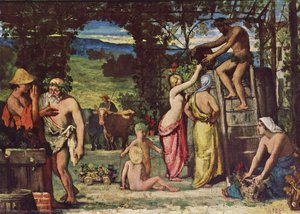
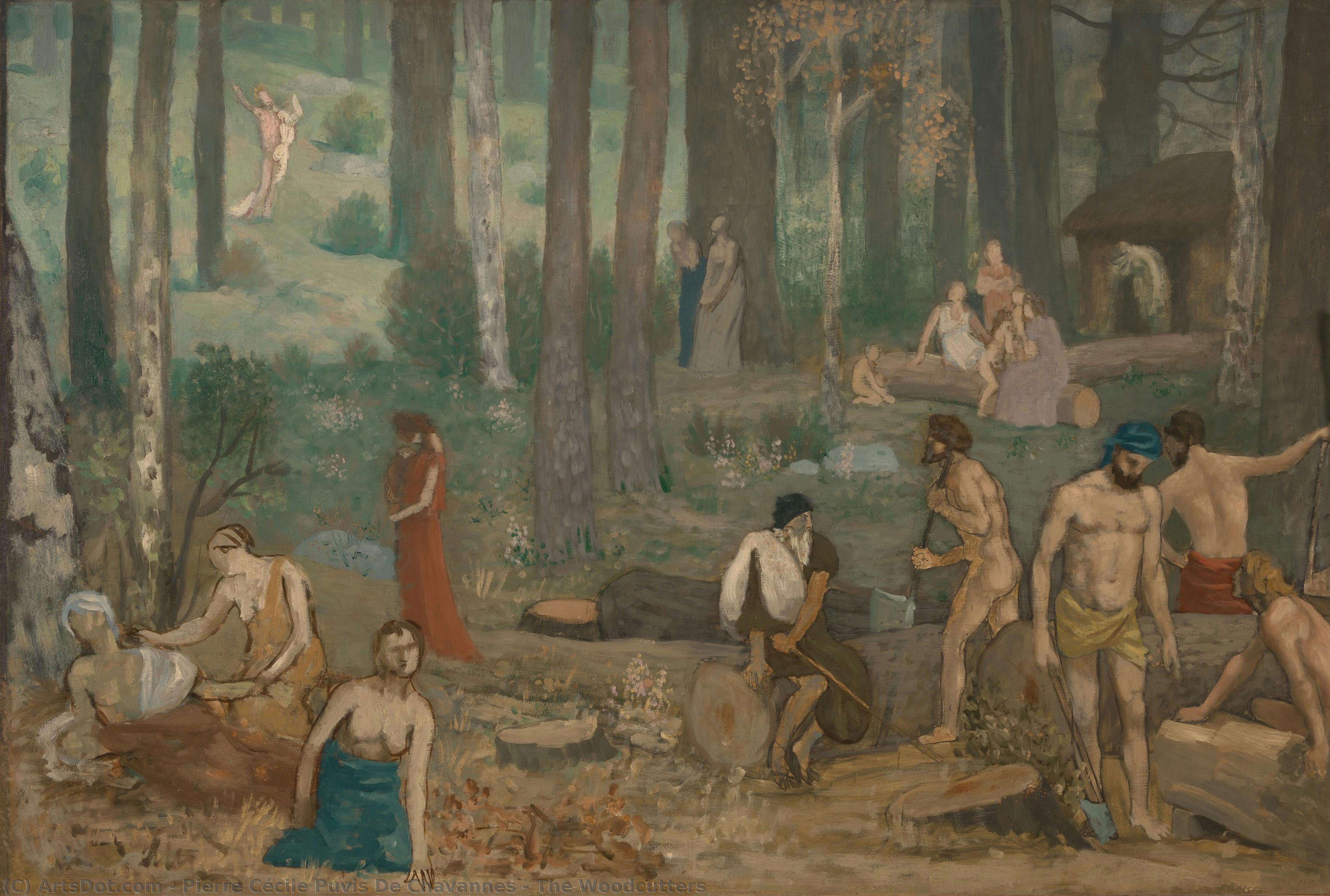
In the quietude of a sun-dappled forest, Pierre Cécile Puvis de Chavannes invites us into a realm where time seems to suspend its forward march. The Woodcutters is not merely a depiction of labor; it is an evocative window into a primordial state of harmony between humanity and nature. The scene unfolds with a sense of profound stillness, capturing a diverse group of figures—men, women, and children—engaged in the rhythmic, elemental tasks of woodland life. As one gazes upon the canvas, there is an immediate sense of camaraderie and shared purpose. The presence of scattered bowls and a rustic cabin suggests a communal existence, a moment of respite where the boundaries between the domestic and the wild blur into a singular, peaceful narrative.
The composition possesses a unique, dreamlike quality that distinguishes it from the more frenetic energy of the Impressionist movement. While his contemporaries were obsessed with the fleeting effects of light, Puvis de Chavannes sought something more enduring and monumental. In The Woodcutters, we see the artist’s mastery of spatial flatness and a deliberate, almost sculptural approach to form. The figures in the foreground, particularly the men engaged in their toil, are rendered with a robust modeling that gives them a tactile presence, yet they remain anchored within a landscape that feels as much like a memory as it does a physical place. This interplay between weight and ethereal lightness creates a captivating tension, drawing the viewer deeper into the forest's mysterious embrace.
Symbolism and the Classical Echo
Beneath the surface of this pastoral scene lies a layer of profound symbolic depth that invites endless interpretation. The painting functions as an enigmatic allegory, where every element may whisper of a larger, classical truth. A particularly striking detail is the figure descending a distant hill in the background, carrying a lyre. This silhouette strongly evokes Orpheus, the mythical poet whose music could charm even the inanimate objects of nature. Through this subtle inclusion, the artist may be suggesting the civilizing power of art and culture—the idea that melody and myth can harmonize the raw, untamed impulses of human existence. It transforms a simple scene of woodcutting into a meditation on the civilizing effects of the human spirit upon the natural world.
The color palette further enhances this sense of timelessness. Utilizing chalky, muted tones and strong, deliberate outlines, Puvis de Chavannes achieves a decorative elegance that feels both ancient and modern. The soft greens, earthy browns, and pale ochres create a cohesive atmosphere that avoids the jarring transitions of realism, opting instead for a rhythmic unity. For the discerning collector or interior designer, this piece offers more than just visual beauty; it provides an emotional anchor. It is a work that commands attention through its subtlety, offering a sense of tranquility and intellectual depth that can transform any sophisticated space into a sanctuary of reflection.
A Masterpiece for the Modern Interior
For those looking to curate a collection defined by elegance and historical significance, The Woodcutters stands as an incomparable choice. As a high-quality reproduction, this artwork brings the monumental vision of a master who revived the art of the mural into the intimate setting of a home or gallery. The painting’s ability to evoke a mood of serenity and nostalgia makes it a versatile centerpiece, capable of complementing both classical and contemporary decor. It serves as a conversation piece that bridges the gap between the nineteenth-century French tradition and the modern desire for peace in an increasingly chaotic world.
Owning a piece of this caliber is an investment in atmosphere. Whether placed in a sunlit study or a grand living hall, the painting’s soft textures and evocative subject matter provide a constant source of inspiration. It invites the eye to wander through its woods, to discover the hidden figures among the trees, and to lose oneself in the eternal, quiet beauty of Puvis de Chavannes' vision. To display this work is to invite the timeless spirit of the forest and the enduring legacy of French Symbolism into one's personal environment.
Related Artworks

Artist Biography
A Life Dedicated to Monumental Visions
Pierre Cécile Puvis de Chavannes, a name often simply rendered as Puvis de Chavannes, occupies a unique and pivotal position in 19th-century French art. Born in Lyon in 1824, he rose to become known as “the painter for France,” a testament to his profound impact on public art during the early years of the Third Republic. His legacy extends far beyond mere decoration; Puvis de Chavannes crafted visual narratives that embodied national ideals and resonated with a generation grappling with political and social transformation. He wasn’t merely illustrating history, but actively shaping its visual memory for the future. His influence on subsequent artists, particularly those aligned with Symbolism and Art Nouveau, is undeniable, and his collaborative spirit extended to working alongside medallists, offering designs and insightful suggestions.From Engineering Aspirations to Artistic Devotion
The early life of Pierre-Cécile Puvis was marked by a trajectory that initially diverged from the world of art. Born into a family of modest means – his father an engineer descended from Burgundy nobility – he received an education at Amiens College and Lycée Henri IV in Paris, preparing him for a career following in his father’s footsteps. However, a serious illness proved to be a turning point, forcing a period of convalescence that allowed space for introspection and the burgeoning of artistic inclinations. A transformative journey to Italy ignited within him a passion for painting, prompting a decisive shift away from engineering and towards a life dedicated to creative expression. He embraced his ancestral heritage by incorporating “de Chavannes” into his name, a subtle assertion of identity and lineage. His formal training included brief mentorships under luminaries like Eugène Delacroix, Henri Scheffer, and Thomas Couture, yet he ultimately favored independent study, establishing a spacious studio near the Gare de Lyon that became a hub for artistic exploration. He diligently honed his understanding of anatomy through classes at the Académie des Beaux Arts, laying a solid foundation for his later monumental works.The Genesis of a Symbolist Style
Puvis de Chavannes’s artistic style is generally categorized as Symbolist, though it evolved from roots in Romanticism. His work is instantly recognizable by its simplified forms, rhythmic linear compositions, and a distinctive, muted palette reminiscent of fresco painting. He wasn't interested in photographic realism; instead, he sought to distill essence, to capture the underlying spirit of his subjects. He frequently drew inspiration from classical antiquity and idealized landscapes, weaving allegorical themes into grand narratives. His early commissions, beginning in the 1860s at the Musée de Picardie in Amiens – including *Concordia*, *Bellum*, *Le Travail* (Work), and *Le Repos* (Rest) – established his reputation for large-scale mural paintings. These weren’t simply decorative elements; they were carefully considered statements about civic virtue, labor, and the pursuit of harmony. Later, a significant series of murals commissioned for the Museum of Fine Arts in Lyon further cemented his position as a leading figure in public art. Notable works like *The Woodcutters* (1873), currently housed at the San Antonio Museum of Art, demonstrate his ability to imbue everyday scenes with symbolic weight and poetic grace. Paintings such as *Massilia, Greek Colony*, and *Sacred Grove* exemplify his characteristic style and thematic interests, showcasing nude figures within evocative landscapes that invite contemplation.A Lasting Legacy: Influence and Historical Significance
The impact of Puvis de Chavannes on the artistic landscape of France – and beyond – was profound. He is credited with influencing an entire generation of painters and sculptors, particularly those associated with Modernism. His emphasis on simplified forms, decorative patterns, and allegorical themes resonated deeply with artists seeking to break away from traditional academic constraints. Georges de Feure was among his notable protégés, benefiting directly from his guidance and mentorship. Beyond painting, Puvis actively collaborated with medallists, providing designs and suggestions that enriched their work. Émile Zola eloquently lauded his art as “an art made of reason, passion, and will,” capturing the intellectual and emotional depth inherent in his creations. His most celebrated achievement lies in his contribution to the development of public art during a period of significant political and social change in France. His murals weren’t merely aesthetic enhancements; they were intended to embody national ideals and provide visual narratives for civic spaces, fostering a sense of collective identity and shared values. The monumental murals at the Panthéon in Paris, illustrating the life of St. Geneviève, stand as enduring testaments to his skill and vision. Puvis de Chavannes remains an important figure in 19th-century French art, bridging the gap between Romanticism and Symbolism and paving the way for the artistic innovations of the modern era. His work continues to inspire awe and admiration, reminding us of the power of art to shape our understanding of history, culture, and the human condition.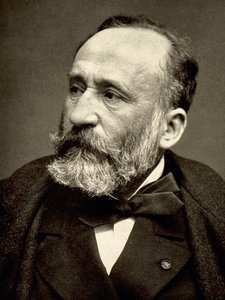
Pierre Cécile Puvis de Chavannes
1824 - 1898 , France
Quick Facts
- Artistic Movement Or Style: Symbolism
- Artists Or Movements Influenced By This Artist:
- Robert Genin
- Art Nouveau
- Modernism
- Artists Who Influenced This Artist:
- Delacroix
- Scheffer
- Couture
- Date Of Birth: December 14, 1824
- Date Of Death: 1898
- Full Name: Pierre Cécile Puvis de Chavannes
- Nationality: French
- Notable Artworks:
- The Woodcutters
- Massilia
- Sacred Grove
- Peace
- Study for Patriotism
- Place Of Birth: Lyon, France
Related Articles
Elevating Interiors: How Murals are Redefining Kitchens and Bathrooms
Transform your kitchen & bathroom with stunning murals! Explore design trends, durable materials & expert advice. Elevate your interiors with 's bespoke mural solutions.

From Jungle Scenes to Gold Leaf Geometry: A Guide to Today's Most Requested Mural Styles
Explore today's top mural styles for hotels & commercial spaces! Discover trends, expert insights, & custom design solutions. Elevate your space with .
Anchoring Interior Design with Murals: A Comprehensive Guide for Hotel Designers
Elevate your hotel's design with impactful murals! Our expert guide explores anchoring interior spaces, thematic storytelling & durable solutions for luxury hospitality. Discover bespoke art options & elevate the guest experience.
Transforming Spaces: How Custom Murals Forge Brand Identity & Enhance Customer Experience
Elevate your brand & spaces with custom murals. Explore expert insights on design, artists, materials & installation. Transform environments – discover 's bespoke solutions.
Elevating Entryways: Transforming Foyers with Artful Murals - A Designer's Guide
Transform your foyer with stunning murals! Explore design trends, artist insights & expert advice for creating a memorable entryway. Discover custom mural solutions at .