 Preview
 Send
Send Share
Share
 Details

 Download
 Similars
 X-Ray
X-Ray Diaporama
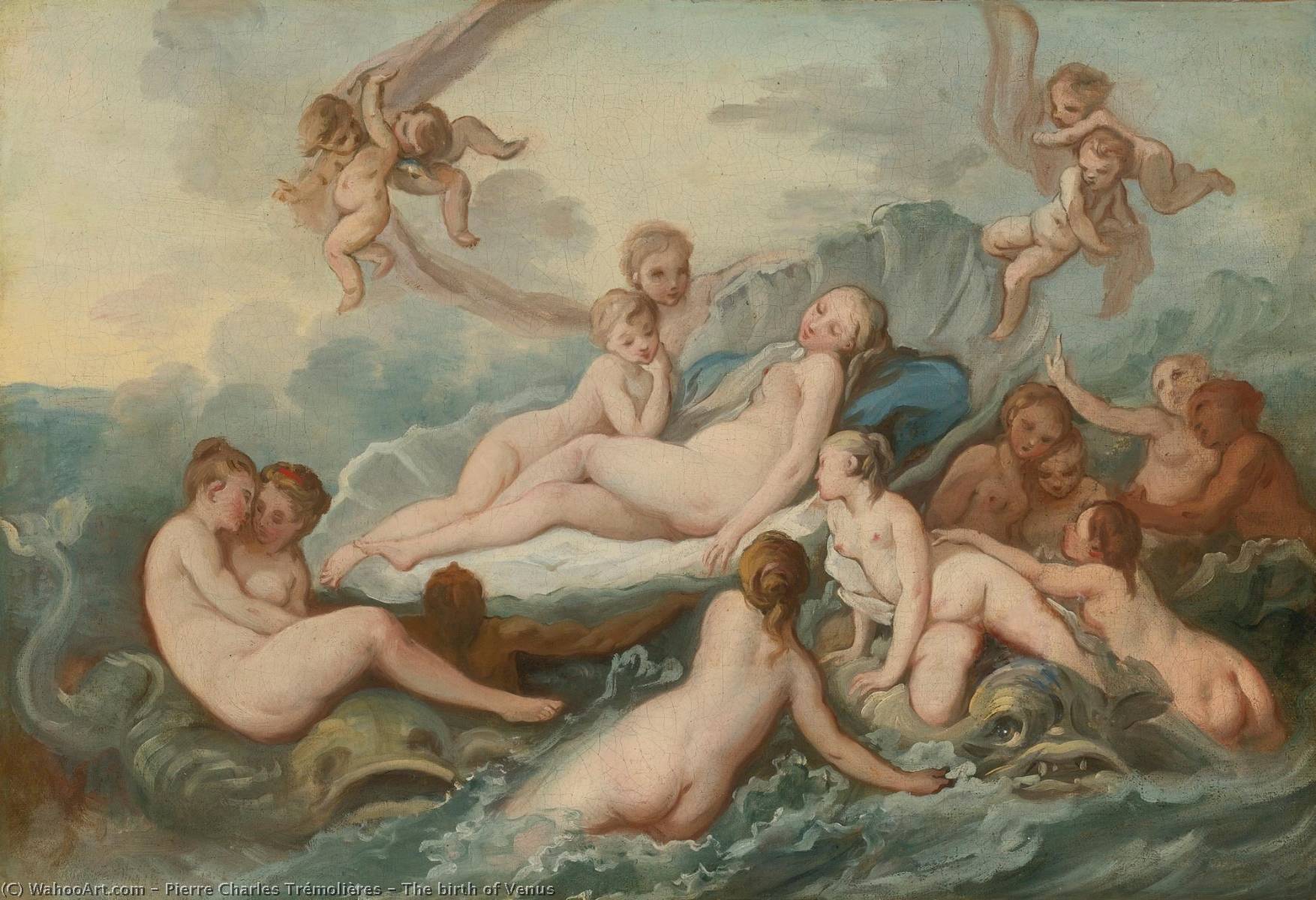
The birth of Venus
 38.0 x 55.0 cm
 Read More
Giclée / Art Print
Museum-quality giclée or canvas print with fast production and flexible finish options. ( Buy Hand Made Painting Buy Image)




































Pick from our preset sizes that match the artwork's original proportions.

You may enter your own dimensions to fit a specific frame or space. If your selected size does not match the original image's proportions, we will either crop the artwork or extend the image with a mirrored or solid-fill edge. A digital mockup will be sent for your approval before production begins.
Please note that the on-screen preview does not reflect the actual cropping or extension. Only the mockup will accurately show the final composition.
While custom sizes are available, we recommend selecting a dimension from the predefined list to preserve the original proportions.
Worldwide Delivery () in 2 weeks instead of standard 4/5 weeks. (28 August)

Free Worldwide Express Shipping

High-Quality Linen Canvas

Full Shipping Insurance

Customs Tax Refund Guarantee

True Color Matching Guarantee

60-Day Return Policy (Defects Only)

100% Money-Back Guarantee

Bulk Discount Offer
 Glass option is only available in size under 110 CM

The birth of Venus
Giclée / Art Print
Reproduction Size
-


Total Price
$ 63
Related Artworks








Artist Biography
The Architect of Light and Illusion
In the vibrant, sun-drenched era of late Baroque France, few artists possessed the ability to transform a static room into a breathing, luminous sanctuary quite like Pierre-Charles Trémolières. Born in 1703 in Cholet, his life was a brief but brilliant meteor across the artistic firmament of the eighteenth century. Though his career was tragically cut short by his death in Paris in 1739, he left behind a legacy defined by an extraordinary mastery of space and a pioneering spirit that sought to dissolve the boundaries between architecture and canvas. Trémolières did not merely paint surfaces; he sculpted light, using color and composition to breathe life into the very walls of the most prestigious institutions of his time.
Trémoli andères’s artistic journey began in earnest when he was sent to Paris at a young age, where he entered the esteemed studio of Jean-Baptiste Van Loo. This formative apprenticeship provided him with a rigorous foundation in the classical traditions of French painting. His talent was quickly recognized, and by 1726, he had secured second place in a prestigious competition that funded an extended period of study at the Académie de France in Rome. This Italian sojourn, lasting six years, proved transformative. Immersed in the grandeur of Roman antiquity and the dramatic chiaroscuro of the Italian masters, Trémolières developed a sophisticated understanding of atmospheric perspective and the interplay of shadow and brilliance—elements that would become the hallmarks of his later decorative triumphs.
Innovation Through Movement and Allegory
What truly set Trémolières apart from his contemporaries was his revolutionary approach to the medium of decoration. While many artists of the period focused on fixed frescoes, he embraced the concept of moveable paintings. By applying pigments directly onto canvas panels rather than adhering them permanently to masonry, he created works that offered a unique flexibility, allowing for the relocation and reconfiguration of art within the shifting tastes of Enlightenment-era interiors. This technique, which allowed for a more dynamic relationship between the viewer and the artwork, hinted at a modern sensibility regarding the portability and adaptability of fine art.
His technical prowess was most evident in his large-scale allegorical works, such as Comedy and Tragedy, painted between 1736 and 1738. These pieces were not merely decorative; they were profound explorations of human emotion and theatricality. His ability to weave complex narratives into grand, sweeping compositions allowed him to secure monumental commissions, including the decoration of the Benedictine Abbey of Saint-Pierre in Solesmes and the Hôtel de Soubise in Paris. In these sacred and secular spaces alike, his brushwork captured the ethereal beauty of monastic devotion and the opulent splendor of aristocratic life with equal grace.
A Legacy Interrupted
The trajectory of Trémolières’s career remains one of art history's great "what ifs." At the age of only 36, his life was extinguished, leaving several of his most ambitious projects unfinished. His final work, The Golden Age, remained incomplete at the time of his death, a poignant reminder of the immense potential that was lost. Yet, even in his brevity, his impact was profound. He bridged the gap between the heavy, dramatic textures of the Baroque and the lighter, more airy sensibilities that would eventually pave the way for the Rococo and beyond.
Today, we remember Pierre-Charles Trémolières as a master of illusion who could command the eye to see depth where there was only flat surface. His contributions to the following areas remain his enduring gift to the art world:
- Decorative Mastery: The seamless integration of painting into architectural design, creating immersive environments.
- Technical Ingenuity: The development and use of moveable canvases to redefine the permanence of interior decoration.
- Narrative Depth: The use of allegorical subjects to elevate decorative spaces into realms of philosophical and emotional reflection.
pierre charles trémolières
1703 - 1739
Quick Facts
- Artistic Movement Or Style: Interior Decorative Painting
- Date Of Birth: 1703
- Date Of Death: 1739
- Full Name: Pierre Charles Tremolières
- Nationality: French
- Notable Artworks:
- The Birth of Venus
- Comedy
- Place Of Birth: Cholet, France