

 Preview
 Send
Send Share
Share
 Details

 Download
 Similars
 X-Ray
X-Ray Diaporama
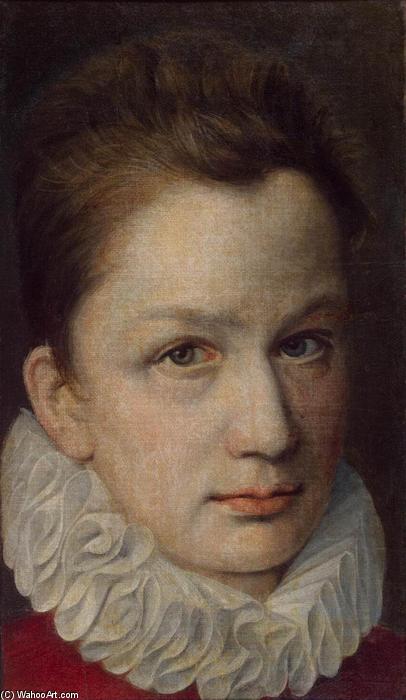
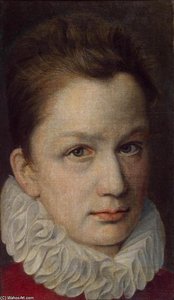
Portrait of a Young Man
 1570
1570 32.0 x 19.0 cm
 Hermitage Museum
 Read More
Hand Made Oil Reproduction
Hand-painted oil on canvas in your size and frame, made to order by our artists. ( Buy Print Buy Image)




































Pick from our preset sizes that match the artwork's original proportions.

You may enter your own dimensions to fit a specific frame or space. If your selected size does not match the original image's proportions, we will either crop the artwork or extend the painting with additional hand-painted elements. A digital mockup will be sent for your approval before production begins.
Please note that the on-screen preview does not reflect the actual cropping or extension. Only the mockup will accurately show the final composition.
While custom sizes are available, we recommend selecting a dimension from the predefined list to preserve the original proportions.
After order, ArtsDot.com team will email client for instructions and provide a mockup preview
Worldwide Delivery () in 3/4 weeks instead of standard 5 weeks. (21 August). No compromise on quality.

Free Worldwide Express Shipping

High-Quality Linen Canvas

Full Shipping Insurance

Customs Tax Refund Guarantee

True Color Matching Guarantee

60-Day Return Policy (Defects Only)

100% Money-Back Guarantee

Bulk Discount Offer
 Glass option is only available in size under 110 CM

Portrait of a Young Man
Reproduction Medium
Reproduction Size
-


Total Price
$ 263
Related Artworks
Artist Biography
Pierre Dumonstier I (c. 1545 – c. 1610): The Subtle Master of Drawn Portraiture
Pierre Dumonstier I stands as a singular figure in the annals of sixteenth-century French art, an artist whose legacy resides not in grand canvases or monumental sculptures but in exquisitely detailed crayon drawings—a technique that would elevate him to prominence amongst his contemporaries. Born around 1545, he descended from a lineage steeped in artistic tradition; his father, Geoffroy Dumonstier, was himself a celebrated illuminator serving the royal court of Francis I and Henry II, establishing a familial commitment to visual artistry that would extend across generations.
- Family Legacy: Dumonstier’s artistic heritage traced back to Geoffroy Dumonstier, whose patronage secured him a position at the influential courts of Francis I and Henry II. This connection fostered an environment where artistic excellence was valued and nurtured – a crucial factor in shaping Pierre's own creative trajectory.
- Early Influences: Étienne Dumonstier, Pierre’s brother, traveled to Vienna under the auspices of Maximilian II, immersing himself in the artistic currents of Habsburg Europe. Cosme Dumonstier, another sibling, became painter to Marguerite de Navarre, exposing Pierre to humanist ideals and fostering a fascination with portraiture as a medium for conveying psychological depth.
- The Viennese Connection: Étienne’s journey to Vienna profoundly impacted Pierre's artistic sensibilities. The encounter with Maximilian II exposed him to innovative stylistic approaches—particularly the burgeoning Mannerist style—which would subtly inform Dumonstier’s own oeuvre.
Pierre Dumonstier’s artistic career unfolded against a backdrop of political upheaval and intellectual ferment, mirroring the broader transformations occurring across Europe during the Reformation and Renaissance. His involvement with Catherine de Medici's court marked a pivotal moment in his life, solidifying his reputation as a skilled portraitist and securing him commissions that would showcase his mastery of crayon technique.
- Catherine De Medici Patronage: Dumonstier’s association with Catherine de Medici ensured access to influential circles and provided opportunities for artistic experimentation.
- Technique & Style: Dumonstier's distinctive style—characterized by meticulous shading, subtle tonal variations, and an uncanny ability to capture the nuances of human expression—became synonymous with crayon drawing during his era. This method allowed him to achieve unparalleled realism while simultaneously conveying emotional resonance.
Louis Dimier meticulously documented Dumonstier’s artistic output, compiling sixty-five drawings executed in crayon, primarily portraits of Étienne Dumonstier and Armand de Gontaut-Biron. These works—now housed at the Musée Bonnat in Bayonne—remain invaluable artifacts of Renaissance portraiture, exemplifying Dumonstier's unwavering dedication to capturing the essence of his subjects with breathtaking precision.
- Notable Works: The Musée Bonnat’s collection showcases Dumonstier’s exceptional skill and artistic vision.
Beyond his immediate circle, Dumonstier's influence extended into the realm of humanist scholarship and intellectual discourse. His commitment to observation and anatomical accuracy—traits honed during his Viennese sojourn—reflected a broader trend toward scientific inquiry and artistic realism that would characterize the decades following his lifetime.
- Vienna Influence: Dumonstier’s exposure to Maximilian II's court fostered an appreciation for scientific observation and anatomical accuracy.
Pierre Dumonstier I’s enduring legacy rests upon his singular contribution to the art of portraiture—a testament to his artistic talent, intellectual curiosity, and unwavering devotion to mastering a technique that would secure him a place among the most celebrated artists of his time.
pierre dumonstier
1545 - 1610
Quick Facts
- Artistic Movement Or Style: Mannerism
- Artists Or Movements Influenced By This Artist: ['School of Fontainebleau']
- Artists Who Influenced This Artist: ['Geoffroy Dumonstier']
- Date Of Birth: c. 1545
- Date Of Death: c. 1610
- Full Name: Pierre Dumonstier I
- Nationality: French
- Notable Artworks:
- Portrait of Étienne Dumonstier
- Portrait of Marguerite de Valois
- Place Of Birth: France

