 Preview
 Send
Send Share
Share
 Details

 Download
 Similars
 X-Ray
X-Ray Diaporama
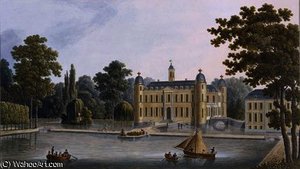
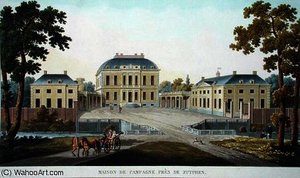
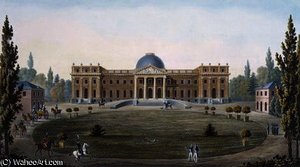
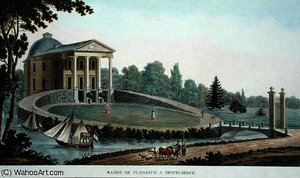
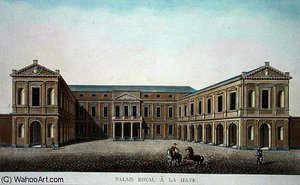
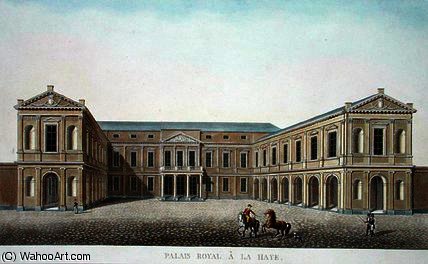
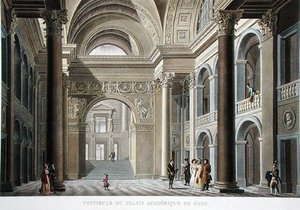
Palais royal, the hague
 Read More
Giclée / Art Print
Museum-quality giclée or canvas print with fast production and flexible finish options. ( Buy Hand Made Painting Buy Image)




































Pick from our preset sizes that match the artwork's original proportions.

You may enter your own dimensions to fit a specific frame or space. If your selected size does not match the original image's proportions, we will either crop the artwork or extend the image with a mirrored or solid-fill edge. A digital mockup will be sent for your approval before production begins.
Please note that the on-screen preview does not reflect the actual cropping or extension. Only the mockup will accurately show the final composition.
While custom sizes are available, we recommend selecting a dimension from the predefined list to preserve the original proportions.
Worldwide Delivery () in 2 weeks instead of standard 4/5 weeks. (23 August)

Free Worldwide Express Shipping

High-Quality Linen Canvas

Full Shipping Insurance

Customs Tax Refund Guarantee

True Color Matching Guarantee

60-Day Return Policy (Defects Only)

100% Money-Back Guarantee

Bulk Discount Offer
 Glass option is only available in size under 110 CM

Palais royal, the hague
Giclée / Art Print
Reproduction Size
-


Total Price
$ 63
Related Artworks




Artist Biography
The Architect of Precision: The Life and Legacy of Pierre Jacques Goetghebuer
In the annals of Belgian architectural history, few names resonate with the same sense of structural elegance and meticulous devotion as Pierre Jacques Goetghebuer. Born in 1788 into a lineage where art and craftsmanship were woven into the very fabric of daily life, Goetghebuer was destined to bridge the gap between technical engineering and fine art. As the son of a sculptor, his early years were steeped in an appreciation for form, volume, and the tactile beauty of physical creation. This foundational upbringing provided him with a unique lens through which to view the world—not merely as a collection of shapes, but as a symphony of proportions waiting to be drafted.
His journey toward mastery began within the hallowed halls of Saint-Séverlam Abbey in Brussels. It was here that Goetghebuer immersed himself in the rigorous disciplines of mathematics and geometry, subjects that would become the bedrock of his architectural language. This academic rigor was further refined under the mentorship of Jean Baptiste Raspail, a distinguished architect whose teachings instilled in Goetghebuer a profound reverence for classical principles. Through this tutelage, the artist learned to marry the cold precision of geometric truth with the fluid grace of artistic expression, a duality that would define his entire body of work.
A Vision of Neo-Classical Grandeur
As his career flourished in Brussels, Goetghebuer emerged as a premier chronicler and designer of the Neo-classical movement. His practice was characterized by an unwavering commitment to the ideals of symmetry, restraint, and rational order—principles championed by masters such as Andrea Palladio and Johann Christian Necker. To gaze upon a Goetghebuer drawing is to witness a profound respect for the classical tradition, where every column, arch, and pediment serves a purpose in creating a sense of eternal stability.
His professional achievements were marked by his ability to translate complex theoretical concepts into breathtaking visual realities. He became a sought-after figure for the most ambitious projects of his era, earning the patronage of influential figures including Leopold II. His repertoire was as diverse as it was magnificent, ranging from the intimate details of country estates to the soaring heights of civic monuments:
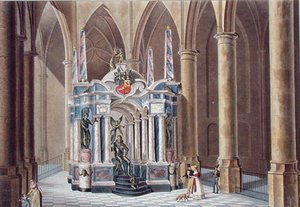
- Ecclesiastical Splendor: His watercolors, such as the evocative Tomb of William I, Prince of Orange at Delft, capture the ethereal light and immense scale of cathedral interiors with startling realism.
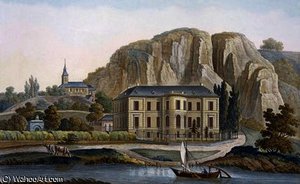
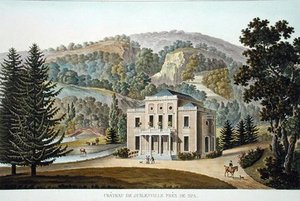
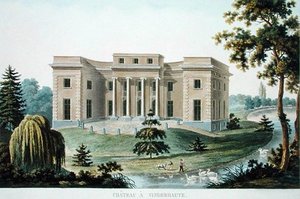
- Palatial Elegance: Through detailed engravings and plans, he brought to life the grandeur of chateaux, including the serene and meticulously rendered Chateau of Juslenville.
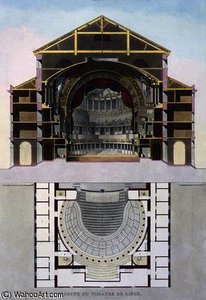
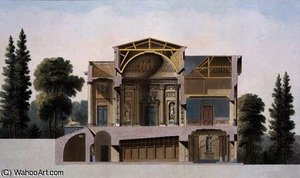
- Civic and Residential Design: His work extended to the structural intricacies of urban life, seen in his precise cross-sections of country houses in Laeken and various architectural studies across Europe.
The Enduring Resonance of a Master Draftsman
What truly distinguishes Goetghebuer from his contemporaries was his ability to imbue technical documentation with an unmistakable artistic soul. While his plans were undeniably functional, they were never merely sterile blueprints; they were imbued with a sensitivity to light, shadow, and atmosphere. His engravings and watercolors possess a narrative quality, inviting the viewer to step into the spaces he envisioned, feeling the weight of the stone and the quiet dignity of the architecture.
The historical significance of Pierre Jacques Goetghebuer lies in his role as a guardian of classical beauty during a period of profound transition. He captured the architectural aspirations of a nation, documenting the transition from the ornate legacies of the past to the structured clarity of the modern age. Today, his works remain vital windows into the 18th and 19th centuries, serving as both historical records of lost or transformed landscapes and as timeless masterpieces of architectural draftsmanship. His legacy is one of order, elegance, and an eternal pursuit of perfection.
pierre jacques goetghebuer
1788 - 1866 , Belgium
Quick Facts
- Artistic Movement Or Style: Neo-classical
- Date Of Birth: 1788
- Full Name: Pierre Jacques Goetghebuer
- Nationality: Belgian
- Notable Artworks:
- Chateau Of Juslenville
- Tomb Of William I
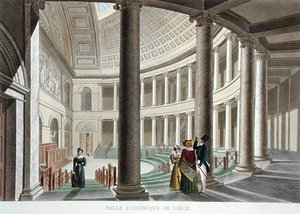
- Interior Of The Academy At Liege
- Place Of Birth: Spa, Belgium