

 Send
Send Share
Share
 Details

 Download
 Similars
 Diaporama
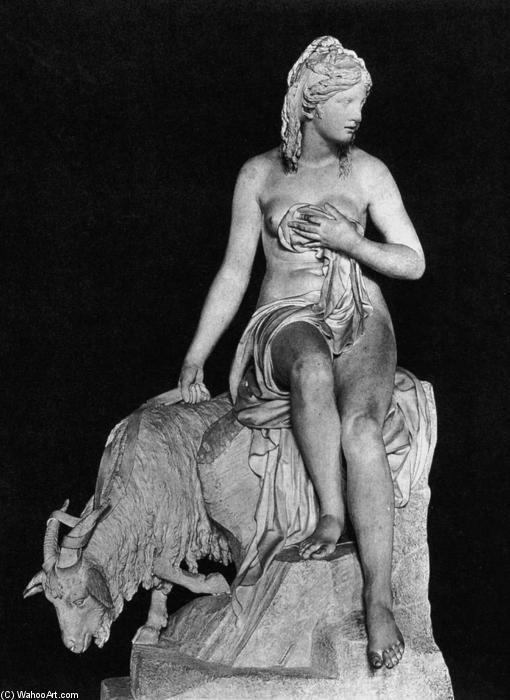
Amalthaea (Girl Tending a Goat)


 Read More
Purchase a high-resolution, enhanced digital image, far superior to the online preview.
Each file is meticulously prepared by our in-house specialists using advanced tools and expert manual retouching. We ensure every image has exceptional clarity, precise color accuracy, and fine detail.
The final file is delivered via email within 72 hours, optimized for immediate use in professional, editorial, and print environments. This is the same quality trusted by top-tier design studios, publishers, and galleries.
Digital Image
Download a high-resolution file for personal display, printing, and creative projects. ( Buy Print Buy Hand Made Painting)
Included in Every Digital Image Order
Expert Digital Delivery, Guaranteed
When you choose ArtsDot.com, you're not just getting an image - you're receiving a professionally enhanced digital artwork, crafted with precision and backed by a satisfaction guarantee. Here's everything that comes with your order, automatically:

Fast Email Delivery
Your high-resolution digital image file will be emailed to you within 72 hours of ordering - ready for immediate use.

AI-Enhanced Digital File
Your artwork is professionally optimized using advanced AI tools and manual editing, ensuring maximum detail, clarity, and color accuracy.

Free Lifetime Re-Delivery
Accidentally deleted or lost your file? No worries - we'll resend it to you anytime, free of charge.

No Import Fees - Ever
Enjoy your artwork instantly with zero customs, duties, or delivery fees - digital downloads are always tax-free.

Color Accuracy Guarantee
We ensure your digital image reflects the original colors as closely as possible using professional tools and color management.

60-Day Satisfaction Guarantee
If you're not satisfied with your digital image, we'll revise it or refund 100% within 60 days - no questions asked.

100% Money-Back Guarantee
Not satisfied? Get a full refund within 60 days of receiving your digital file - no questions asked.

Bulk Order Discounts
Buy 3 images, save 10% - Buy 5, save 15% - Buy 10+, save 20%. Great for creative projects, galleries, and agencies.
Collectible Description
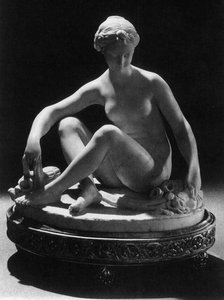
A Moment Frozen in Marble: Exploring Pierre Julien’s “Amalthaea (Girl Tending a Goat)”
The sculpture "Amalthaea (Girl Tending a Goat)" by Pierre Julien, created in 1786, stands as a testament to the enduring power of Neoclassical art – a style that sought to recapture the grandeur and idealism of antiquity while simultaneously grounding itself in rational observation. More than just a depiction of mythic figures, this piece embodies a profound meditation on nurturing, protection, and the harmonious relationship between humanity and nature, themes central to Enlightenment thought. Julien’s masterful execution elevates it beyond mere representation into an emotionally resonant experience for the viewer.Composition and Technique: Precision Embodied
Julien's skill lies in his meticulous approach to sculpting marble. He employed a technique characterized by painstaking carving – a process demanding immense patience and precision – to achieve surfaces remarkably smooth and lines flowing with graceful curves. The sculpture dominates its space, positioned centrally on a subtly tilted pedestal, creating a visual balance that draws the eye inward. Fine lines delineate textures—the delicate fleece of the goat and the folds of the woman’s drapery—revealing Julien's dedication to capturing every nuance of form. Careful consideration was given to lighting; diffused illumination casts soft shadows that accentuate the three-dimensionality of the figures, enhancing their sculptural presence.Mythological Narrative and Symbolic Resonance
The sculpture recounts a pivotal episode from Greek mythology: Zeus, as an infant, entrusted to the care of Amalthaea, a nymph who nurtured him with goat’s milk. This narrative speaks directly to the core values of the era – compassion, maternal devotion, and safeguarding innocence. The woman's posture exudes tenderness and attentiveness as she gently tends to the goat, symbolizing not only nourishment but also protection and guardianship. Julien skillfully conveys this symbolic significance through anatomical accuracy and expressive gesture, inviting contemplation on themes of vulnerability and resilience.The Influence of Neoclassical Ideals
Julien’s work firmly anchors itself within the broader context of Neoclassical art, which flourished in France during the latter half of the eighteenth century. Rejecting the ornate excesses of Baroque style, Neoclassicism championed clarity, restraint, and idealized forms inspired by classical sculpture and architecture. Artists sought to emulate the perceived perfection of ancient Greek and Roman art, believing it represented the pinnacle of human achievement – a belief rooted in philosophical optimism about reason and virtue. “Amalthaea (Girl Tending a Goat)” exemplifies this aesthetic ideal, presenting a serene tableau that embodies Enlightenment values.A Legacy of Graceful Form
Today, reproductions of Julien’s sculpture continue to inspire admiration for its beauty and intellectual depth. Its enduring appeal stems from its ability to communicate complex ideas—the importance of compassion, the sanctity of maternal care, and the harmonious balance between humanity and the natural world—through a deceptively simple visual language. “Amalthaea (Girl Tending a Goat)” remains a poignant reminder that art can transcend time, capturing not only aesthetic excellence but also the profound spirit of its era.Related Artworks
Artist Biography
William Aikman: A Pioneer of British Watercolour
William Aikman, born in Edinburgh in 1682 and tragically dying in London in 1731, remains a somewhat enigmatic figure within the burgeoning world of British art. While he didn’t achieve widespread fame during his lifetime, Aikman's contribution to watercolour painting is now recognized as profoundly influential, establishing him as a key precursor to later Romantic landscape artists. His life was marked by both artistic ambition and personal hardship, shaping the distinctive character of his work. Aikman’s early years were spent in Edinburgh, where he received a basic education before moving to London in 1708. It was here that he began his career as a professional artist, initially working as a portrait painter but quickly gravitating towards landscape subjects – a field increasingly gaining prominence at the time.Early Influences and Artistic Development
Aikman’s artistic journey reveals a fascinating interplay of influences. He was deeply impacted by the Dutch Masters, particularly their masterful use of light and shadow, which he skillfully translated into his watercolour paintings. His early works demonstrate a strong debt to the meticulous detail and atmospheric perspective favored by artists like Jan van Goyen and Jacob van Ruisdael. However, Aikman wasn’t simply a mimic; he possessed an innate ability to imbue his landscapes with a sense of drama and emotional resonance. He was also influenced by the prevailing taste for ‘Picturesque’ scenery – idealized views of nature that emphasized grandeur and sublimity – though he ultimately moved beyond this fashionable trend. Aikman's style evolved over time, becoming increasingly expressive and less reliant on rigid topographical accuracy. His later works are characterized by looser brushwork, brighter colors, and a greater emphasis on capturing the mood and atmosphere of a scene.The Scottish Highlands: A Defining Subject
A significant portion of Aikman’s oeuvre is dedicated to depicting the dramatic landscapes of the Scottish Highlands. This period, beginning around 1715, proved to be exceptionally formative for his artistic development. Commissioned by the British government following the Jacobite rising, Aikman was tasked with creating detailed surveys of the region – a monumental undertaking that provided him with unparalleled access to some of Scotland’s most breathtaking scenery. These commissions weren't merely exercises in cartography; they demanded an acute eye for detail and a sensitivity to the nuances of light and color. The rugged mountains, vast lochs, and heather-covered moors became his primary subjects, and he captured them with remarkable precision and evocative power. His Highland paintings are not simply representations of scenery but rather powerful expressions of the wildness and beauty of the Scottish wilderness.Technique and Innovation in Watercolour
Aikman’s mastery of watercolour lies primarily in his innovative use of layering and glazing techniques. He built up his compositions gradually, applying thin washes of color over dry underlayers to create luminous effects and subtle tonal variations. He was particularly adept at using ‘wet-on-wet’ technique – applying wet paint onto a still-damp surface – to achieve soft edges and atmospheric diffusion. Furthermore, Aikman experimented with incorporating body colour (a more opaque pigment) into his watercolors, allowing him to create richer, more vibrant hues and add textural interest. His work demonstrated a remarkable understanding of the medium’s capabilities, pushing the boundaries of what was considered possible in watercolour painting during the early 18th century. He is often credited with being one of the first British artists to publish aquatint prints, further solidifying his position as an innovator.Legacy and Historical Significance
Despite a relatively short career cut short by illness, William Aikman’s impact on British art was considerable. His detailed surveys of the Scottish Highlands provided invaluable documentation of the region's landscape, while his paintings established watercolour as a viable medium for capturing the beauty of nature. Aikman’s emphasis on atmospheric perspective and emotional expression paved the way for later Romantic artists such as Turner and Constable. Although he didn’t achieve widespread fame during his lifetime, Aikman is now recognized as a pivotal figure in the development of British landscape painting – a pioneer who helped to elevate watercolour from a decorative art form to a respected medium capable of conveying profound artistic insights. His work can be found in major collections across the UK, testament to its enduring appeal and historical importance.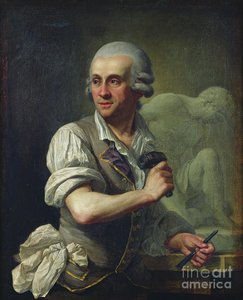
pierre julien
1731 - 1804 , France
Quick Facts
- Artistic Movement Or Style: Scottish Baroque
- Artists Or Movements Influenced By This Artist: ['Rafaello Zucchero']
- Artists Who Influenced This Artist: ['Peter Lely']
- Date Of Birth: 1682
- Date Of Death: 1731
- Full Name: William Aikman
- Nationality: British
- Notable Artworks:
- The Burning of Edinburgh
- Portrait of James Drummond

