

 Preview
 Send
Send Share
Share
 Details

 Download
 Similars
 X-Ray
X-Ray Diaporama
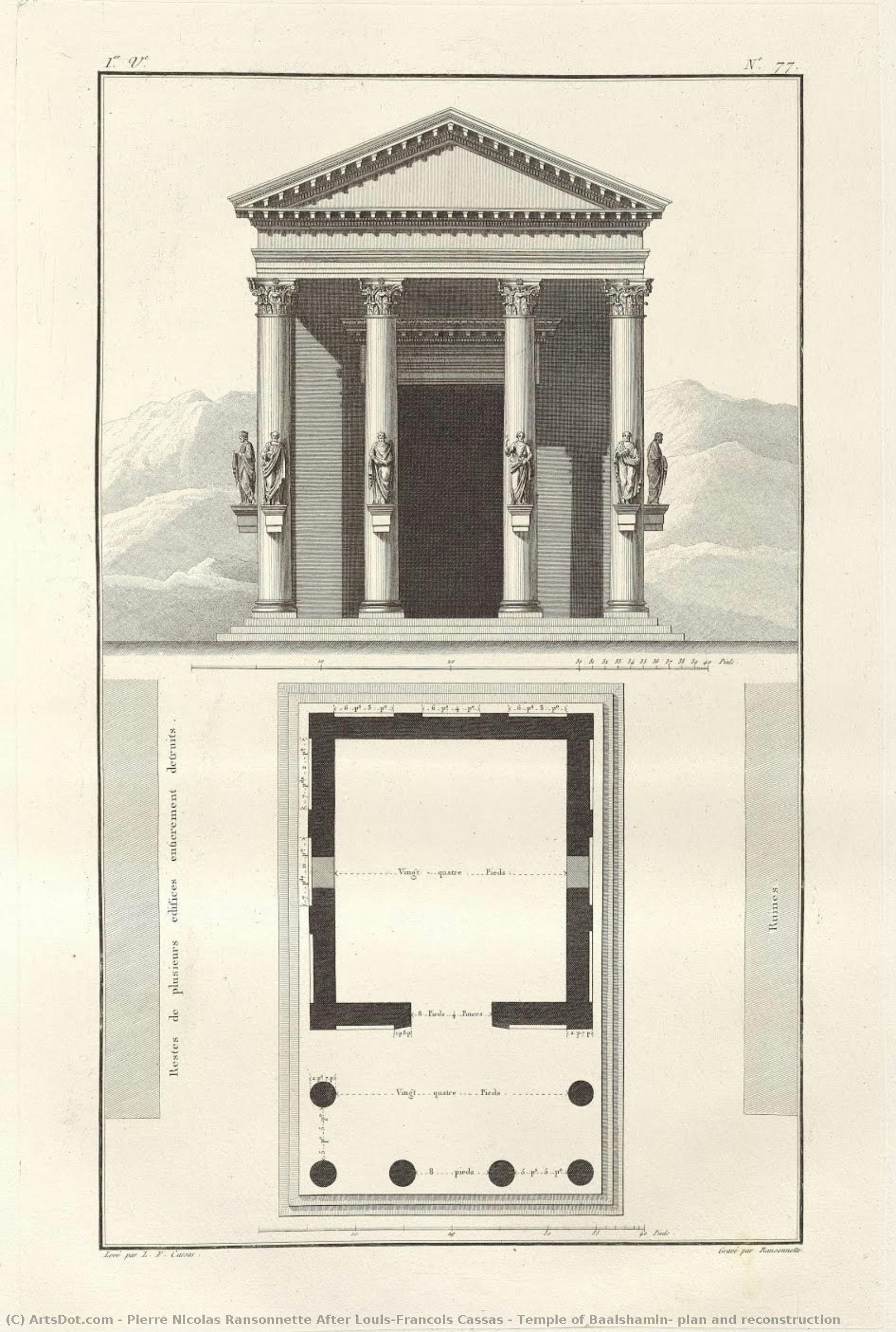
Temple of Baalshamin, plan and reconstruction


 Read More
Hand Made Oil Reproduction
Hand-painted oil on canvas in your size and frame, made to order by our artists. ( Buy Print Buy Image)




































Pick from our preset sizes that match the artwork's original proportions.

You may enter your own dimensions to fit a specific frame or space. If your selected size does not match the original image's proportions, we will either crop the artwork or extend the painting with additional hand-painted elements. A digital mockup will be sent for your approval before production begins.
Please note that the on-screen preview does not reflect the actual cropping or extension. Only the mockup will accurately show the final composition.
While custom sizes are available, we recommend selecting a dimension from the predefined list to preserve the original proportions.
After order, ArtsDot.com team will email client for instructions and provide a mockup preview
Worldwide Delivery () in 3/4 weeks instead of standard 5 weeks. (27 August). No compromise on quality.

Free Worldwide Express Shipping

High-Quality Linen Canvas

Full Shipping Insurance

Customs Tax Refund Guarantee

True Color Matching Guarantee

60-Day Return Policy (Defects Only)

100% Money-Back Guarantee

Bulk Discount Offer
 Glass option is only available in size under 110 CM

Temple of Baalshamin, plan and reconstruction
Reproduction Medium
Reproduction Size
-


Total Price
$ 263
Related Artworks









Artist Biography
The Precision of Light and Line: The Legacy of Pierre Nicolas Ransonnette
In the vibrant intellectual landscape of the French Enlightenment, few artists captured the intersection of architectural grandeur and technical mastery as delicately as Pierre Nicolas Ransonnette. Born in Paris around 1745, Ransonnette emerged during an era when the pursuit of classical ideals was not merely an aesthetic choice but a profound cultural movement. While history often remembers his mentor, the illustrious architect Louis-François Cassas, Ransonnette carved out a singular identity as a master engraver. His work served as a vital bridge between the visionary blueprints of architects and the tangible, visual reality experienced by the public, translating complex structural dreams into the intimate medium of print.
Ransonnette’s artistic foundation was laid under the rigorous guidance of Pierre-Philippe Choffard, a renowned printmaker whose expertise in etching techniques provided Ransonnette with the essential tools for his future triumphs. This early training instilled in him an unwavering commitment to accuracy and a profound respect for the nuances of line. Through Choffard’s tutelage, Ransonnette learned that an engraver does more than replicate; they interpret. He developed a sensitivity to how light interacts with stone and shadow, a skill that would become the hallmark of his professional output.
Architectural Visions and the Influence of Cassas
The trajectory of Ransonnette’s career was irrevocably altered by his relationship with Louis-François Cassas. As an artist deeply embedded in the architectural discourse of the time, Ransonnette found himself tasked with documenting the ambitious projects of a man whose influence stretched as far as Constantinople. The patronage of Cassas offered Ransonnette more than just subject matter; it provided a window into the grandest scales of human ambition. Through these collaborations, Ransonnette explored the complexities of Byzantine grandeur and humanist principles, translating monumental architectural concepts onto the much smaller, yet equally profound, scale of paper.
One of his most significant achievements remains the etching titled ‘Temple of Baalshamin, Plan and Reconstruction.’ In this work, Ransonnette’s technical prowess is on full display. He did not merely present a plan; he breathed life into a reconstruction. By meticulously rendering every detail of Cassas’s vision for the temple in Istanbul, Ransonnette allowed viewers to inhabit a space that existed primarily in the imagination of the architect. His ability to capture the structural integrity and the historical weight of such designs solidified his reputation as an indispensable chronicler of architectural history.
Technique, Style, and Enduring Significance
The true magic of Ransonnette’s work lies in his sophisticated use of medium and tone. His etching style is celebrated for its exceptional precision and a subtle play of light that transcends the limitations of black ink. He masterfully employed pen and ink, often augmenting his compositions with delicate washes of gray and blue. These soft tonal variations allowed him to convey the rugged textures of masonry, the smooth contours of classical columns, and the atmospheric depth of architectural landscapes with a remarkable sense of realism.
Ransonnette’s prints were far more than mere technical documents; they were immersive experiences. He possessed the rare ability to use tonal subtlety to create an atmosphere of reverence, transporting the viewer into the heart of classical antiquity or the burgeoning modernism of his own time. His legacy is found in this unique synthesis of scientific accuracy and artistic soul. As a master of the etching needle, Pierre Nicolas Ransonnette ensured that the architectural wonders of the 18th century were not lost to time, but preserved through the enduring beauty of fine printmaking.
pierre nicolas ransonnette after louis-francois cassas
1745 - 1810 , France
Quick Facts
- Artistic Movement Or Style: Etchings
- Artists Or Movements Influenced By This Artist: Louis François Cassas
- Artists Who Influenced This Artist: Pierre Philippe Chooffard
- Date Of Birth: Paris, France (1745)
- Date Of Death: 1810
- Full Name: Pierre Nicolas Ransonnette
- Nationality: French
- Notable Artworks: ['Temple of Baalshamin']
- Place Of Birth: Paris

