

 Preview
 Send
Send Share
Share
 Details

 Download
 Similars
 X-Ray
X-Ray Diaporama
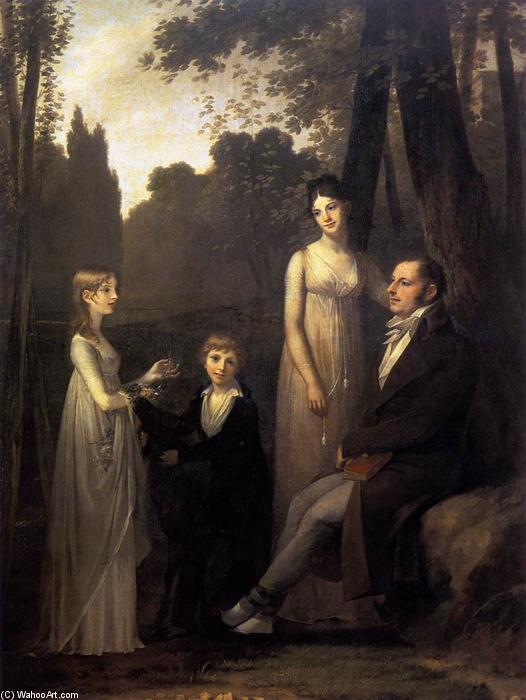
Rutger Jan Schimmelpenninck with his Wife and Children
 Acrylic On Canvas
- WallArt
- Romantic Landscape Painting
 1801
1801 263.0 x 200.0 cm
 Rijksmuseum
 Read More
Purchase a high-resolution, enhanced digital image, far superior to the online preview.
Each file is meticulously prepared by our in-house specialists using advanced tools and expert manual retouching. We ensure every image has exceptional clarity, precise color accuracy, and fine detail.
The final file is delivered via email within 72 hours, optimized for immediate use in professional, editorial, and print environments. This is the same quality trusted by top-tier design studios, publishers, and galleries.
Digital Image
Download a high-resolution file for personal display, printing, and creative projects. ( Buy Print Buy Hand Made Painting)
Included in Every Digital Image Order
Expert Digital Delivery, Guaranteed
When you choose ArtsDot.com, you're not just getting an image - you're receiving a professionally enhanced digital artwork, crafted with precision and backed by a satisfaction guarantee. Here's everything that comes with your order, automatically:

Fast Email Delivery
Your high-resolution digital image file will be emailed to you within 72 hours of ordering - ready for immediate use.

AI-Enhanced Digital File
Your artwork is professionally optimized using advanced AI tools and manual editing, ensuring maximum detail, clarity, and color accuracy.

Free Lifetime Re-Delivery
Accidentally deleted or lost your file? No worries - we'll resend it to you anytime, free of charge.

No Import Fees - Ever
Enjoy your artwork instantly with zero customs, duties, or delivery fees - digital downloads are always tax-free.

Color Accuracy Guarantee
We ensure your digital image reflects the original colors as closely as possible using professional tools and color management.

60-Day Satisfaction Guarantee
If you're not satisfied with your digital image, we'll revise it or refund 100% within 60 days - no questions asked.

100% Money-Back Guarantee
Not satisfied? Get a full refund within 60 days of receiving your digital file - no questions asked.

Bulk Order Discounts
Buy 3 images, save 10% - Buy 5, save 15% - Buy 10+, save 20%. Great for creative projects, galleries, and agencies.
Collectible Description
A Portrait Steeped in Romantic Sentiment: Prud’hon's Rutger Jan Schimmelpenninck
Pierre-Paul Prud’hon stands as a cornerstone of French artistic evolution, deftly navigating the shifting currents between Neoclassicism and Romanticism. Born in Cluny, France, in 1758, his oeuvre embodies both meticulous observation and profound emotional resonance—a hallmark of the burgeoning Romantic movement that would soon dominate European art circles. This portrait of Rutger Jan Schimmelpenninck exemplifies Prud’hon's signature style: a harmonious blend of realism and idealized beauty, meticulously crafted to convey not merely likeness but also an intangible sense of character and circumstance.The Style of Delicate Observation
Prud’hon’s artistic approach distinguishes itself from the rigid formalism championed by Neoclassical painters like Jacques-Louis David. Rather than striving for absolute accuracy—a preoccupation characteristic of David's monumental canvases—Prud’hon favored a softer touch, prioritizing tonal gradation and subtle modeling to achieve an ethereal quality. This technique, known as chiaroscuro, skillfully manipulates light and shadow to sculpt form and imbue the scene with depth and atmosphere. The muted palette—dominated by earthy tones—further contributes to the painting's contemplative mood, fostering a sense of serenity and understated grandeur.Historical Context: Embracing Emotion Over Reason
The portrait emerged during a period marked by significant intellectual upheaval. Enlightenment ideals emphasizing reason and scientific inquiry were increasingly challenged by Romantic thinkers who championed imagination, emotion, and intuition. Prud’hon responded to this paradigm shift by prioritizing expressive power over didactic intent—a deliberate departure from the moralizing narratives favored by his predecessors. Schimmelpenninck's dignified pose and serene gaze reflect the Romantic ideal of noble virtue tempered by melancholy contemplation; a sentiment prevalent in artistic circles of the time.Symbolism Within the Frame
Beyond its formal qualities, the painting is laden with symbolic significance. The outdoor setting—a meticulously rendered grove of trees—represents not merely a picturesque backdrop but also an allusion to Arcadia, the pastoral paradise revered by Romantic poets and artists as a refuge from urban corruption. The clock on the wall serves as a poignant reminder of mortality, subtly underscoring the fleeting nature of earthly existence. These elements coalesce into a cohesive visual statement that transcends mere representation—inviting viewers to contemplate themes of beauty, time, and human dignity.Emotional Impact: A Moment Frozen in Time
Ultimately, Prud’hon's Rutger Jan Schimmelpenninck succeeds in capturing a profound emotional experience. The painting evokes feelings of tranquility, contemplation, and understated nobility—qualities that resonate deeply with audiences even today. It is precisely this ability to convey intangible sentiments through masterful technique and evocative imagery that secures Prud’hon’s place among the most influential artists of his era—a testament to the enduring power of Romantic art to inspire awe and provoke introspection.Related Artworks
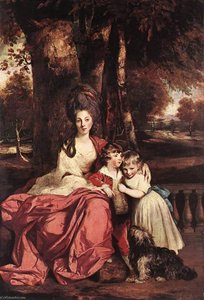
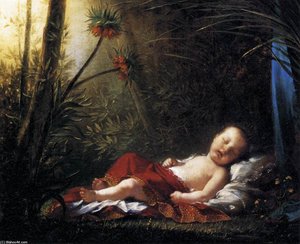
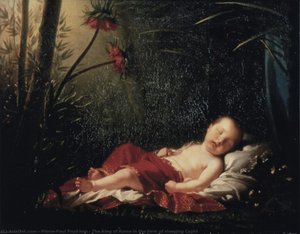
Artist Biography
Pierre-Paul Prud'hon: A Life in Art
- Born: Cluny, France (1758)
- Died: 1823
- Nationality: French
Pierre-Paul Prud’hon was a pivotal figure in French art, bridging the transition from Neoclassicism to Romanticism. Born in Cluny, Saône-et-Loire, France, his artistic journey reflects the changing aesthetic landscape of late 18th and early 19th century Europe. He is celebrated for both his allegorical paintings and portraits, demonstrating a mastery of chiaroscuro and realism that captivated audiences and influenced subsequent generations.
Early Life and Training
- Provincial Beginnings: Prud’hon received his initial artistic training in the French provinces.
- Dijon Scholarship: In 1774, he secured a municipal scholarship to attend the École de Dessin in Dijon, marking a significant step towards formal artistic education.
- Rome and Neoclassical Influences: He traveled to Rome in 1784, where he immersed himself in the study of classical art, particularly admiring the works of Canova and Correggio. This period profoundly shaped his early style, imbuing it with a sense of elegance and idealized form characteristic of Neoclassicism.
Artistic Career and Royal Patronage
- Revolutionary Allegories: Prud’hon's work gained prominence during the French Revolution, producing vignettes, book illustrations, and allegorical paintings that resonated with republican ideals.
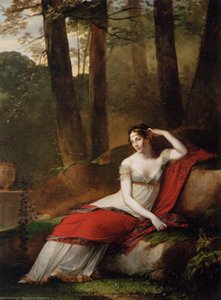
- Napoleon's Court Painter: His talent attracted the attention of Napoleon Bonaparte, who commissioned him to paint portraits of both Joséphine de Beauharnais and Marie-Louise d’Autriche. The portrait of Joséphine, in particular, depicted her not as an empress but as a captivating woman, fueling speculation about a possible romantic relationship between the artist and the former queen.
- Bridging Styles: Prud'hon skillfully navigated the evolving artistic trends of his time, incorporating elements of both Neoclassicism and Romanticism into his work. While maintaining a classical foundation in composition and form, he infused his paintings with emotional depth and dramatic lighting that foreshadowed the Romantic movement.
Major Works and Artistic Legacy
- Madame Georges Anthony and Her Two Sons (1796): An early example of his portraiture skills, showcasing a refined elegance.
- The Soul Breaking the Links Holding it to the Earth: A powerful allegorical work demonstrating his ability to convey complex emotions through symbolic imagery.
- The Dream of Happiness: A poignant exploration of human aspirations and desires.
- Crucifixion (1822): Commissioned for St. Etienne's Cathedral in Metz, now housed in the Louvre, this work is considered one of his most significant achievements.
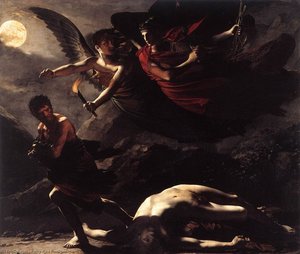
- Justice and Divine Vengeance Pursuing Crime: A monumental masterpiece that anticipates the dramatic intensity of Géricault’s *The Raft of the Medusa*.
Influence and Historical Significance
Prud'hon exerted a considerable influence on subsequent generations of French artists. His mastery of chiaroscuro, his ability to imbue portraits with psychological depth, and his synthesis of Neoclassical and Romantic styles made him a highly respected figure in the art world. Artists such as Théodore Géricault and Eugène Delacroix acknowledged his impact, drawing inspiration from his dramatic compositions and emotional expressiveness. Stendhal, Millet, and Baudelaire also recognized Prud'hon’s artistic merit, further solidifying his place in French cultural history.
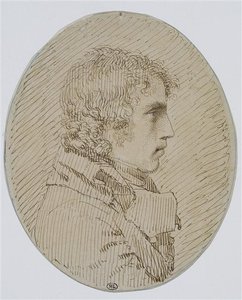
Pierre-Paul Prud'hon
1758 - 1823 , France
Quick Facts
- Artistic Movement Or Style: Neoclassicism & Romanticism
- Artists Or Movements Influenced By This Artist:
- Théodore Géricault
- Delacroix
- Artists Who Influenced This Artist:
- Antonio Canova
- Leonardo da Vinci
- Correggio
- Date Of Birth: April 4, 1758
- Date Of Death: February 16, 1823
- Full Name: Pierre-Paul Prud'hon
- Nationality: French
- Notable Artworks:
- Madame Georges Anthony and her sons
- The Soul Breaking the Links
- The Dream of Happiness
- Crucifixion
- Justice and Divine Vengeance
- Place Of Birth: Cluny, France

