 Preview
 Send
Send Share
Share
 Details

 Download
 Similars
 X-Ray
X-Ray Diaporama
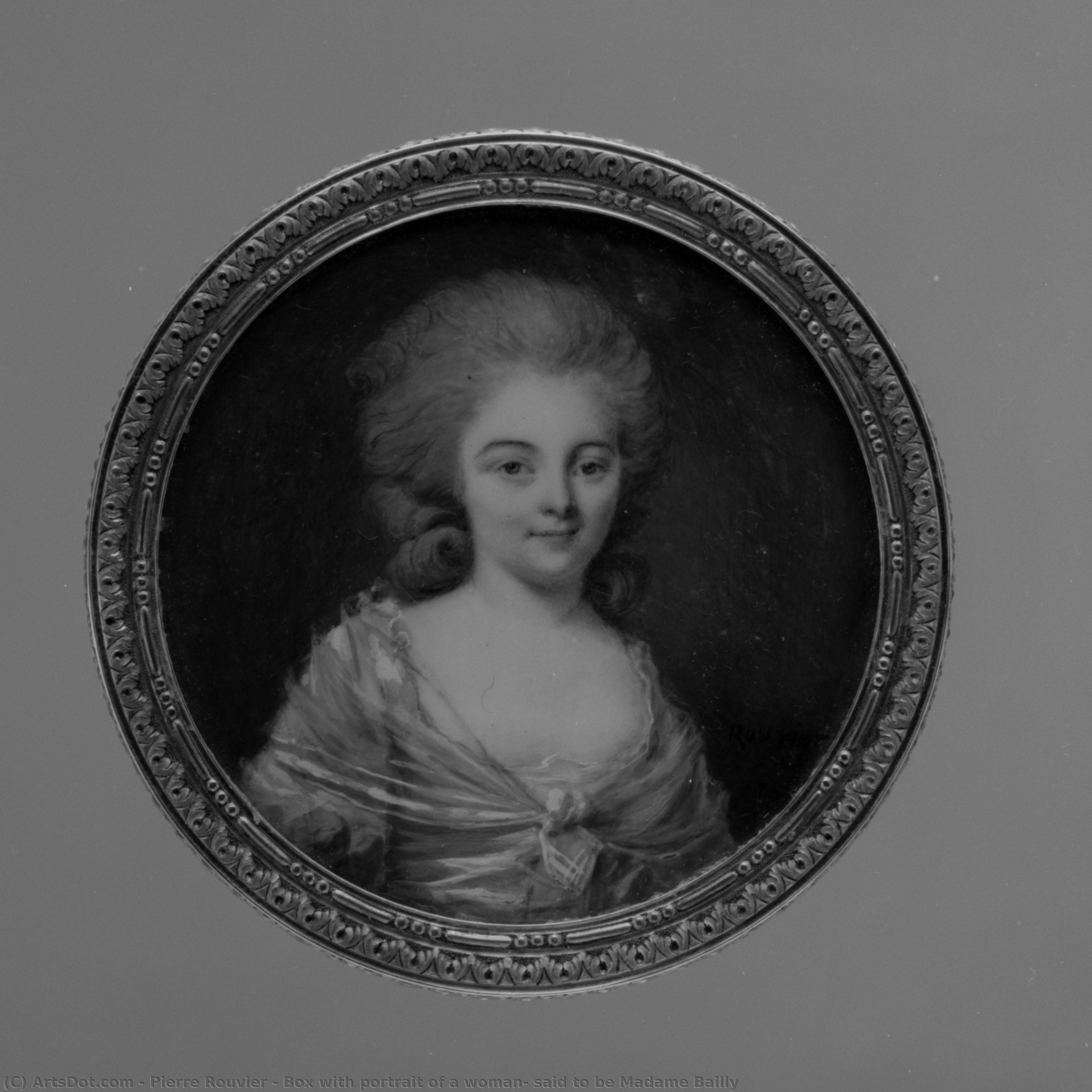
Box with portrait of a woman, said to be Madame Bailly
 1780
1780 3.0 x 7.0 cm
 Read More
Giclée / Art Print
Museum-quality giclée or canvas print with fast production and flexible finish options. ( Buy Hand Made Painting Buy Image)




































Pick from our preset sizes that match the artwork's original proportions.

You may enter your own dimensions to fit a specific frame or space. If your selected size does not match the original image's proportions, we will either crop the artwork or extend the image with a mirrored or solid-fill edge. A digital mockup will be sent for your approval before production begins.
Please note that the on-screen preview does not reflect the actual cropping or extension. Only the mockup will accurately show the final composition.
While custom sizes are available, we recommend selecting a dimension from the predefined list to preserve the original proportions.
Worldwide Delivery () in 2 weeks instead of standard 4/5 weeks. (4 September)

Free Worldwide Express Shipping

High-Quality Linen Canvas

Full Shipping Insurance

Customs Tax Refund Guarantee

True Color Matching Guarantee

60-Day Return Policy (Defects Only)

100% Money-Back Guarantee

Bulk Discount Offer
 Glass option is only available in size under 110 CM

Box with portrait of a woman, said to be Madame Bailly
Giclée / Art Print
Reproduction Size
-


Total Price
$ 63
Related Artworks










Artist Biography
A Delicate Hand: The Life and Art of Pierre Rouvier
Pierre Rouvier, a name perhaps less celebrated than some of his contemporaries, nevertheless occupies a significant niche in the world of 18th-century French art. Born in Aix-en-Provence in 1742, Rouvier dedicated his life to the meticulous arts of painting, engraving, and particularly, miniature portraiture—a field demanding not only technical skill but also an extraordinary sensitivity to character and nuance. While biographical details remain somewhat sparse, piecing together available information reveals a career deeply rooted in the aristocratic tastes of pre-Revolutionary France, and one that continued, with adaptations, into the shifting landscape of the early 19th century. Rouvier’s existence speaks to the flourishing artistic communities outside of Paris, where talent thrived alongside regional patronage. He wasn't merely replicating images; he was capturing fleeting moments of elegance and status in a form designed for intimacy and personal connection.The Miniature World: Technique and Style
Rouvier’s reputation rests primarily on his miniature paintings. These were not simply scaled-down versions of larger portraits, but works unto themselves—intricate jewels of artistry often housed within snuffboxes, lockets, or elegant frames. The technique required an astonishing level of precision; Rouvier worked with incredibly fine brushes and layers of translucent paint to achieve a luminosity and realism that belied the small scale. His style is characterized by a delicate grace, refined coloring, and a keen attention to detail in rendering fabrics, hairstyles, and jewelry—all hallmarks of aristocratic fashion. He possessed an ability to capture not just likeness, but also something of the sitter’s personality; a subtle smile, a thoughtful gaze, or a hint of melancholy. Rouvier's miniatures were prized possessions, often commissioned as tokens of affection, symbols of social standing, and cherished family heirlooms. His work reflects the Rococo sensibility prevalent in his early career—lightheartedness, ornamentation, and an emphasis on beauty—but gradually evolved to incorporate a more Neoclassical restraint as tastes shifted.Patronage and Influences
Living and working in Aix-en-Provence placed Rouvier within a network of provincial nobility and wealthy merchants who formed his primary clientele. The region, while not the epicenter of artistic innovation like Paris, boasted a vibrant cultural life and a strong tradition of patronage. It is likely that Rouvier received early training from local artists, though specific mentors remain undocumented. The influence of prominent portraitists working in Paris—artists such as Elisabeth Vigée Le Brun and Jean-Antoine Houdon—can be detected in his work, particularly in the elegance of his compositions and the psychological depth he brought to his portraits. However, Rouvier developed a distinctive style that set him apart, characterized by a particular delicacy and refinement not always found in the more grandiose works produced in the capital. His success depended on cultivating relationships with influential patrons who commissioned portraits of themselves, their families, and their friends.A Legacy Enduring Through Intimacy
While Rouvier’s work doesn't command the same attention as that of his Parisian counterparts, its enduring appeal lies in the intimate nature of the medium he mastered. His miniatures offer a unique glimpse into the lives and sensibilities of 18th-century French society—a world of elegance, refinement, and social grace. The fact that his works continue to appear at auction, fetching prices ranging from $1,000 to $100,000, testifies to their lasting value and desirability.- Rouvier’s paintings provide valuable insights into the fashion and material culture of the period.
- His skill in capturing likeness and personality makes his portraits particularly compelling.
- The miniatures represent a significant contribution to the art of portraiture, demonstrating the possibilities of working on a small scale.
pierre rouvier
1742 - 1815 , France
Quick Facts
- Artistic Movement Or Style: Old Masters Painting
- Date Of Birth: 1742 Aix-en-Provence France
- Date Of Death: 1815
- Full Name: Pierre Rouvier
- Nationality: French
- Notable Artworks: ['Box with portrait of a woman']
- Place Of Birth: Aix-en-Provence France