 Preview
 Send
Send Share
Share
 Details

 Download
 Similars
 X-Ray
X-Ray Diaporama
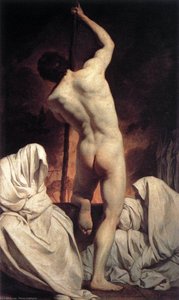
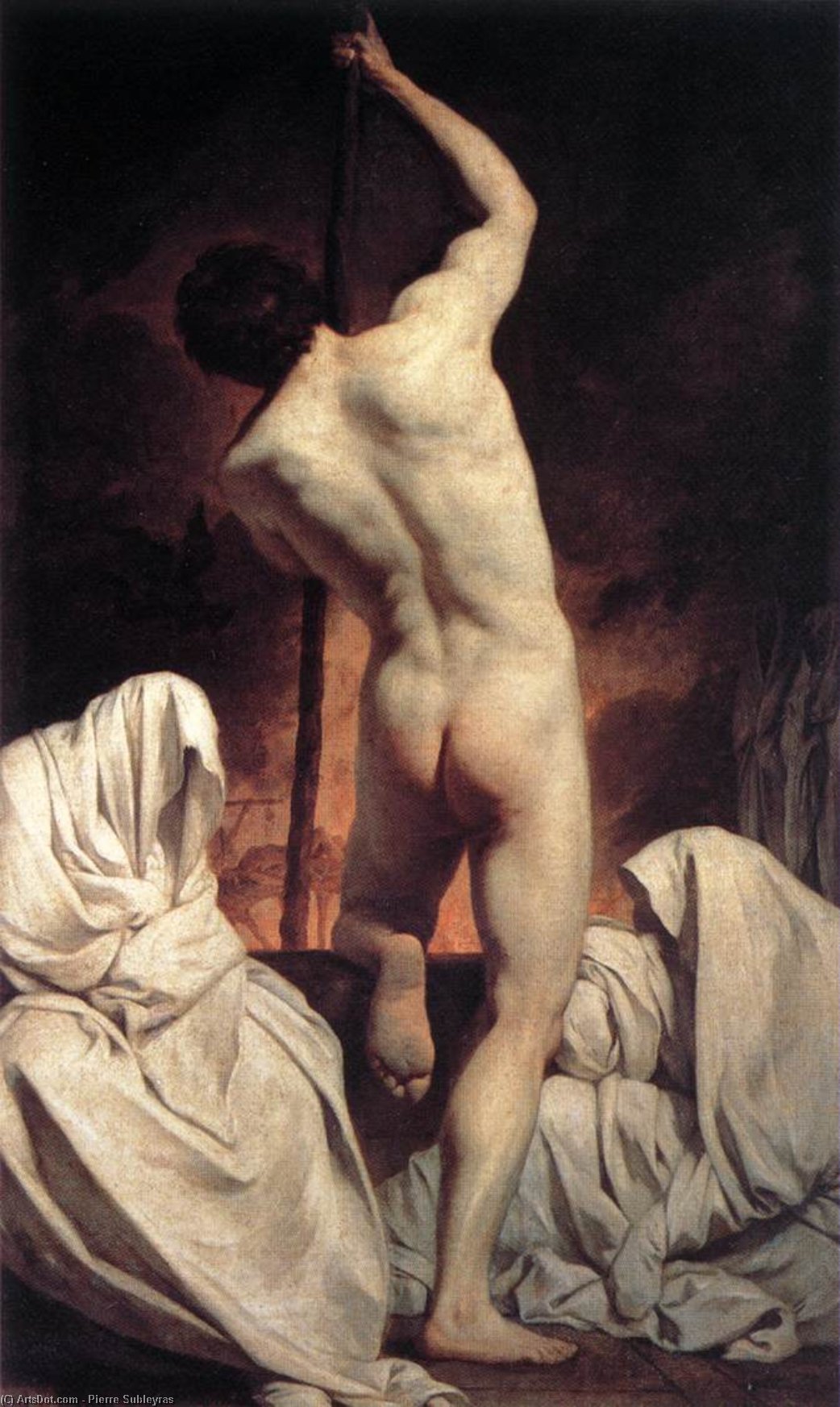
Charon Ferrying the Shades
 Oil On Canvas
- WallArt
- Baroque
 1735
1735 135.0 x 83.0 cm
 The Louvre
 Read More
Giclée / Art Print
Museum-quality giclée or canvas print with fast production and flexible finish options. ( Buy Hand Made Painting Buy Image)




P118B $10

P118H $10

P118W $10

P438Z $10

P508JH $12

P508YH $12

P805H $10

P805Z $10

P919BZ $10

P919G $10

P919XJ $10

P959ZH $10

P968JZ $12

W106C $8

W218G $10

W218JH $8

W218Y $10

W307PJ $10

W316G $10

W316PJ $8

W316Y $10

W398PJ $8

W4111J $10

W500HY $15

W500JH $15

W692G $12

W849H $8

W940BG $15

W953PJ $8




Pick from our preset sizes that match the artwork's original proportions.

You may enter your own dimensions to fit a specific frame or space. If your selected size does not match the original image's proportions, we will either crop the artwork or extend the image with a mirrored or solid-fill edge. A digital mockup will be sent for your approval before production begins.
Please note that the on-screen preview does not reflect the actual cropping or extension. Only the mockup will accurately show the final composition.
While custom sizes are available, we recommend selecting a dimension from the predefined list to preserve the original proportions.
Worldwide Delivery () in 2 weeks instead of standard 4/5 weeks. (16 August)

Free Worldwide Express Shipping

High-Quality Linen Canvas

Full Shipping Insurance

Customs Tax Refund Guarantee

True Color Matching Guarantee

60-Day Return Policy (Defects Only)

100% Money-Back Guarantee

Bulk Discount Offer
 Glass option is only available in size under 110 CM

Charon Ferrying the Shades
Giclée / Art Print
Reproduction Size
-


Total Price
$ 63
Collectible Description
A Journey Across Styx: Pierre Subleyras’s “Charon Ferrying the Shades”
The Musée du Louvre houses a masterpiece of Baroque art – Pierre Subleyras’s “Charon Ferrying the Shades,” completed in 1735-40. This monumental canvas, measuring 135 x 83 cm, depicts a scene from Greek mythology: Charon, the ferryman of Hades, transporting souls across the River Styx into the underworld. More than just a depiction of legend, Subleyras’s painting embodies the artistic fervor and intellectual curiosity that characterized the Prix de Rome era and cemented his place as one of the foremost artists of his time.A Baroque Symphony of Light and Shadow
Subleyras expertly employs the principles of Baroque art – dramatic chiaroscuro – to create a palpable sense of movement and emotion. The artist skillfully manipulates light and shadow, casting deep recesses onto Charon’s boat and highlighting the ethereal glow surrounding the souls being ferried. This technique isn't merely decorative; it serves to heighten the psychological impact of the scene, conveying both solemnity and urgency. Notice how the subdued palette – dominated by earthy tones accented with subtle blues and greens – contributes to the overall atmosphere of melancholy contemplation.Mythological Narrative: Symbolism Embodied
The painting’s narrative is rich in symbolism. Charon himself represents death and judgment, his weathered face reflecting centuries of sorrowful experience. The souls being transported are draped in white garments, symbolizing purity and innocence – those destined for eternal bliss. The two figures flanking Charon represent the shades themselves, embodying the transition from earthly life to afterlife. Subleyras’s meticulous attention to detail—from the texture of Charon's robe to the subtle expressions on the souls’ faces—underscores his commitment to conveying not just what is seen but also what is felt.Technical Mastery: Oil Paintsmanship at Its Finest
Subleyras’s masterful oil paintmanship distinguishes “Charon Ferrying the Shades” as a pinnacle of Baroque technique. The artist meticulously layered thin glazes upon thicker impasto, achieving remarkable depth and luminosity. This painstaking process allowed him to capture the nuances of light and shadow with unparalleled accuracy—a testament to his artistic skill and unwavering dedication to realism. The canvas’s surface retains traces of this meticulous craftsmanship, offering a tangible connection to the artist's vision and ensuring that the painting’s beauty endures across time.Legacy: A Timeless Reflection on Mortality
“Charon Ferrying the Shades” continues to resonate with audiences today because it confronts fundamental questions about human existence—questions explored by artists throughout history. Subleyras’s work transcends its mythological subject matter, becoming a profound meditation on mortality and the inevitability of death. Its enduring appeal lies in its ability to evoke contemplation and inspire awe—a reminder that even amidst darkness, beauty can prevail. This painting stands as an unforgettable emblem of Baroque artistry and a testament to Pierre Subleyras’s unparalleled talent.Related Artworks

Artist Biography
Pierre Subleyras: A Roman Master Bridging Baroque and Neoclassicism
Born in Saint-Gilles-du-Gard, France, in 1699, Pierre Subleyras’s life was a testament to the allure of Rome and the enduring power of artistic ambition. His early training under Antoine Rivalz in Toulouse laid a solid foundation, but it was his departure for Paris at age seventeen that truly ignited his career – securing him the prestigious Prix de Rome in 1728. This scholarship, a coveted prize offered by the French Academy, granted him access to the heart of European art and culture: the Eternal City. Subleyras’s journey wasn't merely geographical; it marked a profound shift from provincial France to the epicenter of artistic innovation, setting the stage for a remarkable career that would span nearly two decades.
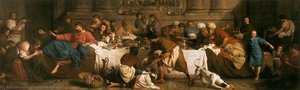
Subleyras’s time in Rome was transformative. He quickly established himself within the city’s vibrant art scene, gaining patronage from influential figures like the Elector of Saxony, Frederick Christian, and later, Cardinal Valenti Gonzaga. His early work, notably “Christ’s Visit to the House of Simon,” a dramatic narrative painting, secured his admission into the esteemed Roman artists guild, Accademia di San Luca – a significant validation of his talent and skill. This period witnessed the development of Subleyras's distinctive style: a masterful blend of Baroque dynamism and emerging Neoclassical clarity. He was particularly adept at capturing emotion and movement within complex compositions, utilizing rich color palettes and dramatic lighting to create visually arresting scenes.
Religious Grandeur and Papal Favor
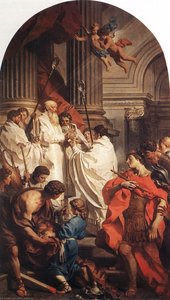
Subleyras’s artistic output during his Roman years was overwhelmingly devoted to religious subjects, reflecting the demands of the Catholic patronage that sustained him. His most celebrated commission, undertaken in 1745, was the monumental “Mass of St. Basil” for the Canons Regular of the Lateran at Santa Maria Nuova in Asti, a vast mosaic depicting the liturgical ceremony. This ambitious undertaking showcased his technical prowess and compositional skill on an unprecedented scale. Beyond this masterpiece, he produced numerous altarpieces, devotional panels, and frescoes for churches throughout Rome, demonstrating a consistent commitment to religious art.
His work for Pope Benedict XIV was particularly noteworthy. The Pope himself commanded two significant paintings: “The Marriage of St. Catherine” and “The Ecstasy of St. Camilla,” both placed within the private apartments of the papal residence. These commissions underscored Subleyras’s position as a favored artist within the highest echelons of Roman society. Furthermore, his execution of the intricate mosaic for St. Peter's Basilica – a project that involved collaboration with skilled artisans – cemented his legacy as one of Rome’s most important artists of the era.
Portraiture and Genre Scenes: A Dual Talent
While primarily known for his religious works, Subleyras possessed a remarkable versatility as a portraitist. His portraits are characterized by their insightful character studies and subtle psychological depth. Notable examples include his striking depiction of the obese Cardinal Valenti Gonzaga – a work that captures both the subject’s physical presence and inner personality with impressive acuity. The Pope himself commissioned portraits, including one of Subleyras himself, further highlighting the artist's standing within the papal court.
Beyond portraiture, Subleyras also produced a significant body of genre scenes – intimate depictions of everyday life that reveal a more playful and individualistic side to his artistic sensibility. These works, often exhibited in the Louvre, demonstrate his ability to capture human emotion and social dynamics with remarkable sensitivity. Illustrations for works by La Fontaine and Boccaccio further showcased this talent, blending classical influences with contemporary themes.
A Curious Legacy: Drawings and Travels
Subleyras’s artistic practice extended beyond painting to include drawing, where he demonstrated a keen eye for detail and an appreciation for natural forms. His drawings, often characterized by their precise observation and skillful rendering of light and shadow, are considered particularly noteworthy. A study of a man draped in a heavy cloak, housed at the British Museum, exemplifies his ability to capture texture and form with remarkable realism.
Despite his success in Rome, Subleyras experienced a period of exhaustion and sought a change of scenery, venturing to Naples towards the end of his life. However, he ultimately returned to Rome, where he succumbed to illness in 1749 at the age of fifty. His wife, Maria Felice Tibaldi – herself a celebrated miniature painter and sister of Isabella Trémolières – provided unwavering support throughout his career. Subleyras’s legacy endures as a testament to the enduring influence of Baroque and Neoclassical styles, and his works continue to captivate viewers with their dramatic compositions, rich colors, and profound emotional resonance.
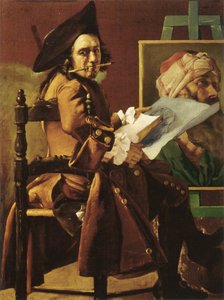
Pierre Subleyras
1699 - 1749 , France
Quick Facts
- Artistic Movement Or Style: Late Baroque & Neoclassical
- Artists Or Movements Influenced By This Artist: ['Classical tradition']
- Artists Who Influenced This Artist: ['Antoine Rivalz']
- Date Of Birth: November 25, 1699
- Date Of Death: May 28, 1749
- Full Name: Pierre Hubert Subleyras
- Nationality: French
- Notable Artworks:
- Christ's Visit to Simon
- Mass of St. Basil
- Portrait of Pope Benedict XIV
- Don Cesare Benvenuti
- Courtesan in love
- Place Of Birth: Saint-Gilles-du-Gard, France
Related Articles

Giclée Prints: Archival Quality & Aesthetic Nuances for the Discerning Collector
Explore the world of giclée prints with ArtsDot. Learn about archival quality, aesthetic nuances & investment potential. Expert guidance for discerning art collectors seeking museum-quality reproductions and lasting value.

The Enduring Legacy of Fine Art Prints: Technique, History & Aesthetic Impact
Explore the rich history & techniques of fine art prints. Discover investment potential, assess authenticity, and learn how to preserve your collection with expert guidance. Trusted insights for discerning collectors.

Baroque Drama: Bringing Opulence & Emotion into Contemporary Interiors
Explore the opulent world of Baroque interior design! Discover key elements, modern applications & how to bring dramatic elegance into your home with 's authentic reproductions.

Echoes of Time: Exploring the Enduring Appeal & Historical Context of Vintage Art Prints
Explore the captivating world of vintage art prints! Discover their history, collecting tips & enduring appeal. Expert insights on chromolithography and building a legacy collection with ArtsDot.

The Visceral Stage: Exploring Dramatic Narratives & Emotional Intensity in Baroque Art
Explore the dramatic world of Baroque art! Discover iconic masters like Caravaggio & Rembrandt, their techniques, and the movement's lasting impact. Expert insights for collectors & enthusiasts at ArtsDot.