 Preview
 Send
Send Share
Share
 Details

 Download
 Similars
 X-Ray
X-Ray Diaporama
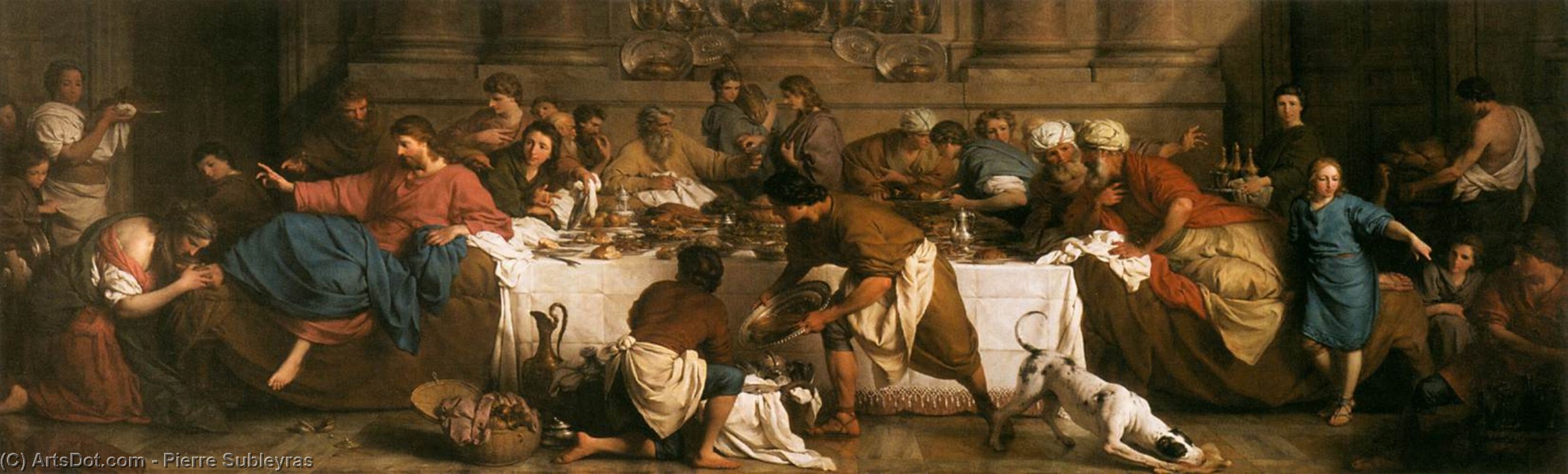
The Feast in the House of Simon
 Oil On Canvas
- WallArt
- Baroque
 1737
1737 215.0 x 679.0 cm
 The Louvre
 Read More
Hand Made Oil Reproduction
Hand-painted oil on canvas in your size and frame, made to order by our artists. ( Buy Print Buy Image)




P118B $10

P118H $10

P118W $10

P438Z $10

P508JH $12

P508YH $12

P805H $10

P805Z $10

P919BZ $10

P919G $10

P919XJ $10

P959ZH $10

P968JZ $12

W106C $8

W218G $10

W218JH $8

W218Y $10

W307PJ $10

W316G $10

W316PJ $8

W316Y $10

W398PJ $8

W4111J $10

W500HY $15

W500JH $15

W692G $12

W849H $8

W940BG $15

W953PJ $8




Pick from our preset sizes that match the artwork's original proportions.

You may enter your own dimensions to fit a specific frame or space. If your selected size does not match the original image's proportions, we will either crop the artwork or extend the painting with additional hand-painted elements. A digital mockup will be sent for your approval before production begins.
Please note that the on-screen preview does not reflect the actual cropping or extension. Only the mockup will accurately show the final composition.
While custom sizes are available, we recommend selecting a dimension from the predefined list to preserve the original proportions.
After order, ArtsDot.com team will email client for instructions and provide a mockup preview
Worldwide Delivery () in 3/4 weeks instead of standard 5 weeks. (16 August). No compromise on quality.

Free Worldwide Express Shipping

High-Quality Linen Canvas

Full Shipping Insurance

Customs Tax Refund Guarantee

True Color Matching Guarantee

60-Day Return Policy (Defects Only)

100% Money-Back Guarantee

Bulk Discount Offer
 Glass option is only available in size under 110 CM

The Feast in the House of Simon
Reproduction Medium
Reproduction Size
-


Total Price
$ 538
Artwork Description
A Grand Gathering: Exploring Pierre Subleyras’ *The Feast in the House of Simon*
This monumental canvas by French painter Pierre Subleyras (1699-1749) transports viewers to a bustling scene of social and religious significance. Measuring an impressive 215 x 679 cm, *The Feast in the House of Simon*, completed in 1737, exemplifies the artist’s mastery of late Baroque and early Neoclassical styles while operating within the vibrant artistic milieu of Rome. The painting depicts a lavish banquet, almost certainly representing an episode from the New Testament – specifically, Christ's visit to the home of Simon the Pharisee as recounted in Luke 7:36-50. Subleyras skillfully captures the dynamic interaction between Jesus and his diverse group of companions, creating a compelling narrative frozen in time.Baroque Drama & Neoclassical Refinement
Subleyras’ technique is characterized by a rich interplay of Baroque drama and emerging Neoclassical sensibilities. Dramatic lighting, a hallmark of the Baroque period, directs our gaze to key figures – most notably Christ at the center of the composition – while casting deep shadows that sculpt forms and heighten emotional intensity. However, unlike the unrestrained exuberance often found in High Baroque works, Subleyras employs a more controlled palette and compositional structure. The arrangement of figures, though dense, feels deliberate and balanced, hinting at the clarity and order favored by Neoclassical aesthetics. Visible brushstrokes contribute to the texture of fabrics, skin tones, and architectural details, adding a tactile quality that invites close inspection. The artist’s meticulous attention to detail is evident in the rendering of opulent clothing, gleaming silverware, and the varied expressions on each individual's face.Symbolism & Narrative
Beyond its visual splendor, *The Feast in the House of Simon* is laden with symbolic meaning. The presence of bread and wine immediately evokes the Eucharist – a central sacrament in Christian tradition representing communion with Christ and his sacrifice. A woman, traditionally identified as Mary Magdalene, anoints Jesus’ feet, signifying repentance and devotion. This act, contrasted with the judgmental gazes of other guests, underscores the painting's core theme: forgiveness and unconditional love. Subleyras masterfully uses gesture and expression to convey these complex emotions, creating a scene that is both visually captivating and intellectually stimulating. The architectural setting, while providing a realistic backdrop, also serves to frame the sacred event, elevating its importance within the viewer’s perception.A Legacy of Artistic Excellence
Pierre Subleyras was a highly sought-after artist during his lifetime, receiving commissions from prominent patrons including Popes and Electors. His ability to blend stylistic influences – French classicism with Italian Baroque grandeur – established him as a unique voice in 18th-century art. *The Feast in the House of Simon* stands as a testament to his skill and artistic vision. This painting is not merely a depiction of a biblical story; it’s a powerful exploration of faith, forgiveness, and human connection—a work that continues to resonate with audiences today. A high-quality reproduction would serve as a stunning focal point in any interior, bringing a touch of historical elegance and spiritual depth to the space.Related Artworks
Artist Biography
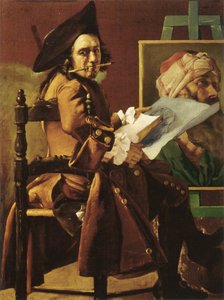
Pierre Subleyras: A Roman Master Bridging Baroque and Neoclassicism
Born in Saint-Gilles-du-Gard, France, in 1699, Pierre Subleyras’s life was a testament to the allure of Rome and the enduring power of artistic ambition. His early training under Antoine Rivalz in Toulouse laid a solid foundation, but it was his departure for Paris at age seventeen that truly ignited his career – securing him the prestigious Prix de Rome in 1728. This scholarship, a coveted prize offered by the French Academy, granted him access to the heart of European art and culture: the Eternal City. Subleyras’s journey wasn't merely geographical; it marked a profound shift from provincial France to the epicenter of artistic innovation, setting the stage for a remarkable career that would span nearly two decades.
Subleyras’s time in Rome was transformative. He quickly established himself within the city’s vibrant art scene, gaining patronage from influential figures like the Elector of Saxony, Frederick Christian, and later, Cardinal Valenti Gonzaga. His early work, notably “Christ’s Visit to the House of Simon,” a dramatic narrative painting, secured his admission into the esteemed Roman artists guild, Accademia di San Luca – a significant validation of his talent and skill. This period witnessed the development of Subleyras's distinctive style: a masterful blend of Baroque dynamism and emerging Neoclassical clarity. He was particularly adept at capturing emotion and movement within complex compositions, utilizing rich color palettes and dramatic lighting to create visually arresting scenes.
Religious Grandeur and Papal Favor
Subleyras’s artistic output during his Roman years was overwhelmingly devoted to religious subjects, reflecting the demands of the Catholic patronage that sustained him. His most celebrated commission, undertaken in 1745, was the monumental “Mass of St. Basil” for the Canons Regular of the Lateran at Santa Maria Nuova in Asti, a vast mosaic depicting the liturgical ceremony. This ambitious undertaking showcased his technical prowess and compositional skill on an unprecedented scale. Beyond this masterpiece, he produced numerous altarpieces, devotional panels, and frescoes for churches throughout Rome, demonstrating a consistent commitment to religious art.
His work for Pope Benedict XIV was particularly noteworthy. The Pope himself commanded two significant paintings: “The Marriage of St. Catherine” and “The Ecstasy of St. Camilla,” both placed within the private apartments of the papal residence. These commissions underscored Subleyras’s position as a favored artist within the highest echelons of Roman society. Furthermore, his execution of the intricate mosaic for St. Peter's Basilica – a project that involved collaboration with skilled artisans – cemented his legacy as one of Rome’s most important artists of the era.
Portraiture and Genre Scenes: A Dual Talent
While primarily known for his religious works, Subleyras possessed a remarkable versatility as a portraitist. His portraits are characterized by their insightful character studies and subtle psychological depth. Notable examples include his striking depiction of the obese Cardinal Valenti Gonzaga – a work that captures both the subject’s physical presence and inner personality with impressive acuity. The Pope himself commissioned portraits, including one of Subleyras himself, further highlighting the artist's standing within the papal court.
Beyond portraiture, Subleyras also produced a significant body of genre scenes – intimate depictions of everyday life that reveal a more playful and individualistic side to his artistic sensibility. These works, often exhibited in the Louvre, demonstrate his ability to capture human emotion and social dynamics with remarkable sensitivity. Illustrations for works by La Fontaine and Boccaccio further showcased this talent, blending classical influences with contemporary themes.
A Curious Legacy: Drawings and Travels
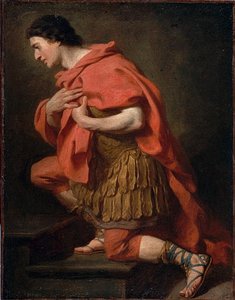
Subleyras’s artistic practice extended beyond painting to include drawing, where he demonstrated a keen eye for detail and an appreciation for natural forms. His drawings, often characterized by their precise observation and skillful rendering of light and shadow, are considered particularly noteworthy. A study of a man draped in a heavy cloak, housed at the British Museum, exemplifies his ability to capture texture and form with remarkable realism.
Despite his success in Rome, Subleyras experienced a period of exhaustion and sought a change of scenery, venturing to Naples towards the end of his life. However, he ultimately returned to Rome, where he succumbed to illness in 1749 at the age of fifty. His wife, Maria Felice Tibaldi – herself a celebrated miniature painter and sister of Isabella Trémolières – provided unwavering support throughout his career. Subleyras’s legacy endures as a testament to the enduring influence of Baroque and Neoclassical styles, and his works continue to captivate viewers with their dramatic compositions, rich colors, and profound emotional resonance.
Pierre Subleyras
1699 - 1749 , France
Quick Facts
- Artistic Movement Or Style: Late Baroque & Neoclassical
- Artists Or Movements Influenced By This Artist: ['Classical tradition']
- Artists Who Influenced This Artist: ['Antoine Rivalz']
- Date Of Birth: November 25, 1699
- Date Of Death: May 28, 1749
- Full Name: Pierre Hubert Subleyras
- Nationality: French
- Notable Artworks:
- Christ's Visit to Simon
- Mass of St. Basil
- Portrait of Pope Benedict XIV
- Don Cesare Benvenuti
- Courtesan in love
- Place Of Birth: Saint-Gilles-du-Gard, France
Related Articles
Renoir's Masterpieces: Explore 25 Iconic Paintings & Bring Art Home | ArtsDot
Explore 25 iconic Pierre-Auguste Renoir paintings! Discover the stories behind Impressionist masterpieces like 'Dance at Le Moulin de la Galette' & 'Luncheon of the Boating Party'. Find museum-quality art reproductions and elevate your home decor with ArtsDot.com.

The Dramatic Flourish: Exploring the Baroque Movement's Enduring Legacy in Art History
Explore the dramatic world of Baroque art! Discover iconic artists like Caravaggio & Rubens, defining techniques, and its lasting impact on art history. Expert insights for collectors & enthusiasts at ArtsDot.

The Visceral Stage: Exploring Dramatic Narratives & Emotional Intensity in Baroque Art
Explore the dramatic world of Baroque art! Discover iconic masters like Caravaggio & Rembrandt, their techniques, and the movement's lasting impact. Expert insights for collectors & enthusiasts at ArtsDot.

Baroque Masterpieces: 10 Paintings That Defined an Era |
Journey through the drama & grandeur of Baroque art! Explore 10 masterpieces by Caravaggio, Rembrandt, Rubens & more. Discover stunning oil paintings, rich colors & timeless stories. Find museum-quality reproductions at .

Baroque Drama: Bringing Opulence & Emotion into Contemporary Interiors
Explore the opulent world of Baroque interior design! Discover key elements, modern applications & how to bring dramatic elegance into your home with 's authentic reproductions.