

 Preview
 Send
Send Share
Share
 Details

 Download
 Similars
 X-Ray
X-Ray Diaporama
 Stats
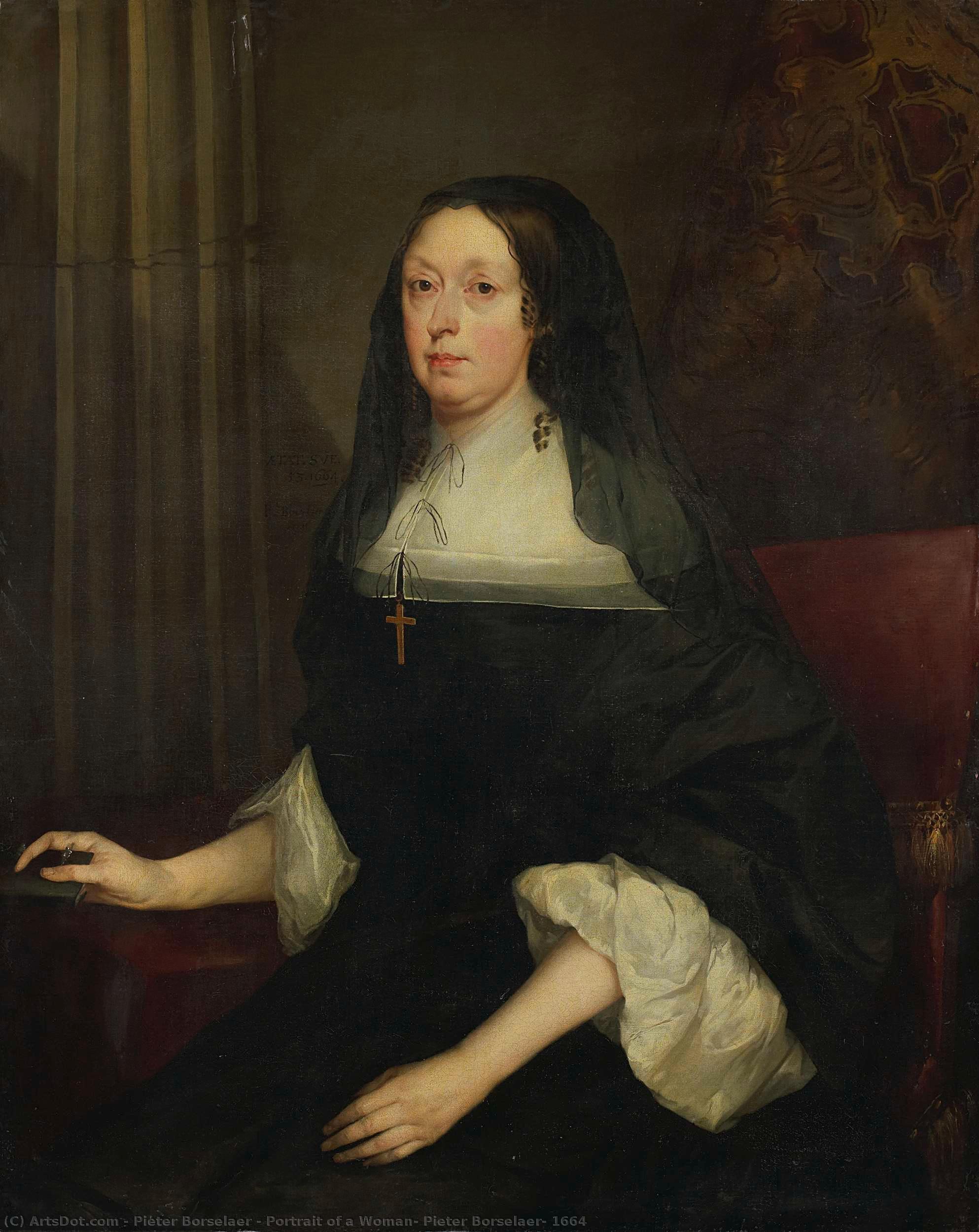
StatsPortrait of a Woman, Pieter Borselaer, 1664
 1664
1664 113.0 x 91.0 cm
 Read More
Hand Made Oil Reproduction
Hand-painted oil on canvas in your size and frame, made to order by our artists. ( Switch to Print Switch to Digital Image)




































Pick from our preset sizes that match the artwork's original proportions.

You may enter your own dimensions to fit a specific frame or space. If your selected size does not match the original image's proportions, we will either crop the artwork or extend the painting with additional hand-painted elements. A digital mockup will be sent for your approval before production begins.
Please note that the on-screen preview does not reflect the actual cropping or extension. Only the mockup will accurately show the final composition.
While custom sizes are available, we recommend selecting a dimension from the predefined list to preserve the original proportions.
After order, ArtsDot.com team will email client for instructions and provide a mockup preview
Worldwide Delivery () in 3/4 weeks instead of standard 5 weeks. (8 September). No compromise on quality.

Free Worldwide Express Shipping

High-Quality Linen Canvas

Full Shipping Insurance

Customs Tax Refund Guarantee

True Color Matching Guarantee

100-Day Return Policy (Defects Only)

100% Money-Back Guarantee

Bulk Discount Offer
 Glass option is only available in size under 110 CM

Portrait of a Woman, Pieter Borselaer, 1664
Reproduction Medium
Reproduction Size
-


Total Price
$ 263
Related Artworks





Artist Biography
The Melancholic Brush: The Life and Legacy of Pieter Borselaer
In the grand tapestry of seventeenth-century European art, few threads possess the quiet, introspective texture found in the works of Pieter Borselaer. Born in the industrious Dutch city of Middelburg around 1633 or 1634, Borsseler emerged from a period of profound cultural transition. His artistic identity was forged not in the isolation of his homeland, but amidst the vibrant, theatrical atmosphere of Antwerp. Between 1651 and 1654, he studied under the master Thomas Willeboirts Bosschaert, an experience that immersed him in the rich traditions of the Flemish Baroque. This formative apprenticeship provided him with more than just technical proficiency; it gifted him a command over light and shadow that would later serve as the foundation for his signature style—a style defined by a certain quiet melancholy and a profound psychological depth.
While his roots remained firmly planted in the Netherlands, Borsseler’s professional zenith was achieved within the English landscape. During the years between 1665 and 1679, he became a prominent figure in England, navigating the social and artistic circles of the British nobility. His arrival coincided with a period where portraiture served as both a record of lineage and a mirror of the soul. Borsseler’s breakthrough arrived with his 1665 portrait of the antiquarian Sir William Dugdale. This work was far more than a mere likeness; it introduced the art world to a painter capable of capturing an introspective gaze and a sober, dignified palette. Through this masterpiece, he established himself as a master of psychological realism, moving beyond the superficiality of external appearance to touch upon the inner emotional state of his subjects.
A Legacy of Intimacy and Influence
The breadth of Borsseler’s oeuvre reveals an artist deeply attuned to the nuances of human character and social standing. His ability to document the prominent families of his era, such as the Hoby family at Bisham Abbey, showcases a remarkable sensitivity to both status and sentiment. In his depictions of figures like Mrs. Peregrine Hoby, one finds a tender exploration of aging beauty, rendered with a meticulousness that honors the subject's dignity. His talent for capturing the essence of literary and intellectual giants is equally profound, seen in his portraits of the writer Samuel Butler.
Perhaps most intriguing to art historians is the enduring speculation surrounding his connection to the most iconic figure in English literature. It is widely believed that Borsseler may have been responsible for the posthumous “Chesterfield portrait” of William Shakespeare. By adapting the famous Chandos portrait, he sought to honor the Bard’s legacy through a lens of historical reverence. This connection, alongside his stylistic similarities to fellow Anglo-Dutch artist Gerard Soest, places Borsseler at the heart of a significant movement in seventeenth-century portraiture—one that favored emotional resonance over mere ornamentation.
Though his later years saw him returning to Middelburg and The Hague, the impact of his work remained etched in the collections of great institutions. From the enigmatic female portraits attributed to his studio in the National Gallery to the intimate family records at Merevale Hall, Borsseler’s contribution to the Anglo-Dutch artistic landscape remains a testament to the power of the observant eye. His life's work stands as a bridge between the dramatic flourishes of the Baroque and a more restrained, soulful approach to the human countenance, ensuring his place in the annals of portrait history.
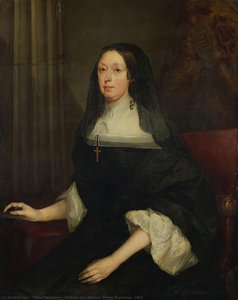
Pieter Borselaer
1633 - , Netherlands
Quick Facts
- Artistic Movement Or Style: Anglo-Dutch Painting; Melancholic Style
- Artists Or Movements Influenced By This Artist: ['Gerard Soest']
- Artists Who Influenced This Artist: ['Thomas Willeboirts Bosschaert']
- Date Of Birth: 1633/1634 Middelburg
- Date Of Death: Living
- Full Name: Pieter Borselaer
- Nationality: Dutch
- Notable Artworks:
- Sir William Dugdale Portrait
- Orlando Bridgman Portrait
- Mrs Peregrine Hoby Portrait
- Place Of Birth: Middelburg, Netherlands