

 Preview
 Send
Send Share
Share
 Details

 Download
 Similars
 X-Ray
X-Ray Diaporama
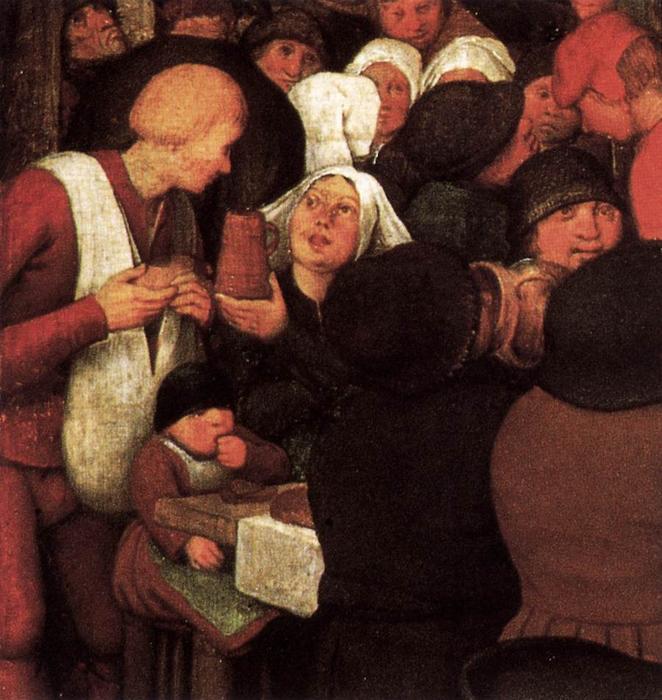
Peasant Wedding (detail)


 Read More
Purchase a high-resolution, enhanced digital image, far superior to the online preview.
Each file is meticulously prepared by our in-house specialists using advanced tools and expert manual retouching. We ensure every image has exceptional clarity, precise color accuracy, and fine detail.
The final file is delivered via email within 72 hours, optimized for immediate use in professional, editorial, and print environments. This is the same quality trusted by top-tier design studios, publishers, and galleries.
Digital Image
Download a high-resolution file for personal display, printing, and creative projects. ( Buy Print Buy Hand Made Painting)
Included in Every Digital Image Order
Expert Digital Delivery, Guaranteed
When you choose ArtsDot.com, you're not just getting an image - you're receiving a professionally enhanced digital artwork, crafted with precision and backed by a satisfaction guarantee. Here's everything that comes with your order, automatically:

Fast Email Delivery
Your high-resolution digital image file will be emailed to you within 72 hours of ordering - ready for immediate use.

AI-Enhanced Digital File
Your artwork is professionally optimized using advanced AI tools and manual editing, ensuring maximum detail, clarity, and color accuracy.

Free Lifetime Re-Delivery
Accidentally deleted or lost your file? No worries - we'll resend it to you anytime, free of charge.

No Import Fees - Ever
Enjoy your artwork instantly with zero customs, duties, or delivery fees - digital downloads are always tax-free.

Color Accuracy Guarantee
We ensure your digital image reflects the original colors as closely as possible using professional tools and color management.

60-Day Satisfaction Guarantee
If you're not satisfied with your digital image, we'll revise it or refund 100% within 60 days - no questions asked.

100% Money-Back Guarantee
Not satisfied? Get a full refund within 60 days of receiving your digital file - no questions asked.

Bulk Order Discounts
Buy 3 images, save 10% - Buy 5, save 15% - Buy 10+, save 20%. Great for creative projects, galleries, and agencies.
Collectible Description
A Window Into Flemish Life: Pieter Bruegel’s ‘Peasant Wedding’
Pieter Bruegel the Elder's “Peasant Wedding,” completed in 1568, isn’t merely a depiction of a wedding ceremony; it’s a masterful snapshot of fifteenth-century Flemish society—a scene brimming with detail that speaks volumes about daily life and moral considerations. Painted on wood panel using oil paint, this monumental artwork resides within the Kunsthistorisches Museum in Vienna (Inventory Number GG 1027), offering visitors an unparalleled glimpse into Bruegel’s artistic vision and his profound understanding of human nature.Composition and Technique: A Symphony of Impasto
The painting's genius lies primarily in its ambitious scale—measuring approximately 1640 x 1140 cm—and Bruegel’s revolutionary technique. He employed *impasto*, applying thick layers of paint onto the surface, creating palpable textures that convey a sense of immediacy and physicality. This method wasn't simply about visual impact; it mirrored the rugged realities of rural existence, mirroring the hardships faced by ordinary people. The artist meticulously crafted every element—from the sprawling banquet table dominating the center to the individual figures scattered throughout the room—to achieve this remarkable effect. Notice how Bruegel captures the light filtering through windows, illuminating faces and highlighting the textures of clothing and furnishings.Historical Context: Renaissance Morality Revisited
“Peasant Wedding” emerges from a pivotal moment in European art history – the waning years of the High Renaissance and the burgeoning influence of Mannerism. While influenced by Italian artistic ideals, Bruegel firmly rooted his work in Northern European sensibilities, rejecting the polished elegance favored by Rome. The painting reflects anxieties surrounding religious reform—the Protestant Reformation was reshaping Europe—and simultaneously captures the spirit of a prosperous merchant culture. More than just documenting an event, Bruegel subtly critiques societal values; the depiction of excessive indulgence contrasts sharply with the solemnity of marriage vows.Symbolism: Layers of Meaning Beneath the Surface
Beyond its visual grandeur, “Peasant Wedding” is laden with symbolic significance. The abundance of wine glasses represents conviviality and celebration, yet also hints at excess and moral decay. The presence of two books symbolizes learning and piety—a deliberate juxtaposition against the prevailing hedonistic tendencies of the time. Perhaps most striking are the shoes – a reference to the German proverb “auf großem Fuß leben” (“to live in great style”), serving as a commentary on social ambition and materialism. Bruegel’s careful placement of these objects invites contemplation about human behavior and spiritual aspiration.Emotional Resonance: A Timeless Portrait of Humanity
Ultimately, “Peasant Wedding” transcends its historical context to resonate powerfully with viewers across centuries. Bruegel's masterful portrayal captures the essence of human experience—joyful celebration intertwined with underlying anxieties about mortality and social responsibility. The painting’s vibrant colors and textured surfaces evoke a visceral response, transporting us back to fifteenth-century Flanders and prompting reflection on universal themes of faith, morality, and the complexities of everyday life. It remains an enduring testament to Bruegel's artistic genius and his ability to distill profound ideas into unforgettable visual imagery.Related Artworks
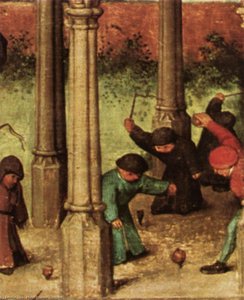
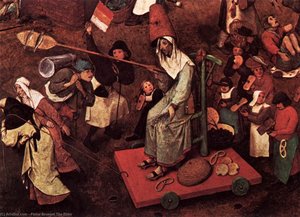
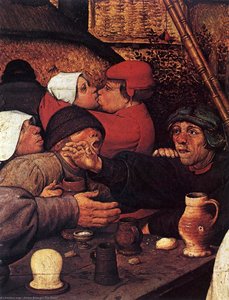
Artist Biography
A Life Rooted in Renaissance Transformation
Pieter Bruegel the Elder emerged during a period of profound change, a time when the artistic landscape of Europe was shifting from the High Renaissance ideals of Italy towards the burgeoning complexities of Northern European expression. Born sometime between 1525 and 1530, likely in Breda – though details surrounding his early life remain somewhat elusive – Bruegel’s formative years unfolded amidst religious upheaval and a flourishing merchant culture. He began his artistic journey around 1545 as an apprentice to Pieter Coecke van Aelst, a respected Antwerp painter known for both his artistry and his designs for tapestries. This apprenticeship provided Bruegel with a solid grounding in the technical skills of oil painting and drawing, but perhaps more importantly, it exposed him to the humanist currents that were beginning to permeate intellectual circles. Van Aelst’s workshop was not merely a place of artistic instruction; it was a crucible where traditional techniques met new ideas, shaping Bruegel's future vision.Wanderings and the Forging of a Unique Vision
Following his apprenticeship, Bruegel embarked on extensive travels that would indelibly mark his artistic development. Between 1551 and 1553, he journeyed through France, Switzerland, and Italy, sketching landscapes and immersing himself in diverse cultures. These were not mere sightseeing trips; they were expeditions of observation and learning. While in Italy, Bruegel encountered the works of Renaissance masters, yet his artistic temperament remained distinctly Northern European. He didn’t simply adopt Italianate styles but rather absorbed their influence and filtered them through his own unique sensibility. The Alps, with their dramatic peaks and valleys, left a lasting impression, influencing the compositional structure and atmospheric perspective found in many of his later landscapes. Upon returning to Antwerp in 1553, he was admitted as a free master into the Guild of Saint Luke, signifying his professional independence and establishing him as a recognized artist within the vibrant artistic community of the city.Beyond Myth and Religion: A New Focus for Art
Bruegel’s true innovation lay in his subject matter. He boldly departed from the established conventions of Renaissance painting, which often focused on religious narratives or classical mythology. Instead, he turned his attention to the everyday lives of ordinary people – peasants laboring in fields, villagers celebrating festivals, hunters traversing snowy landscapes. This wasn't a rejection of traditional themes but rather an elevation of the mundane to the level of high art. His landscapes were not merely backdrops; they were active participants in the narrative, often imbued with symbolic meaning and reflecting a deep understanding of nature’s power and beauty. The Triumph of Death, for example, is a chilling vision of human mortality, while paintings like Peasant Wedding offer remarkably detailed and nuanced portrayals of rural life, devoid of sentimental idealization. He masterfully employed chiaroscuro – the dramatic interplay of light and shadow – to create depth, realism, and emotional resonance in his compositions. His scenes weren’t necessarily critical; they were realistic observations, capturing both the humor and hardship inherent in human existence.Lasting Legacy: An Influence Across Centuries
Pieter Bruegel the Elder's influence on subsequent generations of artists is undeniable. He laid the groundwork for the Dutch Golden Age painters, inspiring artists like Isaac van Ostade and Adriaen Brouwer with his realistic depictions of peasant life. His innovative approach to landscape painting also paved the way for later developments in the genre, influencing artists who sought to capture the beauty and grandeur of the natural world. Beyond painting, Bruegel’s work has continued to resonate with modern audiences, appearing in films like Andrei Tarkovsky's Solaris (1972) and Lars von Trier’s Melancholia (2011), demonstrating the enduring power of his imagery. His paintings offer a timeless reflection on the human condition – our relationship with nature, our struggles with mortality, and our capacity for both joy and sorrow. He died in Brussels in 1569 at the relatively young age of forty-three, leaving behind a body of work that continues to captivate and inspire, solidifying his place as one of the most important figures in the history of art.Notable Works and Enduring Themes
- Landscape with the Flight into Egypt: A serene yet subtly symbolic depiction of the Holy Family’s journey, showcasing Bruegel's mastery of atmospheric perspective.
- The Triumph of Death: A haunting and apocalyptic vision of mortality, filled with grotesque imagery and a sense of impending doom.
- Peasant Wedding: A vibrant and detailed portrayal of rural life, capturing the boisterous energy and social customs of a Flemish village.
- Hunters in the Snow: Part of a series depicting the seasons, this iconic painting is celebrated for its atmospheric beauty and realistic depiction of winter landscapes.
- The Tower of Babel: A monumental work illustrating human ambition and divine judgment, showcasing Bruegel’s skill in creating complex compositions with intricate details.
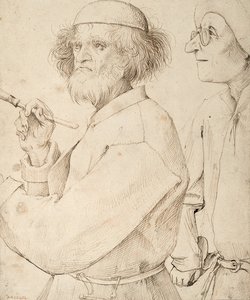
Pieter Bruegel the Elder
1525 - 1569 , Belgium
Quick Facts
- Artistic Movement Or Style: Renaissance painting
- Artists Or Movements Influenced By This Artist: ['Dutch Golden Age painting']
- Artists Who Influenced This Artist: ['Hieronymus Bosch']
- Date Of Birth: c. 1525
- Date Of Death: 1569
- Full Name: Pieter Bruegel the Elder
- Nationality: Flemish
- Notable Artworks:
- Landscape with the Flight into Egypt
- The Triumph of Death
- Peasant Wedding
- Hunters in the Snow
- The Tower of Babel
- Place Of Birth: Breda, Netherlands

