 Preview
 Send
Send Share
Share
 Details

 Download
 Similars
 X-Ray
X-Ray Diaporama
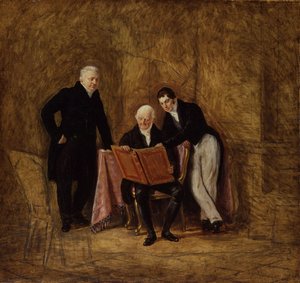
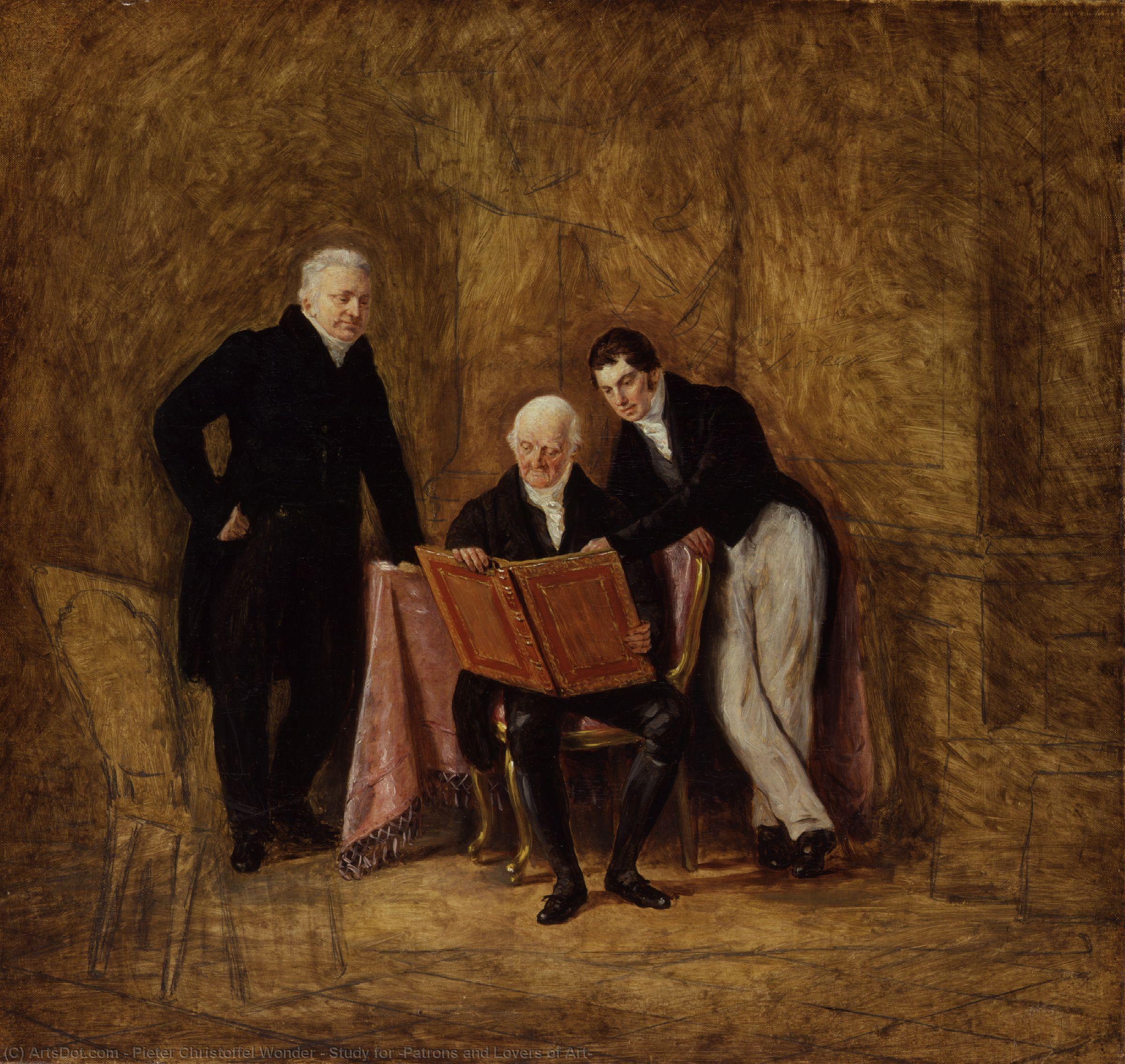
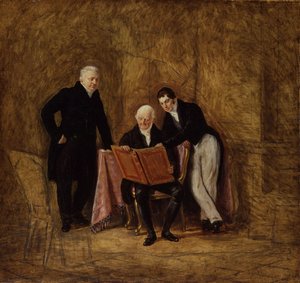
Study for 'Patrons and Lovers of Art'
 1830
1830 61.0 x 46.0 cm
 Read More
Giclée / Art Print
Museum-quality giclée or canvas print with fast production and flexible finish options. ( Buy Hand Made Painting Buy Image)




































Pick from our preset sizes that match the artwork's original proportions.

You may enter your own dimensions to fit a specific frame or space. If your selected size does not match the original image's proportions, we will either crop the artwork or extend the image with a mirrored or solid-fill edge. A digital mockup will be sent for your approval before production begins.
Please note that the on-screen preview does not reflect the actual cropping or extension. Only the mockup will accurately show the final composition.
While custom sizes are available, we recommend selecting a dimension from the predefined list to preserve the original proportions.
Worldwide Delivery () in 2 weeks instead of standard 4/5 weeks. (28 August)

Free Worldwide Express Shipping

High-Quality Linen Canvas

Full Shipping Insurance

Customs Tax Refund Guarantee

True Color Matching Guarantee

60-Day Return Policy (Defects Only)

100% Money-Back Guarantee

Bulk Discount Offer
 Glass option is only available in size under 110 CM

Study for 'Patrons and Lovers of Art'
Giclée / Art Print
Reproduction Size
-


Total Price
$ 63
Related Artworks









Artist Biography
Pieter Christoffel Wonder (1777 – 1852): A Quiet Master of English Portraiture
Pieter Christoffel Wonder, born in Utrecht in January 1777, remains a figure somewhat overshadowed by the luminaries of his era—a testament to the enduring beauty and subtlety of his artistic vision. Unlike many contemporaries who sought fame through grand commissions or theatrical displays, Wonder pursued a path of quiet dedication to craft, honing his skills through meticulous copying of Old Masters and developing a distinctive style rooted in observation and nuanced detail.
His formative years were spent largely self-taught, fueled by an unwavering passion for art. Recognizing the profound influence of Rembrandt and Rubens—artists who prioritized psychological realism alongside technical mastery—Wonder embarked on a deliberate apprenticeship with these masters’ techniques. This early training proved invaluable as he transitioned to formal studies at the Kunstakademie Düsseldorf between 1802 and 1804, broadening his artistic horizons and refining his understanding of compositional principles.
A pivotal moment arrived in 1807 when Wonder established the Genootschap Kunstliefde (Love of Art Society) alongside fellow artists Jan Kobell and Johann Wilhelm Tischbein III. This society served as a crucible for artistic experimentation and collaboration, fostering a vibrant intellectual environment that encouraged innovation within Utrecht.
From 1823 to 1831, Wonder’s artistic endeavors took him across the Channel to England, where he quickly gained renown as a portrait painter. His canvases captured the dignity and character of prominent figures—members of the aristocracy, businessmen, and scholars—often portraying subjects in intimate domestic settings bathed in soft light. Unlike many artists of his time who prioritized grandeur or spectacle, Wonder excelled at conveying inner life through subtle gestures and expressions, reflecting a humanist sensibility that resonated deeply with Victorian sensibilities.
Among his most celebrated works are depictions of Sir William Huskisson, Lord Byron, and Thomas Henry Huxley—each portrait imbued with an arresting sense of psychological realism. However, Wonder’s artistic legacy extends beyond portraiture; he also produced evocative interior scenes—particularly those depicting rooms furnished in the English style—that demonstrate a keen eye for color and texture. Furthermore, he undertook ambitious copies of Raphael’s frescoes at Città Sant'Angelo in Rome, demonstrating his unwavering admiration for the Renaissance ideal.
Wonder died peacefully in Utrecht on July 12th, 1852, leaving behind a body of work that continues to captivate viewers today. His understated style—characterized by meticulous brushwork and an acute sensitivity to tonal gradations—represents a singular contribution to Dutch art history. Though he may not have achieved the widespread acclaim enjoyed by his contemporaries, Wonder’s enduring influence resides in his ability to capture the essence of human experience with grace and precision—a quiet triumph for an artist who prioritized artistic integrity above all else.
Quick Facts
- Artistic Movement Or Style: English Portraiture
- Artists Or Movements Influenced By This Artist: ['Raphael']
- Artists Who Influenced This Artist: ['Old Masters']
- Date Of Birth: 10 January 1777
- Date Of Death: 12 July 1852
- Full Name: Pieter Christoffel Wonder
- Nationality: Dutch
- Notable Artworks:
- Study for 'Patrons and Lovers of Art'
- Various Interior Scenes
- Place Of Birth: Utrecht, Netherlands