 Preview
 Send
Send Share
Share
 Details

 Download
 Similars
 X-Ray
X-Ray Diaporama
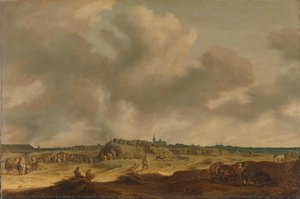
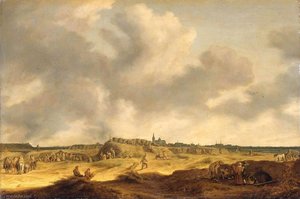
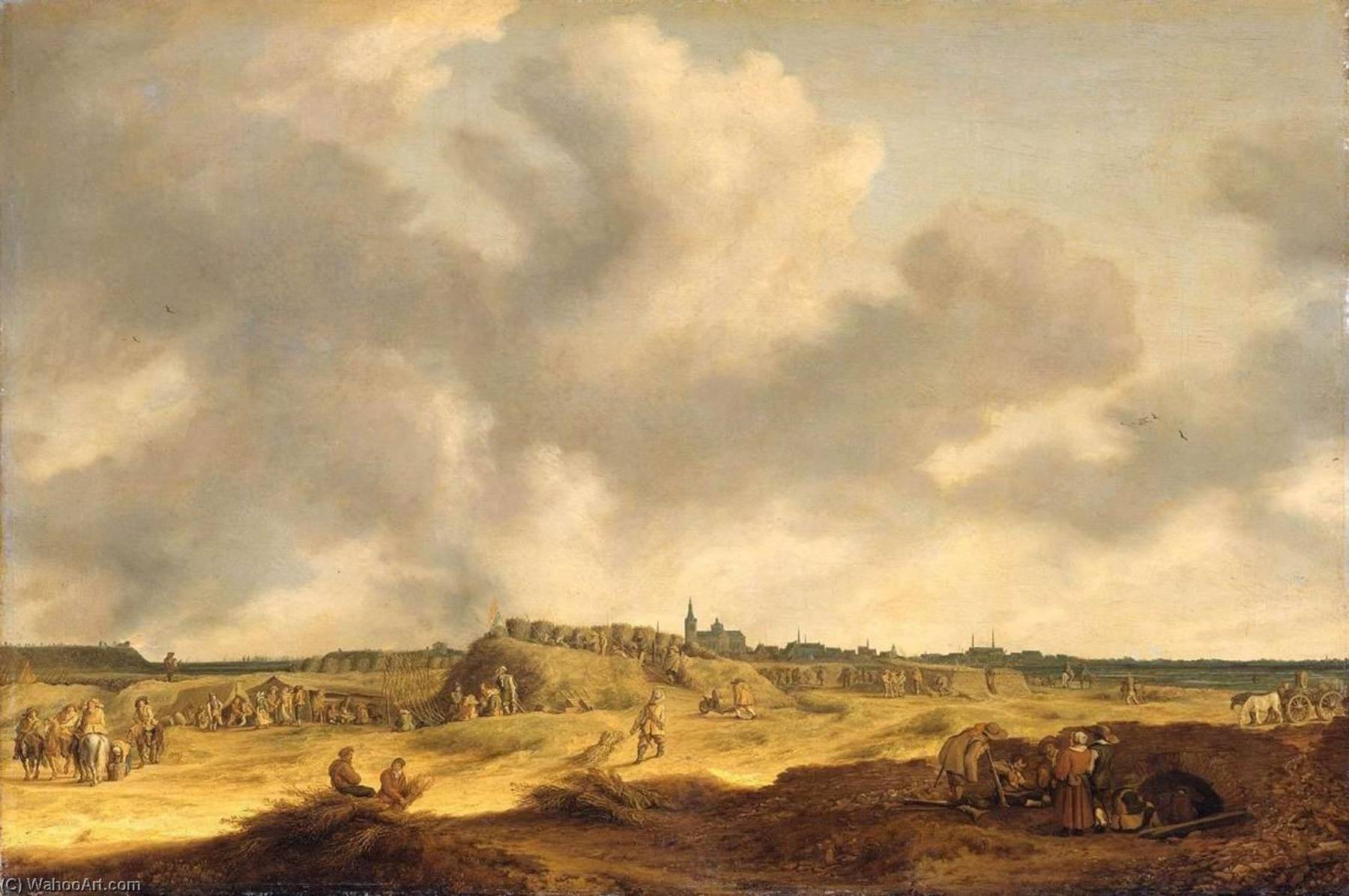
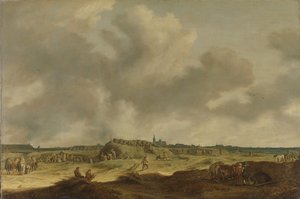
Siege of 's Hertogenbosch by Frederik Hendrik
 1639
1639 78.0 x 114.0 cm
 Read More
Giclée / Art Print
Museum-quality giclée or canvas print with fast production and flexible finish options. ( Buy Hand Made Painting Buy Image)




































Pick from our preset sizes that match the artwork's original proportions.

You may enter your own dimensions to fit a specific frame or space. If your selected size does not match the original image's proportions, we will either crop the artwork or extend the image with a mirrored or solid-fill edge. A digital mockup will be sent for your approval before production begins.
Please note that the on-screen preview does not reflect the actual cropping or extension. Only the mockup will accurately show the final composition.
While custom sizes are available, we recommend selecting a dimension from the predefined list to preserve the original proportions.
Worldwide Delivery () in 2 weeks instead of standard 4/5 weeks. (25 August)

Free Worldwide Express Shipping

High-Quality Linen Canvas

Full Shipping Insurance

Customs Tax Refund Guarantee

True Color Matching Guarantee

60-Day Return Policy (Defects Only)

100% Money-Back Guarantee

Bulk Discount Offer
 Glass option is only available in size under 110 CM

Siege of 's Hertogenbosch by Frederik Hendrik
Giclée / Art Print
Reproduction Size
-


Total Price
$ 63
Related Artworks



Artist Biography
The Architect of Landscapes: The Life and Legacy of Pieter de Neyn
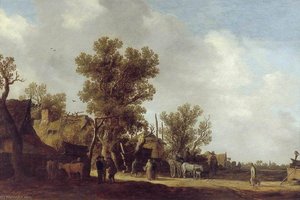
In the vibrant tapestry of the Dutch Golden Age, few artists captured the intersection of structural precision and atmospheric beauty as uniquely as Pieter de Neyn. Born in Haarlem in 1597, De Neyn’s path to artistic mastery was far from conventional. Before he ever held a brush to canvas, his hands were trained in the rugged, tactile world of masonry. This early apprenticeship, arranged by his father, instilled in him a profound understanding of form, weight, and the physical reality of the built environment. While he eventually turned his intellect toward the abstract realms of mathematics and architecture, this foundational period as a mason would forever haunt his paintings, lending them an unmistakable sense of structural integrity and spatial depth that set him apart from his contemporaries.
The evolution of De Neyn’s artistry was deeply intertwined with the mentorship of Esaias van de Velde. Between 1611 and 1617, during his formative years, De Neyn studied under this landscape master, absorbing the subtle tonal gradations and the delicate realism that defined the era's burgeoning landscape movement. This period of education was not merely about learning technique; it was an immersion into a shared aesthetic vision of the Dutch countryside. Alongside fellow students like Jan van Goyen, De Neyn learned to navigate the complexities of light and shadow, developing a style that could transition seamlessly from the tranquil, sun-drenched vistas of rural farmland to the more turbulent, dramatic skies of historical narratives.
A Mastery of Contrast and Composition
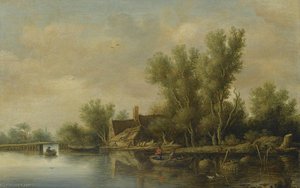
De Neyn’s oeuvre is characterized by a remarkable ability to balance the serene with the spectacular. His landscapes often invite the viewer into a world of quiet contemplation, where farmhouses sit nestled against rolling hills and river estuaries flow with a rhythmic grace. Yet, beneath this pastoral surface lies a sophisticated use of composition informed by his mathematical training. He frequently employed a dark, diagonal band in the foreground—a technique that serves to anchor the viewer before leading the eye toward an intense, luminous middle ground. This interplay of light and shadow creates a sense of theatricality, a hallmark of the Baroque spirit.
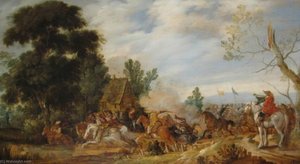
Beyond the idyllic, De Neyn possessed a profound talent for capturing the visceral energy of conflict. His battle scenes, such as the celebrated depictions related to the Siege of ’s-Hertogenbosch, demonstrate his ability to render chaos with meticulous detail. In these works, the artist does not merely document history; he recreates the atmosphere of war. One can almost feel the tension in the neatly lined pikes of the army camps and see the grit in the reinforced earthworks. By blending the architectural precision of a builder with the emotive power of a painter, he was able to portray both the grand scale of military maneuvers and the small, human moments of labor and survival that occur within the shadow of siege.
The Final Chapter and Enduring Influence
Despite his rising prominence and his appointment as a city sculptor in 1632, De Neyn’s life was tragically shortened. The very trade that provided his early foundation—masonry—is believed to have contributed to his untimely death from lung disease in 1639. Though his career was relatively brief, the impact of his work resonated through the decades of the seventeenth century. His ability to marry the technical rigors of architecture with the fluid beauty of nature left a lasting imprint on the Dutch landscape tradition.
Today, we remember Pieter de Neyn not just as a painter of scenes, but as an artist who understood the very bones of the world he depicted. His legacy lives on in the way his canvases continue to command attention through:
- Structural Depth: The use of mathematical perspective to create immersive, three-dimensional environments.
- Atmospheric Realism: A mastery of light that captures the fleeting moods of the Dutch sky and countryside.
- Narrative Complexity: The seamless integration of historical drama within the broader context of the natural landscape.
Pieter de Neyn
1597 - 1639
Quick Facts
- Artistic Movement Or Style: Baroque
- Artists Or Movements Influenced By This Artist: ['Landscape art']
- Artists Who Influenced This Artist:
- Esaias van de Velde
- Jan van Goyen
- Date Of Birth: 1597
- Date Of Death: 1639
- Full Name: Pieter de Neyn
- Nationality: Dutch
- Notable Artworks:
- Farm Houses on Country Road
- Siege of ’s-Hertogenbosch
- Place Of Birth: Netherlands