 Preview
 Send
Send Share
Share
 Details

 Download
 Similars
 X-Ray
X-Ray Diaporama
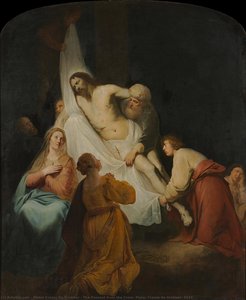
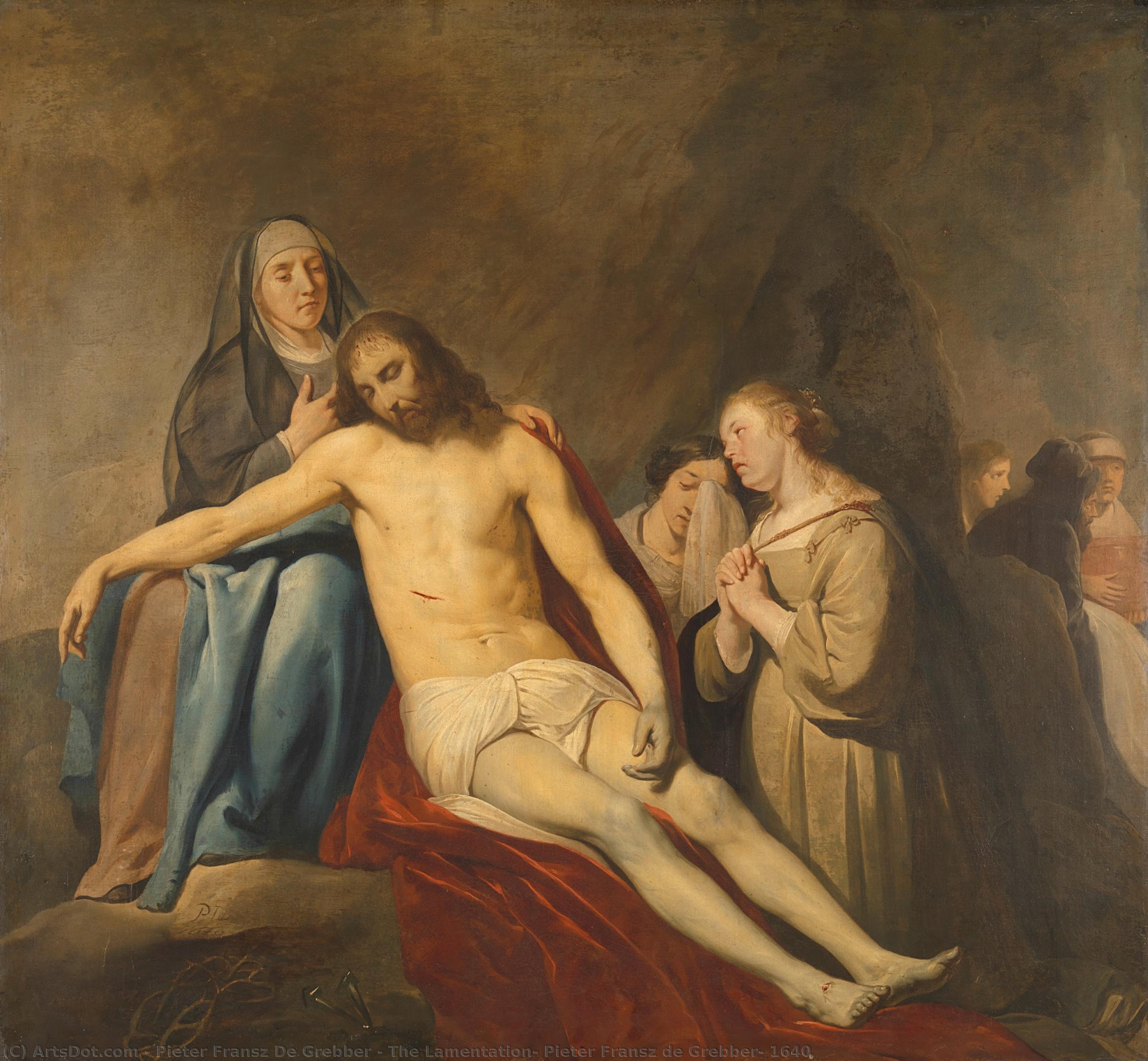
The Lamentation, Pieter Fransz de Grebber, 1640
 1640
1640 164.0 x 174.0 cm
 Read More
Hand Made Oil Reproduction
Hand-painted oil on canvas in your size and frame, made to order by our artists. ( Buy Print Buy Image)




































Pick from our preset sizes that match the artwork's original proportions.

You may enter your own dimensions to fit a specific frame or space. If your selected size does not match the original image's proportions, we will either crop the artwork or extend the painting with additional hand-painted elements. A digital mockup will be sent for your approval before production begins.
Please note that the on-screen preview does not reflect the actual cropping or extension. Only the mockup will accurately show the final composition.
While custom sizes are available, we recommend selecting a dimension from the predefined list to preserve the original proportions.
After order, ArtsDot.com team will email client for instructions and provide a mockup preview
Worldwide Delivery () in 3/4 weeks instead of standard 5 weeks. (25 August). No compromise on quality.

Free Worldwide Express Shipping

High-Quality Linen Canvas

Full Shipping Insurance

Customs Tax Refund Guarantee

True Color Matching Guarantee

60-Day Return Policy (Defects Only)

100% Money-Back Guarantee

Bulk Discount Offer
 Glass option is only available in size under 110 CM

The Lamentation, Pieter Fransz de Grebber, 1640
Reproduction Medium
Reproduction Size
-


Total Price
$ 263
Artwork Description
Related Artworks









Artist Biography
A Master of Haarlem Classicism
In the luminous tapestry of the Dutch Golden Age, few threads are woven with as much elegance and clarity as those spun by Pieter Fransz de Grebber. Born around 1600 in the historic city of Haarlem, De Grebber emerged from a lineage deeply rooted in both artistry and faith. As the eldest son of the painter and embroiderer Frans Pietersz de Grebber, his very first breaths were taken within the rhythmic atmosphere of a family workshop. This early immersion in a Catholic artistic household provided him with a unique cultural perspective, one that blended humanist principles with a profound devotion to narrative storytelling. His formative years were not merely an education in technique but a deep dive into a tradition where the brush and the needle both served the purpose of beauty and meaning.
The development of De Grebber’s hand was shaped by a remarkable confluence of influences. While his father provided the foundational skills, his instruction under the renowned Hendrick Goltzius introduced him to the dramatic tensions of Utrecht Caravaggism. This exposure to chiaroscuro—the powerful interplay of light and shadow—undoubtedly left its mark on his early sensibilities. Yet, De Grebber was never a mere imitator. He possessed the rare ability to absorb the dramatic energy of the Baroque and refine it into something uniquely his own. By synthesizing the robust compositions of Rubens with a more restrained, classical clarity, he became a primary architect of what would later be recognized as the "Haarlem Classicism" school.
The Art of Clarity and Light
De Grebber’s oeuvre is characterized by a remarkable sense of order and a subtle tonal gradation that distinguishes him from the more turbulent painters of his era. While many of his contemporaries sought to overwhelm the viewer with theatricality, De Grebber pursued a serene beauty. His landscapes often possess an understated elegance, capturing the quiet majesty of the Dutch countryside with a precision that feels both timeless and intimate. In his history paintings, he achieved a masterful balance; even in scenes of profound religious or mythological weight, there is a sense of well-organized composition that guides the eye through the narrative without confusion.
His technical prowess extended far beyond the canvas into the realms of portraiture and even printmaking. Whether depicting the solemnity of an altar piece for a hidden Catholic church or the quiet dignity of a private individual, his work maintains a consistent hallmark of remarkable clarity. This ability to render the human form with both anatomical accuracy and emotional resonance allowed him to navigate various genres with ease. His works, such as The Descent from the Cross, demonstrate how he could utilize light not just for drama, but to illuminate the spiritual gravity of a moment, making the divine feel tangibly present within the earthly realm.
Legacy and Historical Significance
The career of Pieter Fransz de Grebber was marked by prestigious commissions that elevated his status from a local master to an artist of international importance. His membership in the Haarlem Guild of St. Luke in 1632 provided him with the professional scaffolding necessary to secure patronage from the highest echelons of Dutch society. Most notably, his work for Frederik Hendrik, the Stadholder of Holland, saw him contributing to the decoration of magnificent spaces such as the Huis Honselaarsdijk in Naaldwijk and the Paleis Noordeinde in Huis ten Bosch. These projects were more than mere decorations; they were assertions of prestige and cultural sophistication.
Though his life was relatively short, ending around 1652 or 1653, the impact of his "Classicist Vision" endured. He stood alongside figures like Salomon de Bray as a pioneer of a movement that sought to bring a sense of balance and classical poise to the Dutch aesthetic. His legacy is found not only in the surviving canvases that grace museums today but in the very definition of the Haarlem school itself. Through his meticulous style, De Grebber ensured that the Golden Age was characterized not just by its wealth and expansion, but by a profound, luminous, and enduring sense of artistic harmony.
pieter fransz de grebber
1600 - 1652
Quick Facts
- Artistic Movement Or Style: Classicist Landscape Painting
- Artists Or Movements Influenced By This Artist: ['Salomon de Bray']
- Artists Who Influenced This Artist:
- Rubens
- Rembrandt
- Date Of Birth: ca. 1600
- Date Of Death: 1652/53
- Full Name: Pieter Fransz de Grebber
- Nationality: Dutch
- Notable Artworks:
- The Descent from the Cross
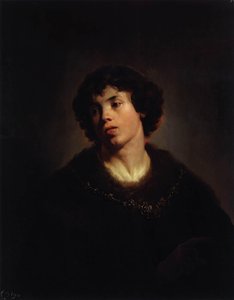
- Portrait of a Youth
- Place Of Birth: Haarlem, Netherlands