 Preview
 Send
Send Share
Share
 Details

 Download
 Similars
 X-Ray
X-Ray Diaporama
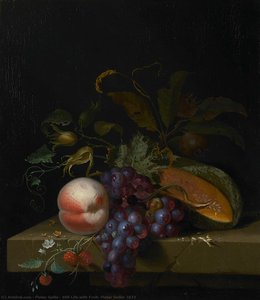
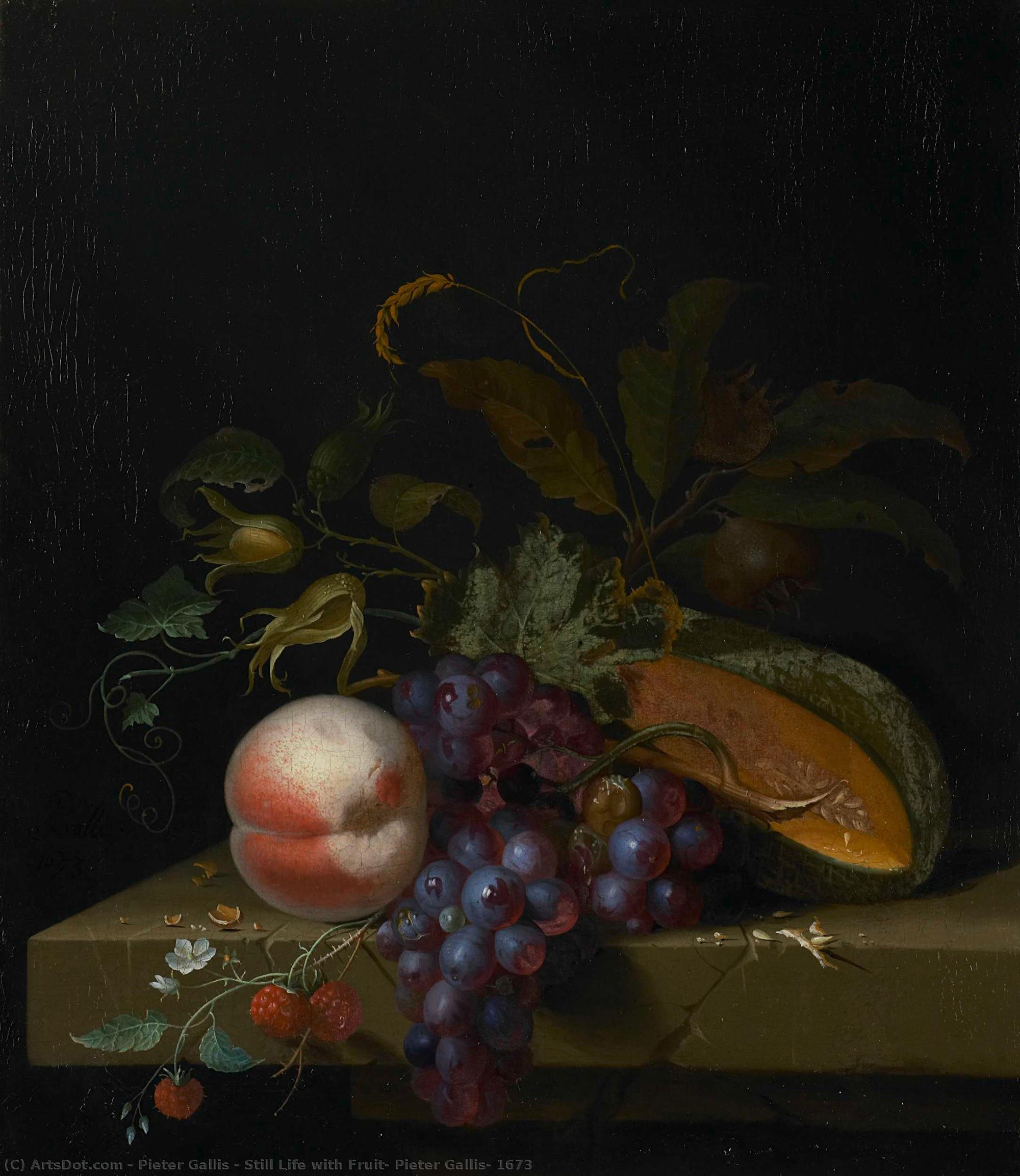
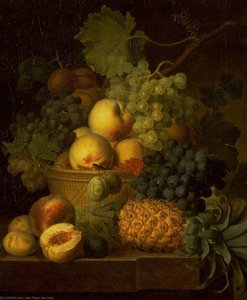
Still Life with Fruit, Pieter Gallis, 1673
 1673
1673 40.0 x 34.0 cm
 Read More
Hand Made Oil Reproduction
Hand-painted oil on canvas in your size and frame, made to order by our artists. ( Buy Print Buy Image)




































Pick from our preset sizes that match the artwork's original proportions.

You may enter your own dimensions to fit a specific frame or space. If your selected size does not match the original image's proportions, we will either crop the artwork or extend the painting with additional hand-painted elements. A digital mockup will be sent for your approval before production begins.
Please note that the on-screen preview does not reflect the actual cropping or extension. Only the mockup will accurately show the final composition.
While custom sizes are available, we recommend selecting a dimension from the predefined list to preserve the original proportions.
After order, ArtsDot.com team will email client for instructions and provide a mockup preview
Worldwide Delivery () in 3/4 weeks instead of standard 5 weeks. (23 August). No compromise on quality.

Free Worldwide Express Shipping

High-Quality Linen Canvas

Full Shipping Insurance

Customs Tax Refund Guarantee

True Color Matching Guarantee

60-Day Return Policy (Defects Only)

100% Money-Back Guarantee

Bulk Discount Offer
 Glass option is only available in size under 110 CM

Still Life with Fruit, Pieter Gallis, 1673
Reproduction Medium
Reproduction Size
-


Total Price
$ 263
Artwork Description
Related Artworks






Artist Biography
A Banker’s Brush: The Serene World of Pieter Gallis
Pieter Gallis, a name perhaps less immediately recognizable than his Dutch Golden Age contemporaries like Rembrandt or Vermeer, nevertheless occupies a fascinating niche in the history of 17th-century art. Born in 1633 in the bustling port town of Enkhuizen, Netherlands, Gallis’s life was an unusual blend of civic duty and artistic passion. He wasn't a painter by profession—his livelihood stemmed from his position as director of the local Bank van Lening, a municipal pawnshop and lending institution. This financial stability afforded him the luxury of pursuing painting not as a necessity, but as a deeply personal avocation. He moved to Purmerend in 1679, continuing his banking work before settling permanently in Hoorn in 1683, where he continued to paint until his death in 1697. This unique circumstance—a banker who painted—shaped both the subject matter and the spirit of his art. He was known as a friendly man, especially with artists and collectors, fostering a welcoming atmosphere within the artistic community despite his unconventional path.Still Life and Landscape: A Harmonious Vision
Gallis specialized in two primary genres: landscapes and still life paintings—often combining elements of both. His still lifes are particularly captivating, showcasing bountiful arrangements of flowers, fruits, insects, and occasionally game birds or other delicacies. These weren’t merely depictions of material abundance; they were carefully constructed visual feasts imbued with symbolic meaning. The exotic fruits featured in his work reflected the Netherlands' burgeoning global trade networks during the Golden Age, a testament to the nation’s prosperity and its reach across continents. Grapes frequently appear, alluding to the Eucharist, while walnuts might symbolize Christ’s divinity—subtle Christian motifs woven into scenes of earthly pleasure. His landscapes, though less numerous than his still lifes, share a similar tranquility and attention to detail. They often depict serene countrysides, bathed in soft light, evoking a sense of peace and harmony. His favorite color was blue, which he used extensively to create depth and atmosphere in his compositions.Influences and Artistic Development
While Gallis didn’t undergo formal artistic training—his banking career occupied much of his time—he clearly absorbed the influences prevalent within the Dutch Golden Age painting tradition. The meticulous realism and detailed observation characteristic of artists like Jan Davidsz. de Heem, a master of still life, are evident in Gallis's work. He also seems to have been inspired by the landscape painters of his region, though he developed a distinctive style that set him apart. His compositions often feature a balanced arrangement and a restrained palette, creating a sense of order and calm. He wasn’t interested in dramatic narratives or overt displays of virtuosity; instead, he focused on capturing the beauty and quiet dignity of everyday objects and scenes. His paintings are not flamboyant but rather possess a subtle elegance that rewards close viewing.A Legacy of Tranquility
Despite painting primarily as an amateur, Gallis garnered recognition during his lifetime, earning praise from art historian Arnold Houbraken, who noted his talent in *De groote schouburgh der Nederlantsche konstschilders en schilderessen* (1718). His works are held in esteemed collections such as the Rijksmuseum and the Victoria and Albert Museum, a testament to their enduring appeal. While he may not have produced an enormous body of work, the paintings that do survive offer a glimpse into the life of a man who found solace and expression through art—a banker whose brush captured the serene beauty of the Dutch Golden Age. His legacy lies in his ability to imbue ordinary subjects with a sense of quiet dignity and symbolic depth, creating works that continue to resonate with viewers today.Historical Significance
Pieter Gallis’s story is significant not only for the quality of his art but also for what it reveals about the broader cultural context of the Dutch Golden Age. His dual life—banker and painter—highlights the growing prosperity of the merchant class during this period, a class that increasingly had both the financial means and the leisure time to pursue artistic endeavors. His paintings reflect the era’s fascination with material wealth and global trade, but they also offer a more contemplative perspective, emphasizing the beauty and transience of life.- Dutch Golden Age Context: Gallis' work embodies the prosperity and artistic innovation of 17th-century Netherlands.
- Symbolism in Still Life: His paintings are rich with subtle Christian motifs, reflecting the religious beliefs of the time.
- Unique Position: As a banker who painted as an avocation, he represents a fascinating intersection of commerce and art.
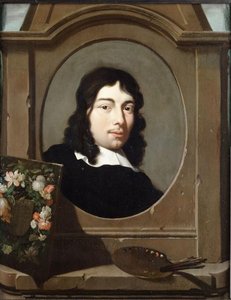
pieter gallis
1633 - 1697 , Netherlands
Quick Facts
- Artistic Movement Or Style: Dutch Golden Age painting
- Artists Who Influenced This Artist:
- Jan Davidsz. de Heem
- Cornelis de Heem
- Date Of Birth: 1633
- Date Of Death: 1697
- Full Name: Pieter Gallis
- Nationality: Dutch
- Notable Artworks:
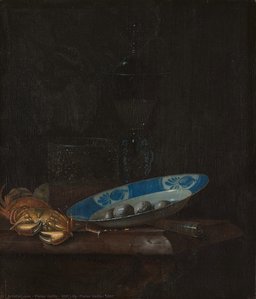
- Still Life with Fruit (1673)
- Still Life (1667)
- Place Of Birth: Enkhuizen, Netherlands