

 Preview
 Send
Send Share
Share
 Details

 Download
 Similars
 X-Ray
X-Ray Diaporama
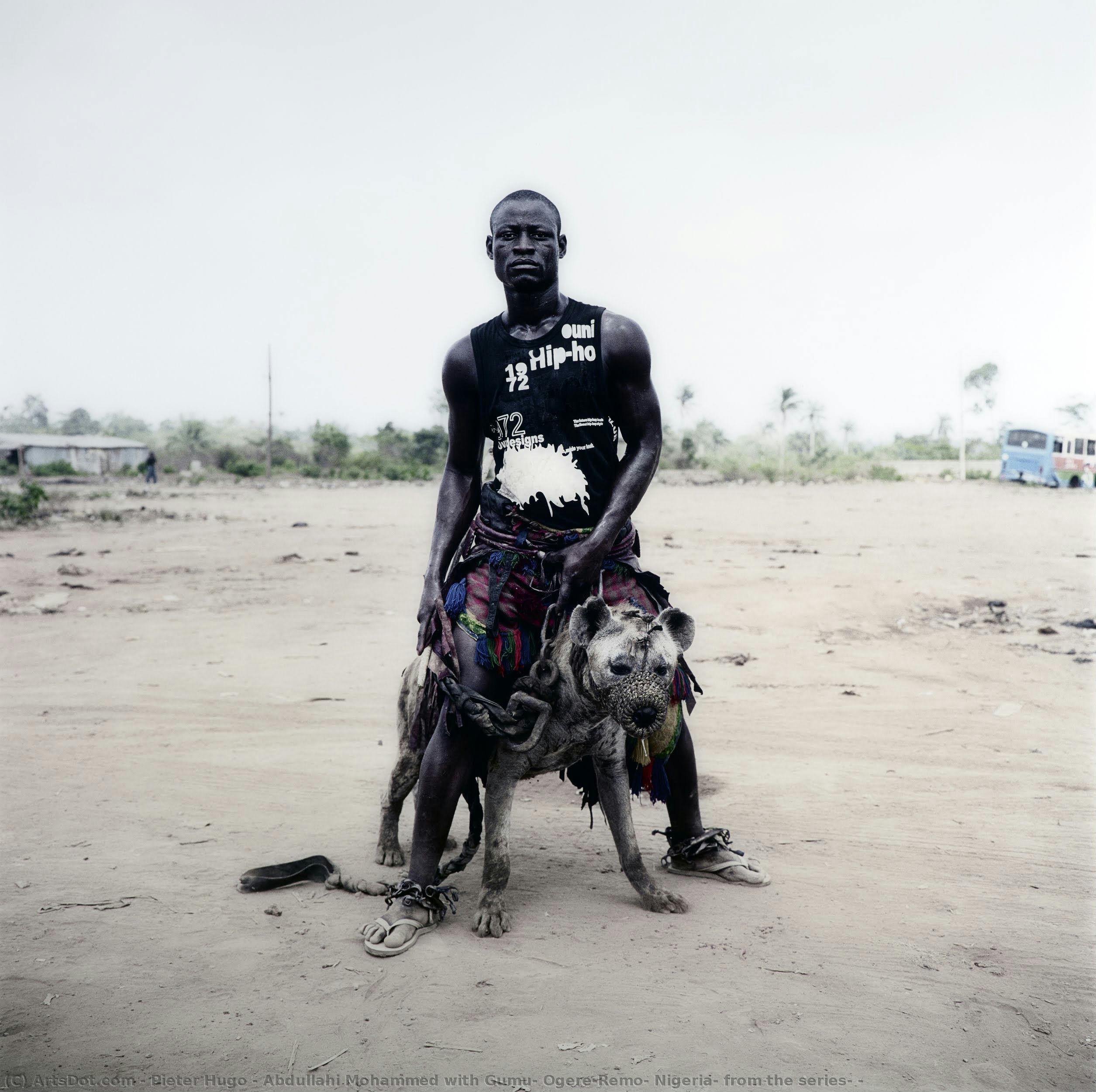
Abdullahi Mohammed with Gumu, Ogere-Remo, Nigeria, from the series:


 Read More
Purchase a high-resolution, enhanced digital image, far superior to the online preview.
Each file is meticulously prepared by our in-house specialists using advanced tools and expert manual retouching. We ensure every image has exceptional clarity, precise color accuracy, and fine detail.
The final file is delivered via email within 72 hours, optimized for immediate use in professional, editorial, and print environments. This is the same quality trusted by top-tier design studios, publishers, and galleries.
Digital Image
Download a high-resolution file for personal display, printing, and creative projects. ( Buy Print Buy Hand Made Painting)
Included in Every Digital Image Order
Expert Digital Delivery, Guaranteed
When you choose ArtsDot.com, you're not just getting an image - you're receiving a professionally enhanced digital artwork, crafted with precision and backed by a satisfaction guarantee. Here's everything that comes with your order, automatically:

Fast Email Delivery
Your high-resolution digital image file will be emailed to you within 72 hours of ordering - ready for immediate use.

AI-Enhanced Digital File
Your artwork is professionally optimized using advanced AI tools and manual editing, ensuring maximum detail, clarity, and color accuracy.

Free Lifetime Re-Delivery
Accidentally deleted or lost your file? No worries - we'll resend it to you anytime, free of charge.

No Import Fees - Ever
Enjoy your artwork instantly with zero customs, duties, or delivery fees - digital downloads are always tax-free.

Color Accuracy Guarantee
We ensure your digital image reflects the original colors as closely as possible using professional tools and color management.

60-Day Satisfaction Guarantee
If you're not satisfied with your digital image, we'll revise it or refund 100% within 60 days - no questions asked.

100% Money-Back Guarantee
Not satisfied? Get a full refund within 60 days of receiving your digital file - no questions asked.

Bulk Order Discounts
Buy 3 images, save 10% - Buy 5, save 15% - Buy 10+, save 20%. Great for creative projects, galleries, and agencies.
A Moment Frozen in Time: Pieter Hugo’s “Gadawan Kura”
The photograph "Abdullahi Mohammed with Gumu, Ogere-Remo, Nigeria," part of Pieter Hugo's acclaimed series “Gadawan Kura,” transcends mere documentation; it embodies a profound exploration of human connection against the backdrop of rural African life. Captured in 2007, this image encapsulates Hugo’s signature style – a meticulous blend of documentary realism and artistic sensitivity—resulting in an artwork that resonates with both visual beauty and intellectual depth.Composition and Visual Narrative
Hugo's masterful framing centers on two figures: Abdullahi Mohammed, perched atop a dog named Gumu, against the muted expanse of a Nigerian landscape. The deliberate positioning emphasizes power dynamics subtly conveyed through posture and gaze. The dog’s lowered head contributes to an atmosphere of quiet contemplation, juxtaposed with Mohammed’s confident stance—a visual dialogue hinting at cultural traditions and perhaps even unspoken hierarchies. Secondary figures in the distant background provide context without distracting from the central subject matter, reinforcing the photograph's narrative focus.Technique and Aesthetic Considerations
Hugo employs a C-print photographic process, known for its archival stability and tonal richness. The grainy texture of the image—likely stemming from the film used—is not merely accidental but integral to conveying the materiality of the scene and anchoring it firmly in its environment. Diffused overcast lighting softens shadows, minimizing harsh contrasts and fostering an overall feeling of serenity. Lines dominate the composition – horizontal stretches mirroring the horizon line and diagonal lines guiding the viewer’s eye across the frame – while organic shapes echo the natural contours of the landscape. The muted color palette—primarily shades of grey, brown, and beige—reflects the desolate beauty of the region and underscores Hugo's commitment to capturing authentic visual experience.Historical Context and Cultural Significance
“Gadawan Kura,” as a whole, delves into themes of nomadic pastoralism in Niger Delta Nigeria. Hugo’s work seeks to portray not just what is seen but also what is felt—the spirit of place and the complexities of human existence within it. The photograph speaks to broader questions about identity, community, and the enduring relationship between humans and animals across cultures. It's a testament to Hugo’s ability to transform everyday observation into evocative artistic expression.Emotional Resonance and Artistic Impact
Ultimately, “Abdullahi Mohammed with Gumu” succeeds in conveying a palpable sense of curiosity and understated dignity. The image invites contemplation on the significance of seemingly simple interactions—a man and his animal companion—within a larger cultural framework. Hugo’s photograph serves as an inspiring reminder that art can illuminate hidden narratives and foster empathy for perspectives beyond our own, cementing its place as a cornerstone of contemporary photographic artistry.Related Artworks
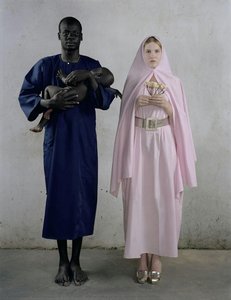
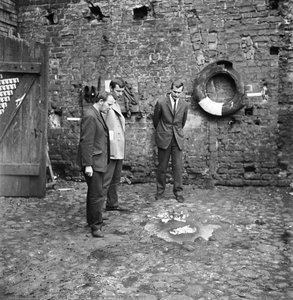
Artist Biography
A Photographer of the In-Between: Pieter Hugo and the Weight of Identity
Pieter Hugo, born in Johannesburg, South Africa, in 1976, is a photographer whose work resonates with a profound sense of unease and empathy. He doesn’t offer easy narratives or picturesque representations; instead, he confronts viewers with complex portraits that grapple with issues of identity, community, and the lingering scars of history. Growing up during the tumultuous transition from Apartheid, Hugo experienced a unique disconnect—feeling deeply connected to his homeland yet perpetually positioned as an outsider within its social fabric. This sense of alienation became a driving force in his artistic practice, fueling a desire to explore the marginalized and often overlooked corners of South African society, and beyond. His early career saw him working within the film industry in Cape Town, but it was a two-year residency at Fabrica research centre in Italy that truly solidified his path as a photographic artist. This period allowed him to hone his distinctive style—a blend of studio portraiture, documentary observation, and carefully staged compositions.The Hyena and Beyond: Early Work and Emerging Themes
Hugo’s breakthrough project, The Hyena & Other Men (2007), immediately established him as a significant voice in contemporary photography. The series depicts Nigerian men who travel with hyenas or baboons, using them to perform tricks for money and, more disturbingly, to intimidate and collect debts. These images are not simply ethnographic documentation; they are deeply unsettling explorations of power dynamics, economic desperation, and the blurring lines between human and animal. Hugo’s approach is deliberately confrontational—the portraits are starkly lit, often unflinching in their gaze, forcing viewers to engage with the subjects on a visceral level. He avoids romanticizing or exoticizing his subjects, instead presenting them with a raw honesty that challenges conventional notions of representation. This project sparked considerable debate, raising questions about exploitation and the ethics of portraying vulnerable communities. However, it also garnered widespread acclaim for its artistic merit and its willingness to tackle difficult subject matter. Following this success, Hugo continued to explore similar themes in projects like Messina/Mussina (2007), which documented life on the border between Zimbabwe and South Africa, focusing on the impact of economic migration and the AIDS epidemic.Expanding Horizons: From Local Narratives to Global Concerns
Hugo’s work gradually expanded beyond the specific context of South Africa, though it never lost its underlying concern with social justice and human dignity. Nollywood (2009) offered a fascinating glimpse into the vibrant yet chaotic world of the Nigerian film industry, while Permanent Error (2011) explored the environmental consequences of electronic waste in Ghana. These projects demonstrated Hugo’s ability to connect local narratives to broader global issues—the exploitation of labor, the impact of consumerism, and the challenges of postcolonial development. He doesn't shy away from complexity; his images often reveal layers of contradiction and ambiguity, refusing easy answers or simplistic interpretations. His work is characterized by a meticulous attention to detail—from the carefully chosen backgrounds to the subtle nuances of expression on his subjects’ faces. This deliberate approach reflects his desire to create portraits that are both visually striking and intellectually engaging.1994: A Generation Defined
Perhaps one of Hugo's most poignant projects is 1994, a series focusing on children born in Rwanda and South Africa after the pivotal year marking the end of Apartheid and the Rwandan genocide. These portraits, often featuring children dressed in fanciful clothing posed within natural landscapes, are imbued with a sense of hope tempered by the weight of history. The project is deeply personal for Hugo, as 1994 was also the year he turned eighteen—a time of immense political change and personal awakening. He sought to capture the resilience and potential of this generation, while acknowledging the indelible mark left by past trauma. 1994 is not simply a celebration of new beginnings; it’s a meditation on memory, identity, and the enduring legacy of oppression.A Lasting Impact: Hugo's Historical Significance
Pieter Hugo has become one of the most influential photographers of his generation. His work challenges viewers to confront uncomfortable truths about power, privilege, and representation. He is not simply documenting reality; he is actively engaging with it—questioning its assumptions and exposing its contradictions. His influence can be seen in the work of numerous contemporary artists who are similarly grappling with issues of social justice and human dignity. Hugo’s photographs have been exhibited in major museums around the world, including the Rijksmuseum, the National Portrait Gallery in London, and the Tate Modern. He has received numerous awards and accolades for his artistic achievements, solidifying his position as a leading figure in contemporary photography. His legacy lies not only in the beauty and power of his images but also in his unwavering commitment to ethical representation and his willingness to challenge conventional norms.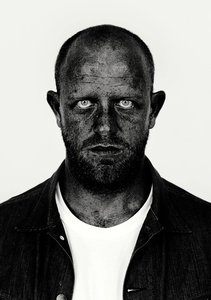
pieter hugo
1976 - , South Africa
Quick Facts
- Artistic Movement Or Style: Portraiture, Documentary
- Date Of Birth: 1976
- Full Name: Pieter Hugo
- Nationality: South African
- Notable Artworks:
- The Hyena and Other Men
- Looking Aside
- Messina/Mussina
- Nollywood
- Permanent Error
- Place Of Birth: Johannesburg, South Africa

