 Preview
 Send
Send Share
Share
 Details

 Download
 Similars
 X-Ray
X-Ray Diaporama
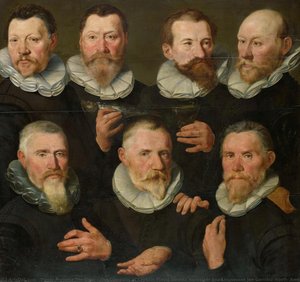
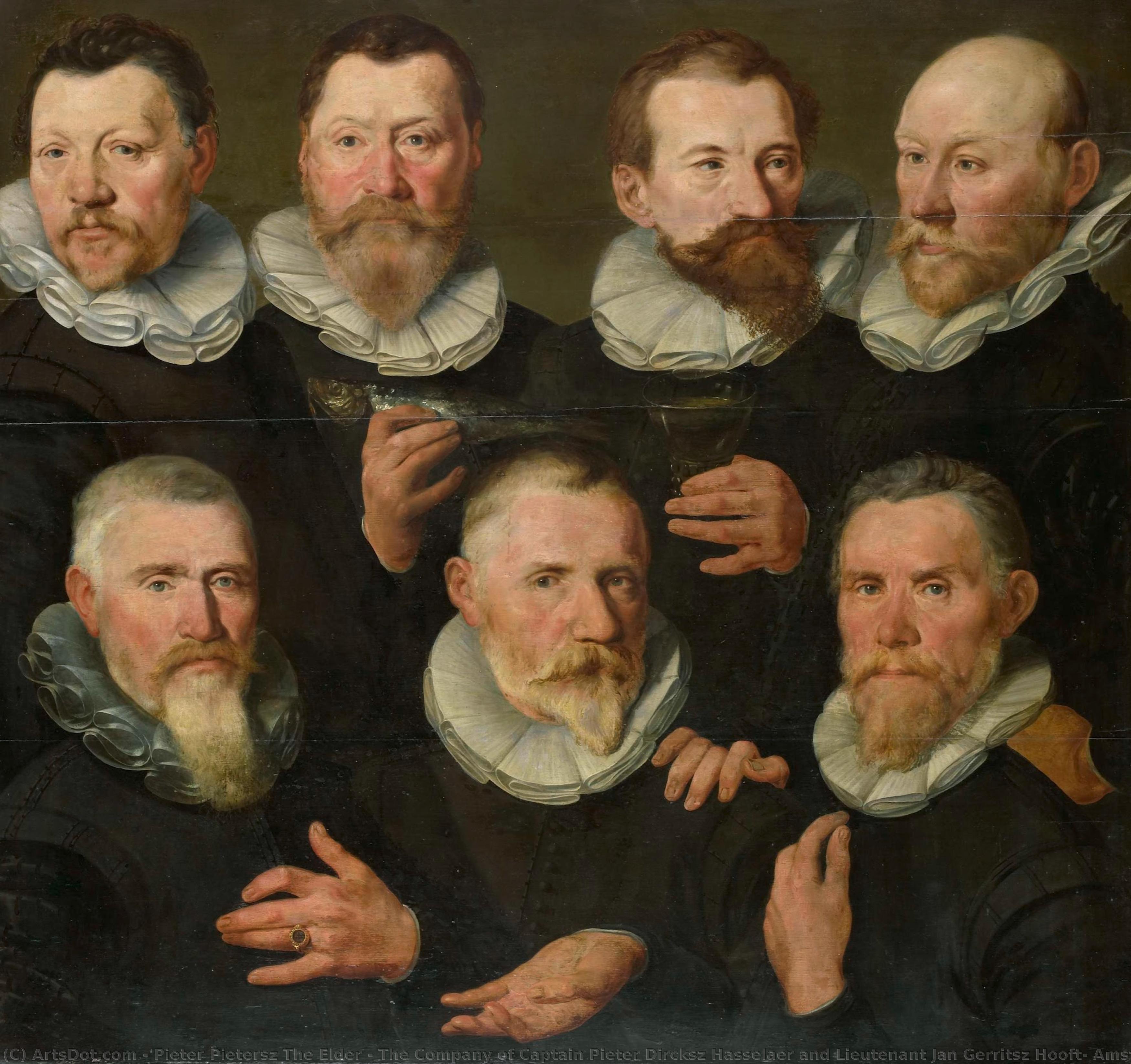
The Company of Captain Pieter Dircksz Hasselaer and Lieutenant Jan Gerritsz Hooft, Amsterdam, Pieter Pietersz. (I) (circle of), c. 1595 - c. 1605
 1605
1605 98.0 x 106.0 cm
 Read More
Hand Made Oil Reproduction
Hand-painted oil on canvas in your size and frame, made to order by our artists. ( Buy Print Buy Image)




































Pick from our preset sizes that match the artwork's original proportions.

You may enter your own dimensions to fit a specific frame or space. If your selected size does not match the original image's proportions, we will either crop the artwork or extend the painting with additional hand-painted elements. A digital mockup will be sent for your approval before production begins.
Please note that the on-screen preview does not reflect the actual cropping or extension. Only the mockup will accurately show the final composition.
While custom sizes are available, we recommend selecting a dimension from the predefined list to preserve the original proportions.
After order, ArtsDot.com team will email client for instructions and provide a mockup preview
Worldwide Delivery () in 3/4 weeks instead of standard 5 weeks. (7 September). No compromise on quality.

Free Worldwide Express Shipping

High-Quality Linen Canvas

Full Shipping Insurance

Customs Tax Refund Guarantee

True Color Matching Guarantee

100-Day Return Policy (Defects Only)

100% Money-Back Guarantee

Bulk Discount Offer
 Glass option is only available in size under 110 CM

The Company of Captain Pieter Dircksz Hasselaer and Lieutenant Jan Gerritsz Hooft, Amsterdam, Pieter Pietersz. (I) (circle of), c. 1595 - c. 1605
Reproduction Medium
Reproduction Size
-


Total Price
$ 263
Related Artworks









Artist Biography
A Life Rooted in Antwerp: The World of Pieter Pietersz the Elder
Pieter Pietersz the Elder, born around 1540 in the bustling port city of Antwerp, stands as a fascinating figure bridging the High Renaissance and the burgeoning Dutch Mannerism. His life unfolded during a period of immense artistic ferment, religious upheaval, and shifting cultural values—a context that profoundly shaped his unique vision. While often overshadowed by contemporaries like Pieter Bruegel the Elder, Pietersz carved out a distinctive niche for himself through a compelling blend of portraiture, genre scenes, and an intriguing exploration of everyday life imbued with subtle symbolism. His father, Pieter Aertsen, was already a renowned painter, known for his innovative market scenes that combined still life elements with biblical narratives; this familial artistic legacy undoubtedly played a crucial role in Pietersz’s early development. Karel van Mander, the influential Dutch art historian and biographer, noted Pietersz followed in his father's footsteps but specialized in portraiture due to limited opportunities for large-scale commissions—a pragmatic shift that nonetheless allowed him to flourish.From Portraits to Genre: A Developing Artistic Voice
Pietersz’s early career centered on the demanding craft of portrait painting, a skill honed through diligent apprenticeship and observation. However, he soon began to explore broader thematic territory, drawn towards the depiction of genre scenes—slices of daily life rendered with meticulous detail and an increasingly sophisticated understanding of composition. This transition wasn't abrupt; it was a gradual evolution influenced by the artistic climate of Antwerp, then a major center for both religious painting and burgeoning commercial art. The city’s vibrant markets, bustling taverns, and domestic interiors provided rich subject matter for his growing interest in representing the world around him. He became a member of the Guild of Saint Luke in Antwerp in 1542, solidifying his position within the artistic community. His work during this period reveals a keen eye for characterization and an ability to capture the nuances of human interaction. While less overtly dramatic than some of his contemporaries, Pietersz’s portraits possess a quiet dignity and psychological depth that set them apart.The Influence of Family and the Northern Renaissance
Pietersz's artistic lineage is central to understanding his style. His father, Pieter Aertsen, pioneered monumental genre scenes—works that juxtaposed still life elements with biblical narratives in unexpected ways. This innovative approach clearly influenced Pietersz’s own compositions, though he developed a more restrained and nuanced aesthetic. Beyond his familial connection, the broader currents of the Northern Renaissance also played a significant role. The meticulous realism of Jan van Eyck, the expressive power of Albrecht Dürer, and the complex symbolism of Hieronymus Bosch all left their mark on Pietersz’s work. He absorbed these influences, synthesizing them into a distinctive style characterized by careful observation, subtle humor, and an underlying moral sensibility. His paintings often feature richly detailed interiors filled with everyday objects—a testament to his mastery of still life painting—and populated by figures engaged in seemingly mundane activities that nonetheless carry deeper symbolic weight.Legacy and Historical Significance
Pietersz’s later years saw him return to Amsterdam, where he continued to produce a steady stream of portraits and genre scenes. He married Magdalena Pietersz, the daughter of a glass painter in Haarlem, in 1574. He died in Amsterdam in 1603 at the age of 62, leaving behind a body of work that offers a fascinating glimpse into the lives and customs of the 16th-century Netherlands. While not as widely celebrated as some of his contemporaries, Pietersz’s contribution to Dutch Renaissance painting is significant. His paintings provide valuable insights into the social and cultural context of his time, while his masterful technique and subtle symbolism continue to captivate viewers today. His influence can be seen in the works of later Flemish Baroque painters and Dutch still life artists, solidifying his place as a key figure in the development of Northern European art. The rediscovery and restoration of works like *The Barleycorn Counter* at the Museum der bildenden Künste Leipzig further illuminate his artistic skill and enduring legacy.- Born: Antwerp, Belgium (c. 1540)
- Died: Amsterdam, Netherlands (1603)
- Key Style: Dutch Renaissance painting, portraiture, genre scenes
- Influences: Pieter Aertsen (father), Jan van Eyck, Albrecht Dürer, Hieronymus Bosch
- Notable Works: Portraits and various genre scenes depicting everyday life.

pieter pietersz the elder
1540 - 1603 , Belgium
Quick Facts
- Artistic Movement Or Style: Renaissance painting
- Artists Who Influenced This Artist: ['Pieter Aertsen']
- Date Of Birth: 1540
- Date Of Death: 1603
- Full Name: Pieter Pietersz the Elder
- Nationality: Dutch
- Place Of Birth: Antwerp, Belgium