 Preview
 Send
Send Share
Share
 Details

 Download
 Similars
 X-Ray
X-Ray Diaporama
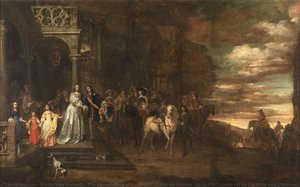
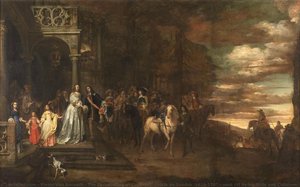
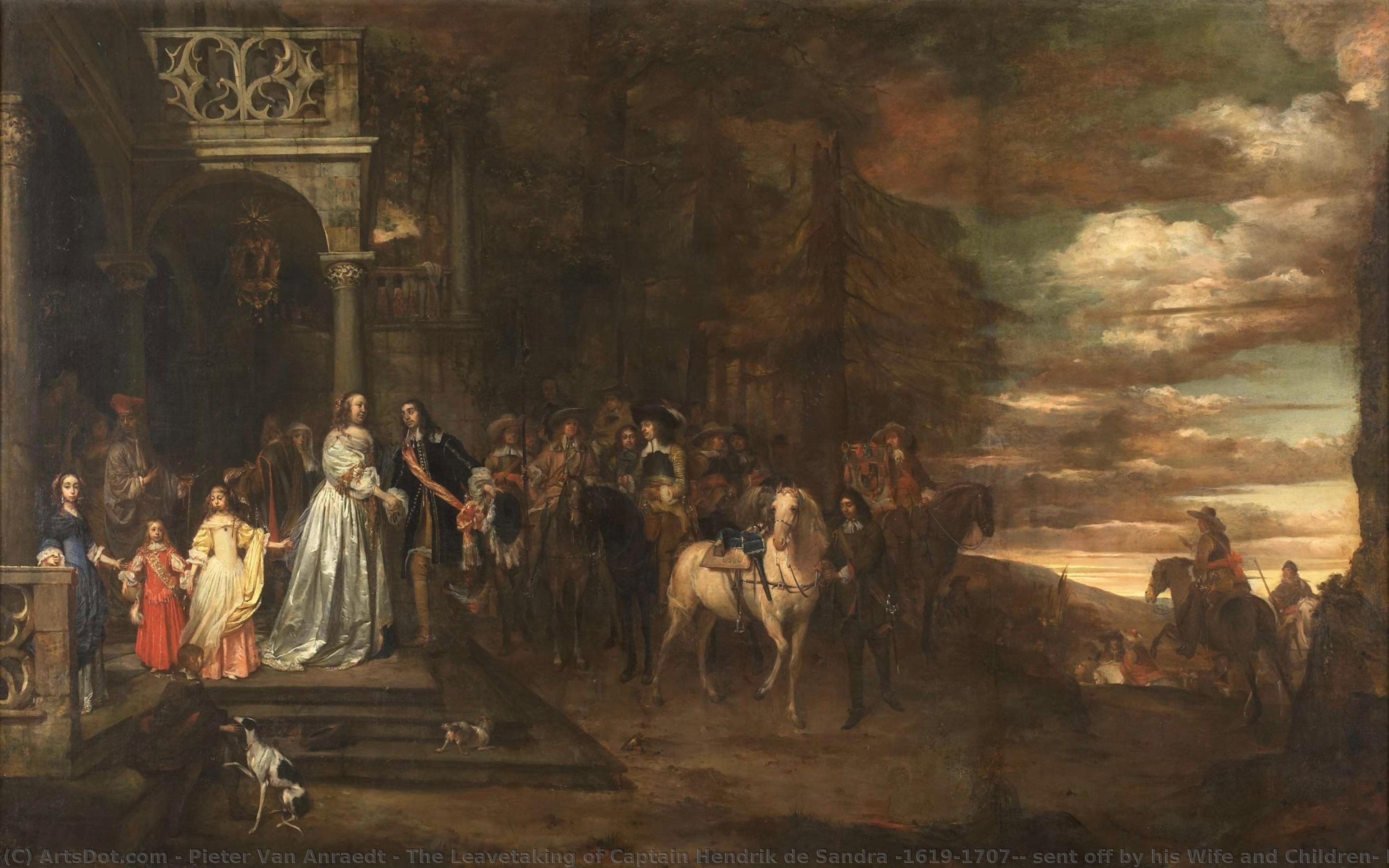
The Leavetaking of Captain Hendrik de Sandra (1619-1707), sent off by his Wife and Children, Pieter van Anraedt, 1661
 1661
1661 155.0 x 246.0 cm
 Read More
Giclée / Art Print
Museum-quality giclée or canvas print with fast production and flexible finish options. ( Buy Hand Made Painting Buy Image)




































Pick from our preset sizes that match the artwork's original proportions.

You may enter your own dimensions to fit a specific frame or space. If your selected size does not match the original image's proportions, we will either crop the artwork or extend the image with a mirrored or solid-fill edge. A digital mockup will be sent for your approval before production begins.
Please note that the on-screen preview does not reflect the actual cropping or extension. Only the mockup will accurately show the final composition.
While custom sizes are available, we recommend selecting a dimension from the predefined list to preserve the original proportions.
Worldwide Delivery () in 2 weeks instead of standard 4/5 weeks. (30 August)

Free Worldwide Express Shipping

High-Quality Linen Canvas

Full Shipping Insurance

Customs Tax Refund Guarantee

True Color Matching Guarantee

60-Day Return Policy (Defects Only)

100% Money-Back Guarantee

Bulk Discount Offer
 Glass option is only available in size under 110 CM

The Leavetaking of Captain Hendrik de Sandra (1619-1707), sent off by his Wife and Children, Pieter van Anraedt, 1661
Giclée / Art Print
Reproduction Size
-


Total Price
$ 63
Related Artworks








Artist Biography
The Enigmatic Vision of Pieter Van Anraedt
Pieter Van Anraedt remains a figure shrouded in the mists of artistic history, a painter whose work evokes a profound sense of melancholy and spiritual yearning despite limited biographical detail. Born in an unknown location sometime around the mid-17th century – records are frustratingly sparse – he flourished primarily during the late Baroque period, though his style defies easy categorization. He wasn't part of any prominent academy or guild; instead, Van Anraedt appears to have operated on the periphery of established artistic circles, accepting commissions from a select clientele and cultivating a deeply personal aesthetic that set him apart. This isolation contributed to his relative obscurity during his lifetime, but has also fueled an enduring fascination with his oeuvre in modern times. What little is known suggests a life dedicated entirely to his art, eschewing public recognition for the pursuit of inner vision. He died sometime after 1720, leaving behind a small but powerfully evocative body of work that continues to captivate and intrigue.A Style Forged in Shadow: Influences and Development
Van Anraedt’s artistic development is difficult to trace with precision due to the lack of documented training or early works. However, scholars identify strong influences from several key sources. The dramatic chiaroscuro – the intense contrast between light and dark – characteristic of Caravaggio's paintings is undeniably present in Van Anraedt’s compositions, particularly his depictions of religious subjects. He also seems to have absorbed elements of Rembrandt van Rijn’s psychological realism, evident in the nuanced expressions and introspective gazes of his figures. The influence isn’t merely imitative; rather, Van Anraedt synthesized these Baroque masters with a distinctly Northern sensibility, incorporating a delicate precision in rendering detail reminiscent of Jan Vermeer. Early works – those tentatively attributed to him based on stylistic analysis – show a gradual shift from more conventional religious scenes towards increasingly intimate and symbolic portrayals. He moved away from grand narratives, focusing instead on solitary figures caught in moments of quiet contemplation or spiritual crisis. This evolution suggests a growing dissatisfaction with established artistic conventions and a desire to explore the complexities of human emotion and faith on a more personal level. His palette remained subdued throughout his career, dominated by earth tones, deep blues, and rich blacks, further enhancing the sense of mystery and introspection that permeates his paintings.Themes of Solitude and Spiritual Quest
The core themes explored in Van Anraedt’s work revolve around solitude, spiritual quest, and the fragility of human existence. Religious subjects are frequent, but rarely depict triumphant miracles or divine intervention. Instead, he focuses on moments of doubt, suffering, and quiet devotion. His paintings often feature a single figure – a penitent saint, a grieving widow, a scholar lost in thought – isolated against a dark background, bathed in a single shaft of light.- The Weight of Faith: Van Anraedt’s depictions of biblical figures are often imbued with a sense of profound melancholy, emphasizing the burden of faith and the struggle to reconcile belief with human suffering.
- Vanitas Symbolism: Recurring motifs such as skulls, decaying flowers, and extinguished candles serve as reminders of mortality and the transience of earthly pleasures. These elements aren’t presented in a morbid way, but rather as invitations to contemplate the deeper meaning of life.
- The Power of Inner Light: Despite the pervasive darkness, Van Anraedt's paintings are never entirely devoid of hope. The single source of light that illuminates his figures often symbolizes divine grace or the enduring power of the human spirit.