 Preview
 Send
Send Share
Share
 Details

 Download
 Similars
 X-Ray
X-Ray Diaporama
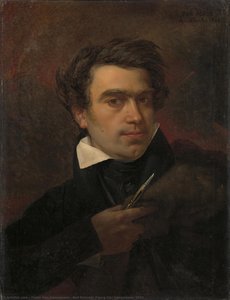
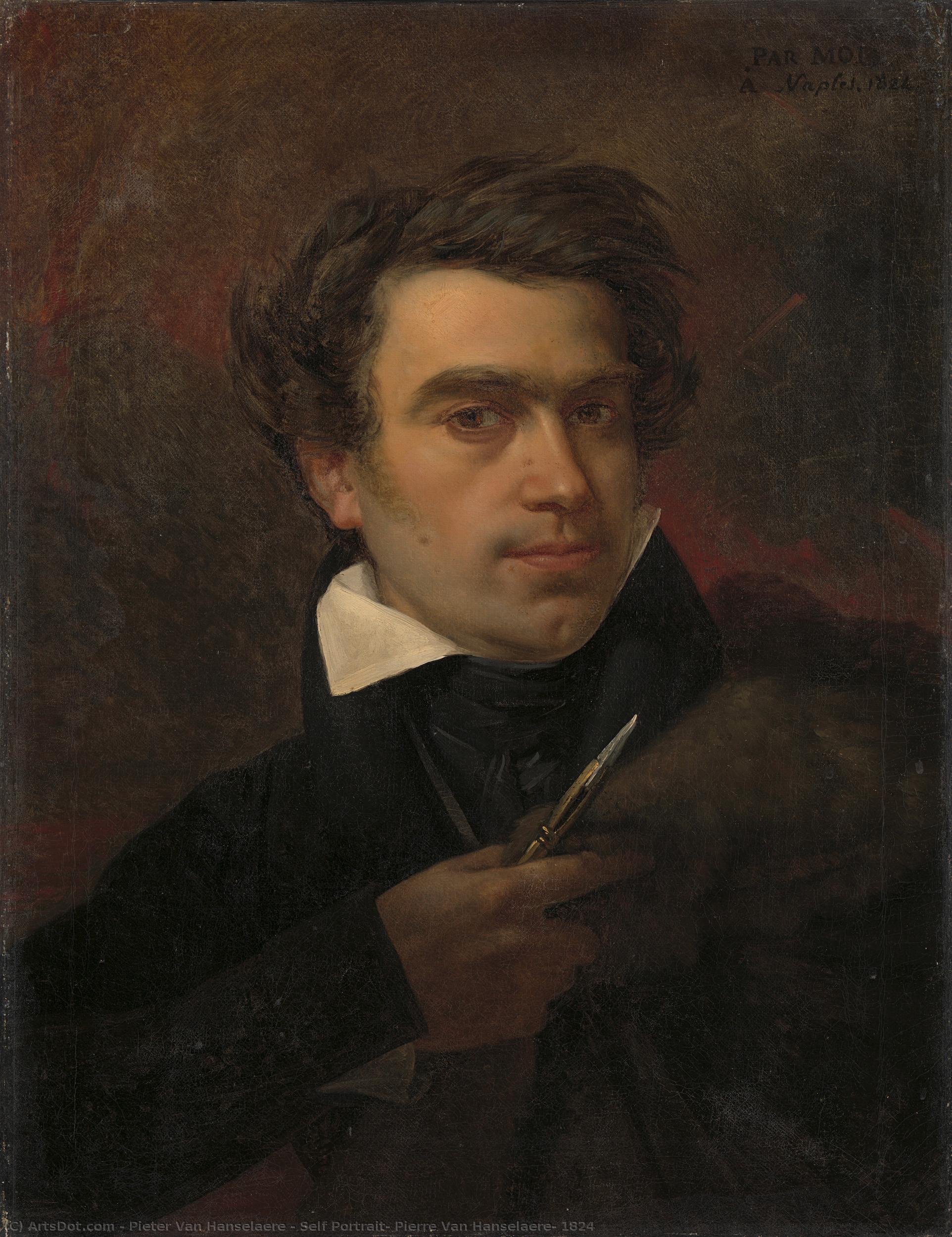
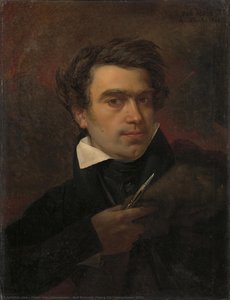
Self Portrait, Pierre Van Hanselaere, 1824
 Romanticism
 1824
1824 64.0 x 49.0 cm
 Read More
Giclée / Art Print
Museum-quality giclée or canvas print with fast production and flexible finish options. ( Buy Hand Made Painting Buy Image)




































Pick from our preset sizes that match the artwork's original proportions.

You may enter your own dimensions to fit a specific frame or space. If your selected size does not match the original image's proportions, we will either crop the artwork or extend the image with a mirrored or solid-fill edge. A digital mockup will be sent for your approval before production begins.
Please note that the on-screen preview does not reflect the actual cropping or extension. Only the mockup will accurately show the final composition.
While custom sizes are available, we recommend selecting a dimension from the predefined list to preserve the original proportions.
Worldwide Delivery () in 2 weeks instead of standard 4/5 weeks. (22 August)

Free Worldwide Express Shipping

High-Quality Linen Canvas

Full Shipping Insurance

Customs Tax Refund Guarantee

True Color Matching Guarantee

60-Day Return Policy (Defects Only)

100% Money-Back Guarantee

Bulk Discount Offer
 Glass option is only available in size under 110 CM

Self Portrait, Pierre Van Hanselaere, 1824
Giclée / Art Print
Reproduction Size
-


Total Price
$ 63
Collectible Description
Related Artworks
Artist Biography
Early Life and Academic Foundations
Pieter van Hanselaere, born in Ghent on July 31st, 1786, emerged as a significant figure within the neoclassical art scene of Belgium. His artistic journey began under the tutelage of Pierre Van Huffel at the Academy of Ghent, laying a solid foundation in traditional techniques and form. However, van Hanselaere’s ambition extended beyond his local training; he sought to immerse himself in the heart of European artistry by traveling to Paris in 1809. There, he enrolled at the prestigious Académie royale de peinture et de sculpture, becoming a student of Jacques-Louis David—a pivotal moment that would profoundly shape his aesthetic sensibilities and stylistic direction. David’s influence instilled within van Hanselaere a dedication to precise draftsmanship, historical accuracy, and a restrained emotional palette characteristic of neoclassical painting. This period was crucial in establishing the core principles that would define his future work, even as he later incorporated elements of Romantic realism.A Journey Through Italy and Royal Patronage
The Napoleonic Wars initially hindered van Hanselaere’s aspirations for further study abroad, delaying his planned sojourn to Italy until 1816. Once able to travel, he first settled in Rome, where he honed his portraiture skills by capturing the likenesses of prominent officials. His talent quickly garnered attention, leading him onward to Naples. It was here that van Hanselaere truly flourished, securing a position as the painter for the royal court—a testament to his growing reputation and mastery of technique. This patronage provided both financial stability and access to a discerning audience, allowing him to refine his artistic voice and experiment with larger-scale compositions. His early work focused on portraiture, demonstrating an exceptional level of technical perfection and attention to detail; however, the allure of historical and religious scenes would soon beckon.Professor at Ghent and the Pursuit of Grand Narratives
In 1828, van Hanselaere returned to his native Ghent with a wealth of experience and a burgeoning career. A professorship opened up at the Academy, prompting him to compete for the position—a challenge he met with dedication, submitting works like *Suzanna and the Elders*. Successfully securing the role in 1829, he dedicated himself to nurturing the next generation of artists, among his pupils were Cornelis Kimmel and Pierre Olivier Joseph Coomans. This period marked a shift towards more ambitious projects, reflecting his desire to engage with grand historical narratives. He exhibited widely, building upon his established fortune and even acquiring three houses in the Rue Courte du Marais—a symbol of his success and standing within the artistic community.The Disappointment of *Philip van Artevelde* and Later Years
Van Hanselaere’s most significant undertaking was undoubtedly *Philip van Artevelde and his army leaving Ghent to fight Louis II, Count of Flanders (1381)*—a monumental work measuring 24 by 16 feet. This *pièce capitale*, as it was known, represented the culmination of his artistic vision and a bold attempt to capture a pivotal moment in Flemish history. Unfortunately, critical reception proved overwhelmingly negative. The composition was deemed confused and lacking clarity, dealing a severe blow to van Hanselaere’s confidence. He never fully recovered from this disappointment. Adding to his personal struggles, the death of his only son further hastened his decline. Pieter van Hanselaere passed away on March 10th, 1862, leaving behind a legacy marked by both technical brilliance and the poignant reminder that artistic success is not always guaranteed. His work continued to be exhibited, including pieces held in the Rijksmuseum in Amsterdam as late as 1890, ensuring his place within the annals of Belgian art history.Legacy and Artistic Significance
- Neoclassical Foundation: Van Hanselaere’s early training under Jacques-Louis David instilled a strong neoclassical sensibility—a dedication to precise draftsmanship, historical accuracy, and restrained emotional expression.
- Portraiture Mastery: He achieved considerable success as a portraitist, demonstrating an exceptional ability to capture the likenesses of his subjects with remarkable detail and sensitivity.
- Historical Ambition: His later work reflected a desire to engage with grand historical narratives, culminating in the ambitious—though ultimately unsuccessful—*Philip van Artevelde*.
- Romantic Realism’s Influence: While rooted in neoclassicism, his paintings often incorporated elements of Romantic realism, adding depth and emotional resonance to his compositions.
- Pedagogical Impact: As a professor at the Academy of Ghent, he played a vital role in nurturing the next generation of Belgian artists, shaping their artistic development and contributing to the broader cultural landscape.
Quick Facts
- Artistic Movement Or Style: Neoclassical
- Artists Who Influenced This Artist: ['Jacques-Louis David']
- Date Of Birth: July 31, 1786
- Date Of Death: March 10, 1862
- Full Name: Pieter van Hanselaere
- Nationality: Belgian
- Notable Artworks:
- Self Portrait (1824)
- Suzanna and the elders
- Philip van Artevelde
- Place Of Birth: Ghent, Belgium
Related Articles

Rembrandt's Masterpieces: Explore 25 Iconic Paintings & Prints | ArtsDot
Journey through Rembrandt van Rijn's 25 most iconic paintings & etchings. Explore Dutch Golden Age masterpieces, dramatic chiaroscuro, and timeless portraits. Find museum-quality art reproductions to elevate your home decor on ArtsDot.com.

The Enduring Legacy of Oil on Canvas: Technique, History & Aesthetic Impact
Explore the rich history & techniques of oil painting – from Renaissance masters to Impressionism. Discover pigments, layering methods, and why this timeless medium endures. Expert insights for artists & art enthusiasts.

Oil on Canvas: A Historical & Technical Exploration of a Timeless Artistic Medium
Explore the rich history & enduring techniques of oil painting on canvas. Discover the science behind its longevity, conservation practices, and contemporary relevance. Expert insights for art enthusiasts.

The Enduring Legacy of Oil on Canvas: Technique, History & Contemporary Practice
Explore the rich history & enduring techniques of oil painting on canvas. Discover the science behind its longevity, conservation practices, and contemporary relevance. Expert insights for art enthusiasts.
Oil on Canvas Masters: 10 Paintings That Redefined Art History |
Journey through art history with our guide to 10 legendary oil on canvas masterpieces! Explore iconic works by Van Gogh, Monet & Rembrandt. Find museum-quality reproductions and elevate your home decor at . Discover all masterpieces online.