Preview
 Send
Send Share
Share
 Details

 Download
 Similars
 X-Ray
X-Ray Diaporama
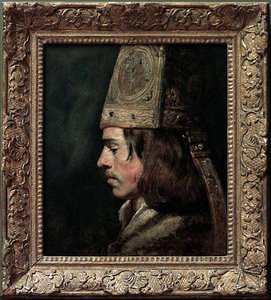
Jeune homme à la mitre


 Read More
Hand Made Oil Reproduction
Hand-painted oil on canvas in your size and frame, made to order by our artists. ( Buy Print Buy Image)




P118B $10

P118H $10

P118W $10

P438Z $10

P508JH $12

P508YH $12

P805H $10

P805Z $10

P919BZ $10

P919G $10

P919XJ $10

P959ZH $10

P968JZ $12

W106C $8

W218G $10

W218JH $8

W218Y $10

W307PJ $10

W316G $10

W316PJ $8

W316Y $10

W398PJ $8

W4111J $10

W500HY $15

W500JH $15

W692G $12

W849H $8

W940BG $15

W953PJ $8




Pick from our preset sizes that match the artwork's original proportions.

You may enter your own dimensions to fit a specific frame or space. If your selected size does not match the original image's proportions, we will either crop the artwork or extend the painting with additional hand-painted elements. A digital mockup will be sent for your approval before production begins.
Please note that the on-screen preview does not reflect the actual cropping or extension. Only the mockup will accurately show the final composition.
While custom sizes are available, we recommend selecting a dimension from the predefined list to preserve the original proportions.
After order, ArtsDot.com team will email client for instructions and provide a mockup preview
Worldwide Delivery () in 3/4 weeks instead of standard 5 weeks. (17 August). No compromise on quality.

Free Worldwide Express Shipping

High-Quality Linen Canvas

Full Shipping Insurance

Customs Tax Refund Guarantee

True Color Matching Guarantee

60-Day Return Policy (Defects Only)

100% Money-Back Guarantee

Bulk Discount Offer
 Glass option is only available in size under 110 CM

Jeune homme à la mitre
Reproduction Medium
Reproduction Size
-


Total Price
$ 263
Artwork Description
A Portrait Steeped in Faith and Baroque Grandeur: Pieter van Mol’s “Jeune homme à la mitre”
Pieter van Mol's "Jeune homme à la mitre," painted circa 1635, stands as a testament to the flourishing artistic spirit of Antwerp during the Baroque period—a time when religious fervor fueled monumental commissions and demanded visual narratives that conveyed profound spiritual truths. This portrait transcends mere likeness; it’s an embodiment of aristocratic piety and masterful execution, reflecting the influence of Rubens, Janssens, and Wolffort – artists who championed dramatic lighting and emotive realism.- Subject Matter: The artwork depicts a young man adorned in ecclesiastical garb—specifically a mitre—a symbol of papal authority and spiritual leadership within the Catholic Church. This deliberate choice underscores the importance of religious identity and social status during the seventeenth century.
- Style & Technique: Van Mol’s style aligns closely with Rubensian ideals, prioritizing dynamic composition and luminous color palettes. Employing oil paint on canvas, he skillfully utilizes chiaroscuro—the interplay between light and shadow—to sculpt the figure's musculature and imbue the scene with palpable drama. Brushstrokes are visible, contributing to a textured surface that captures the materiality of both flesh and fabric.
- Composition: The portrait adheres to a classical bust format, concentrating on the subject’s face and upper torso in profile view. This framing technique emphasizes facial expression and conveys an aura of solemn dignity. A dark background serves as a counterpoint to the illuminated figure, intensifying the impact of the lighting and directing the viewer's gaze towards the central subject.
- Color Palette: The palette leans heavily into earthy tones—browns and beiges dominate the skin and clothing—balanced by splashes of gold and muted blues. Notably, the mitre itself incorporates silver/grey, white, and blue accents, mirroring the grandeur associated with ecclesiastical iconography.
- Historical Context: Created during Rubens’s Parisian period, this artwork reflects the artistic dynamism of the French court and underscores the enduring legacy of Flemish masters in shaping European visual culture. It exemplifies the Baroque preoccupation with portraying idealized figures within emotionally charged settings.
Related Artworks
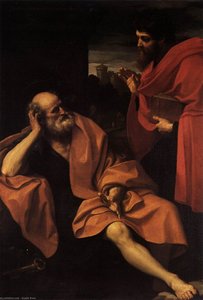
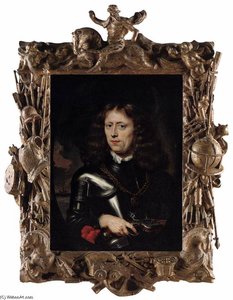
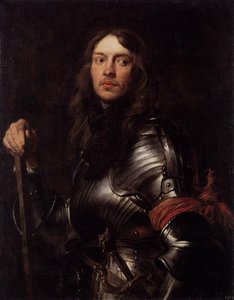
Artist Biography
A Life Bridging Two Artistic Worlds
Pieter van Mol, born in Antwerp in 1599 and passing away in Paris in 1650, occupies a fascinating, often subtly acknowledged position within the landscape of Baroque painting. He wasn’t merely an artist *of* the 17th century; he was a conduit, skillfully translating the robust traditions of Flemish art into the evolving aesthetic sensibilities of the French court. His life story is one of apprenticeship, adaptation, and ultimately, success as a sought-after painter in a new land, becoming one of the founding members of the prestigious Académie Royale de Peinture et de Sculpture. Van Mol’s early training began within the workshop of Siger van den Graeve, a relatively obscure figure, yet it laid the foundation for his later mastery. This initial period was followed by an association with Artus Wolffort, whose influence would become readily apparent in the young artist's developing style – a style that already hinted at the dramatic power and emotional depth he would come to be known for. While once believed to have been directly under Rubens’ tutelage, scholarship now suggests a more nuanced relationship, likely involving collaboration during Rubens’ time in Antwerp when van Mol was establishing himself as a master within the Guild of Saint Luke by 1622.The Parisian Embrace and Royal Patronage
The year 1631 marked a pivotal shift in Van Mol's career: his relocation to Paris. This wasn’t simply a change of scenery; it was an entry into a new artistic ecosystem, one increasingly influenced by the centralized power of the French monarchy and its discerning taste. He quickly found favor within ecclesiastical circles, securing significant commissions for churches – notably the frescoes in the chapelle du Sacré-Cœur at the Église Saint-Joseph-des-Carmes in 1635. These early Parisian works demonstrated his ability to handle large-scale compositions with a growing confidence and sophistication. However, it was his appointment as *peintre ordinaire du roi* (regular painter to the King) in 1637 that truly cemented his position at court. This recognition wasn’t merely symbolic; it opened doors to further commissions from Louis XIII himself, establishing Van Mol as a key figure in the royal artistic network. The culmination of this ascent came in 1642 with his appointment as *peintre ordinaire de la Reyne* (regular painter to the Queen), serving Anne of Austria and solidifying his status among the most esteemed artists in France.Rubens’ Legacy and a Personal Synthesis
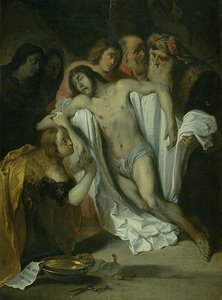
Van Mol's artistic style is often described as profoundly influenced by Rubens, Abraham Janssens, and Artus Wolffort – but this isn’t simply imitation. He absorbed their techniques—the dynamic compositions, rich color palettes, and expressive figures—and synthesized them into something uniquely his own. The influence of Rubens is perhaps the most readily apparent, visible in the dramatic chiaroscuro lighting, the muscularity of his figures, and a general sense of movement and energy. However, Van Mol tempered this dynamism with a more refined elegance, reflecting the evolving tastes of the French court. His works often feature a heightened emotional intensity, particularly evident in religious scenes like *The Deposition*, where he masterfully conveys grief, sorrow, and spiritual contemplation. He wasn’t afraid to incorporate elements from other masters either; the influence of Caravaggio's tenebrism can be seen in his use of stark contrasts between light and shadow, adding a powerful sense of realism and drama to his compositions.Themes and Techniques: Religious Narratives and Allegorical Visions
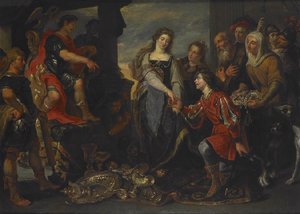
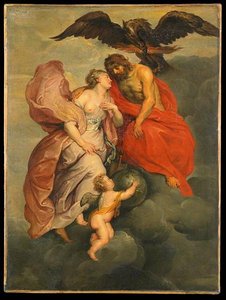
While Van Mol’s oeuvre encompassed portraits and genre scenes, he is best known for his history paintings—specifically those depicting religious subject matter. These weren't simply illustrations of biblical stories; they were carefully constructed narratives designed to evoke emotional responses in the viewer. His *Vénus implorant Jupiter* exemplifies his skill in handling allegorical compositions, showcasing a mythological scene imbued with symbolic meaning and executed with meticulous detail. He possessed a remarkable ability to capture both the grandeur and intimacy of these moments, often employing rich color palettes and dynamic compositions to draw the eye and engage the imagination. His technique was characterized by a skillful blending of Flemish realism and French elegance, resulting in works that were both visually striking and emotionally resonant. The altarpiece commissioned for the abbey church of St Germain des Prés in 1643 – now housed in the Musée des beaux-arts de Marseille – stands as a prime example of his Parisian style, showcasing his ability to create large-scale compositions that are both powerful and refined.A Founding Father: Legacy and Historical Significance
Pieter van Mol’s contribution extends beyond his individual paintings; he played a crucial role in the development of French art institutions. As one of the twelve founding members of the Académie Royale de Peinture et de Sculpture in 1648, he helped shape the standards and practices of artistic training and evaluation in France. This was a watershed moment, marking a shift towards a more formalized system of artistic education and professionalization. His presence within this influential body ensured that Flemish traditions continued to inform the evolving aesthetic landscape of French painting. While perhaps not as widely celebrated as some of his contemporaries, Van Mol’s work remains a testament to his skill, adaptability, and enduring influence. He stands as a compelling example of an artist who successfully navigated two distinct artistic worlds, leaving behind a legacy that continues to resonate with scholars and art enthusiasts alike. His ability to synthesize the robust energy of Flemish Baroque with the refined elegance of the French court makes him a truly significant figure in the history of 17th-century European painting.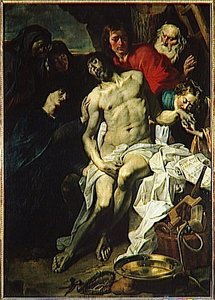
pieter van mol
1599 - 1650
Quick Facts
- Artistic Movement Or Style: Baroque
- Artists Who Influenced This Artist:
- Rubens
- Abraham Janssens
- Artus Wolffort
- Date Of Birth: 1599
- Date Of Death: 1650
- Full Name: Pieter van Mol
- Nationality: Flemish
- Notable Artworks:
- Jeune homme à la mitre
- Vénus implorant Jupiter
- CHRIST DEPOSE DE LA CROIX
- Place Of Birth: Antwerp, Belgium
Related Articles
Van Gogh's Masterpieces: Explore 25 Iconic Paintings & Art for Your Home
Journey through Vincent van Gogh's 25 most iconic paintings! Explore 'Starry Night', 'Sunflowers,' and more—discover the stories, techniques & emotions behind these Post-Impressionist masterpieces. Find museum-quality art reproductions for your home at ArtsDot.com.

Rembrandt's Masterpieces: Explore 25 Iconic Paintings & Prints | ArtsDot
Journey through Rembrandt van Rijn's 25 most iconic paintings & etchings. Explore Dutch Golden Age masterpieces, dramatic chiaroscuro, and timeless portraits. Find museum-quality art reproductions to elevate your home decor on ArtsDot.com.
Early Netherlandish Masters: 10 Paintings That Revolutionized Art & Decor
Journey into the world of Early Netherlandish painting! Explore 10 masterpieces by Jan van Eyck, Rogier van der Weyden & more. Discover stunning detail, symbolism & Renaissance art for your home decor. Find museum-quality reproductions on ArtsDot.com
Sir Anthony van Dyck: Courtly Portraiture & the Shaping of Baroque Identity
Explore the life & legacy of Sir Anthony van Dyck, the leading court painter of his era. Discover his innovative portraiture, Baroque masterpieces, and investment potential for discerning collectors. Learn more at ArtsDot.

The Dramatic Flourish: Exploring the Baroque Movement's Enduring Legacy in Art History
Explore the dramatic world of Baroque art! Discover iconic artists like Caravaggio & Rubens, defining techniques, and its lasting impact on art history. Expert insights for collectors & enthusiasts at ArtsDot.