

 Send
Send Share
Share
 Details

 Download
 Similars
 Diaporama
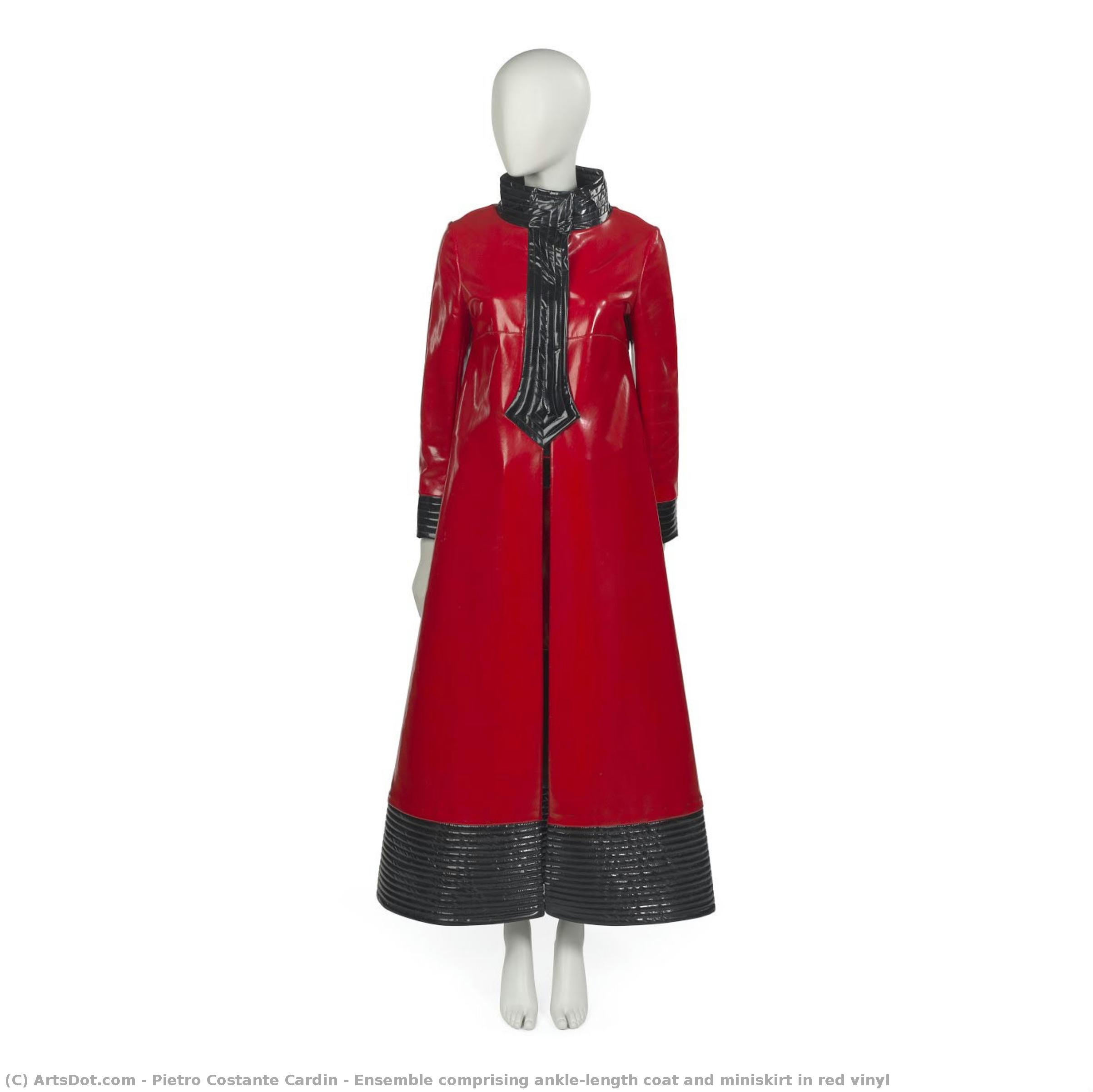
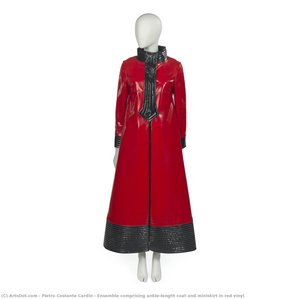
Ensemble comprising ankle-length coat and miniskirt in red vinyl


 Read More
Purchase a high-resolution, enhanced digital image, far superior to the online preview.
Each file is meticulously prepared by our in-house specialists using advanced tools and expert manual retouching. We ensure every image has exceptional clarity, precise color accuracy, and fine detail.
The final file is delivered via email within 72 hours, optimized for immediate use in professional, editorial, and print environments. This is the same quality trusted by top-tier design studios, publishers, and galleries.
Digital Image
Download a high-resolution file for personal display, printing, and creative projects. ( Buy Print Buy Hand Made Painting)
Included in Every Digital Image Order
Expert Digital Delivery, Guaranteed
When you choose ArtsDot.com, you're not just getting an image - you're receiving a professionally enhanced digital artwork, crafted with precision and backed by a satisfaction guarantee. Here's everything that comes with your order, automatically:

Fast Email Delivery
Your high-resolution digital image file will be emailed to you within 72 hours of ordering - ready for immediate use.

AI-Enhanced Digital File
Your artwork is professionally optimized using advanced AI tools and manual editing, ensuring maximum detail, clarity, and color accuracy.

Free Lifetime Re-Delivery
Accidentally deleted or lost your file? No worries - we'll resend it to you anytime, free of charge.

No Import Fees - Ever
Enjoy your artwork instantly with zero customs, duties, or delivery fees - digital downloads are always tax-free.

Color Accuracy Guarantee
We ensure your digital image reflects the original colors as closely as possible using professional tools and color management.

60-Day Satisfaction Guarantee
If you're not satisfied with your digital image, we'll revise it or refund 100% within 60 days - no questions asked.

100% Money-Back Guarantee
Not satisfied? Get a full refund within 60 days of receiving your digital file - no questions asked.

Bulk Order Discounts
Buy 3 images, save 10% - Buy 5, save 15% - Buy 10+, save 20%. Great for creative projects, galleries, and agencies.
Collectible Description
The Geometry of Desire: Pierre Cardin's Vinyl Ensemble
To gaze upon this ensemble comprising an ankle-length coat and miniskirt in vibrant red vinyl is to step directly into the exhilarating, futuristic pulse of the 1970s. It is a study in bold contrasts—the severe structure of the long coat juxtaposed with the playful brevity of the attached mini skirt. Pierre Cardin, a master architect of wearable form, did not merely clothe his patrons; he engineered statements. This piece embodies the Space Age aesthetic filtered through high fashion, presenting an outfit that feels both utterly contemporary for its time and strikingly timeless in its sheer audacity.
Materiality and Modern Form
The choice of red vinyl is central to the garment's narrative power. Vinyl, a material synonymous with futurism and manufactured sheen, catches the light with an almost liquid intensity. The design itself speaks volumes through its detailing: the A-line coat features meticulous black vinyl trapunto quilting adorning the collar, yoke, and cuffs, providing necessary visual anchors against the bright red expanse. This geometric application of black trim serves to both structure and subdue the inherent boldness of the material, lending an air of sophisticated discipline to what could otherwise be pure exuberance. The contrast between the full-length, structured coat and the low-waisted miniskirt creates a dynamic tension—a visual conversation between restraint and liberation.
A Reflection of Its Era
Dating from 1974, this ensemble captures a moment when fashion was shedding its historical constraints. The decade embraced synthetic materials, bold color blocking, and an optimistic, almost utopian vision of the future. Cardin, ever the pioneer, channeled that energy into silhouettes that were both architectural and undeniably sensual. The inclusion of labels referencing New York and Paris speaks to the globalized nature of high fashion at the time—a confluence of international style converging on a single, powerful garment. It is wearable sculpture, designed for the woman who wished her clothing to announce her arrival.
Symbolism and Emotional Resonance
What does this red vinyl ensemble symbolize? Beyond mere fashion, it speaks to confidence. Red, universally recognized as the color of passion and power, dominates the piece. The structure suggests control—the meticulous quilting, the defined seams—while the mini skirt whispers of unbridled freedom. It is a dichotomy made manifest: the disciplined artist housed within the liberated spirit. For the modern collector or designer seeking inspiration, this piece offers a masterclass in controlled drama; it teaches that true impact often lies in the tension between opposing forces.
Curating the Vision
To reproduce or display such an item is to curate a moment of mid-century glamour infused with cosmic energy. Whether imagined as a centerpiece for a dramatic interior space or admired up close, its glossy surface and sharp lines demand attention. It invites contemplation on how materials can transcend their function—how vinyl can become poetry, and how a simple coat can become an emblem of revolutionary self-expression.
Related Artworks
Artist Biography
Early Life and Formation: A Transnational Beginning
Pietro Costante Cardin, known universally as Pierre Cardin, was born on July 2, 1922, in San Biagio di Callalta, a small town near Venice, Italy. His origins were steeped in a world of craftsmanship and familial ambition; his parents, Maria Montagner and Alessandro Cardin, were prosperous wine merchants who unfortunately lost their fortune during the upheaval of World War I. This early experience of economic instability proved formative, instilling a resilience that would characterize his entire career. Faced with political turmoil, the family relocated to France in 1924, settling in Saint-Étienne, seeking a more secure future. Though Alessandro Cardin envisioned an architectural path for his son, Pietro’s heart lay elsewhere – in the meticulous art of tailoring.
At just fourteen years old, young Pietro began an apprenticeship with Louis Bompuis, a local tailor, laying the foundation for his lifelong passion. This early immersion into the world of fabrics, patterns, and construction proved pivotal. He wasn’t merely learning a trade; he was absorbing a philosophy of form and function that would later define his avant-garde aesthetic. The move to Paris in 1945, following World War II, marked a turning point. He enrolled to study architecture but quickly found himself drawn into the vibrant artistic milieu of the postwar city.
The Rise of a Couturier: From Dior to Independence
Paris became Cardin’s crucible. While pursuing architectural studies, he simultaneously delved into the world of performance, briefly exploring an acting career. A crucial encounter with Jean Cocteau led to costume designs for his 1946 film *Beauty and the Beast*, a project that ignited his creative spark and introduced him to influential circles. He then honed his skills at established fashion houses – Paquin and Elsa Schiaparelli – before securing a position at Christian Dior in 1947. This appointment was significant; Cardin contributed to the creation of the iconic “Bar suit” for Dior’s groundbreaking inaugural collection, showcasing his innate talent for tailoring and pleating.
However, despite his contributions, he faced resistance from Balenciaga, a testament to his burgeoning independent vision. In 1950, Cardin boldly established his own fashion house at 10 rue Richepanse in Paris. Initially, his designs aligned with the prevailing Parisian aesthetic, particularly his impeccably crafted suits which quickly garnered attention. A pivotal moment arrived in 1951 when he designed approximately thirty costumes for a lavish masquerade ball hosted by Carlos de Beistegui in Venice. This commission catapulted him into the spotlight and solidified his reputation as a rising star.
Space Age Innovation: Challenging Conventions
The 1960s witnessed Cardin’s full emergence as an iconoclast, a visionary who dared to challenge conventional notions of fashion. He embraced geometric shapes, bold colors, and unconventional materials, pioneering what became known as “Space Age” design. He wasn't simply creating clothes; he was sculpting forms that reflected the optimism and technological advancements of the era. Cardin’s designs often disregarded the female form, prioritizing abstract silhouettes and architectural lines. This approach extended to his exploration of unisex fashions, sometimes experimental and always provocative.
The introduction of the “bubble dress” in 1954 was a watershed moment, establishing him as an innovator. But it was during the latter half of the decade that Cardin truly revolutionized menswear, reintroducing shaped, fitted suits after a period dominated by looser styles. Retailers recognized his influence, noting how he instilled in men the same brand consciousness previously associated with women’s fashion. He became a leading figure in what was termed the “Peacock Revolution,” and his 1960 collection profoundly impacted popular style – so much so that even The Beatles adopted collarless suits inspired by his designs.
A Global Visionary: Beyond Fashion
Cardin’s influence extended far beyond the realm of haute couture. He was a pioneer in ready-to-wear, launching women's and men's collections that democratized fashion and made designer clothing accessible to a wider audience. His travels to Japan in 1957 marked another significant milestone; he became the first couturier to explore this market, sharing his expertise at the Bunka Fukuso School of Design. He wasn’t content with simply selling clothes; he sought to build a global brand encompassing furniture, accessories, and even restaurants.
Throughout his career, Cardin received numerous accolades, including designation as a UNESCO Goodwill Ambassador in 1991 and a United Nations FAO Goodwill Ambassador in 2009. He died on December 29, 2020, at the age of 98, leaving behind an extraordinary legacy. Pierre Cardin wasn’t just a fashion designer; he was a cultural phenomenon, a visionary artist who redefined beauty and challenged the boundaries of creativity.
pietro costante cardin
1922 - 2020 , France
Quick Facts
- Artistic Movement Or Style: Avant-Garde, Space Age
- Date Of Birth: July 2, 1922
- Date Of Death: December 29, 2020
- Full Name: Pietro Costante Cardin
- Nationality: Italian-French
- Notable Artworks:
- Bubble Dress (1954)
- Black wool suit (1950)
- Evening dress (1969)
- Place Of Birth: Saint-Étienne, France

