 Preview
 Send
Send Share
Share
 Details

 Download
 Similars
 X-Ray
X-Ray Diaporama
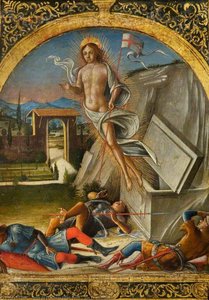
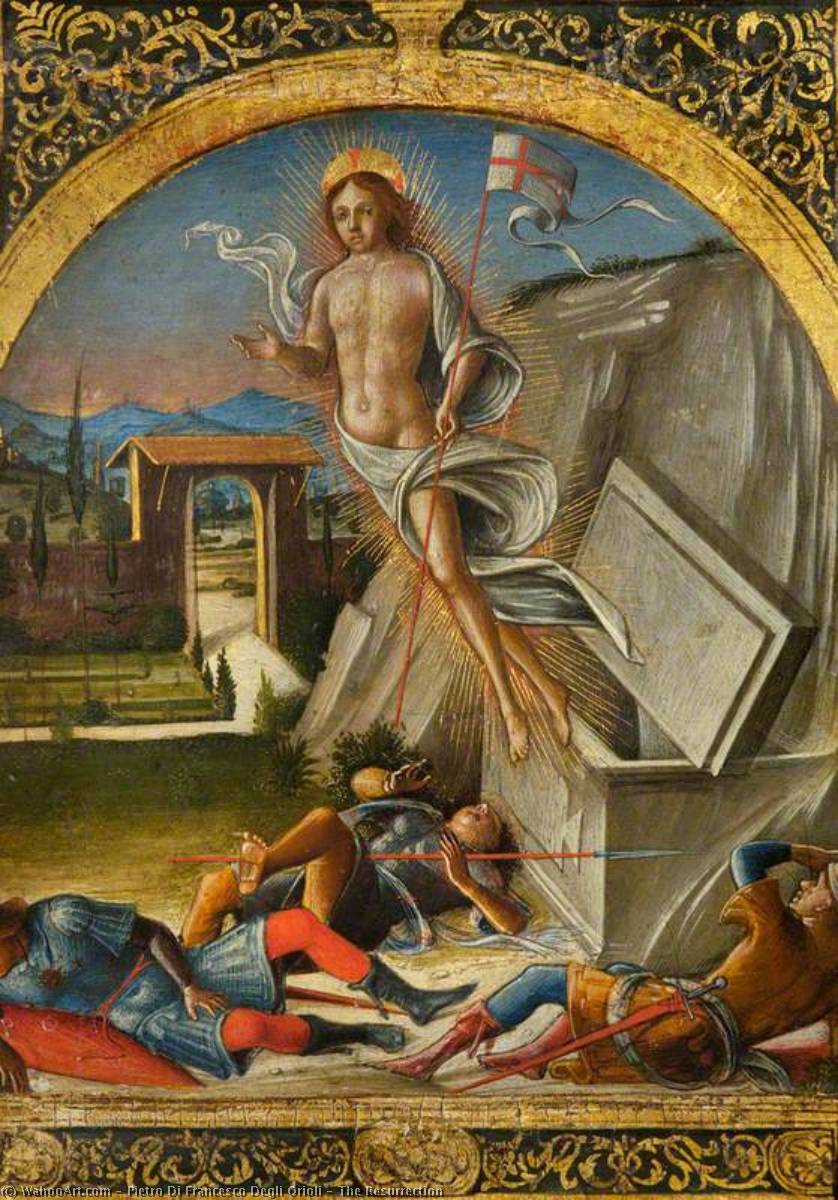
The Resurrection
 38.0 x 27.0 cm
 Fitzwilliam College
 Read More
Giclée / Art Print
Museum-quality giclée or canvas print with fast production and flexible finish options. ( Buy Hand Made Painting Buy Image)




































Pick from our preset sizes that match the artwork's original proportions.

You may enter your own dimensions to fit a specific frame or space. If your selected size does not match the original image's proportions, we will either crop the artwork or extend the image with a mirrored or solid-fill edge. A digital mockup will be sent for your approval before production begins.
Please note that the on-screen preview does not reflect the actual cropping or extension. Only the mockup will accurately show the final composition.
While custom sizes are available, we recommend selecting a dimension from the predefined list to preserve the original proportions.
Worldwide Delivery () in 2 weeks instead of standard 4/5 weeks. (22 August)

Free Worldwide Express Shipping

High-Quality Linen Canvas

Full Shipping Insurance

Customs Tax Refund Guarantee

True Color Matching Guarantee

60-Day Return Policy (Defects Only)

100% Money-Back Guarantee

Bulk Discount Offer
 Glass option is only available in size under 110 CM

The Resurrection
Giclée / Art Print
Reproduction Size
-


Total Price
$ 63
Related Artworks








Artist Biography
Pietro di Francesco degli Orioli: A Sienese Visionary Bridging Florentine and Gothic Traditions
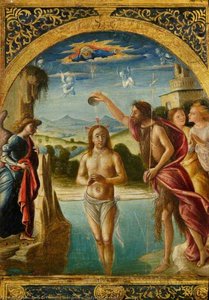
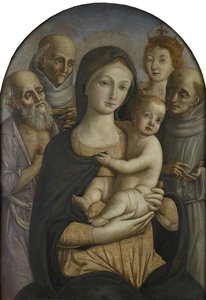
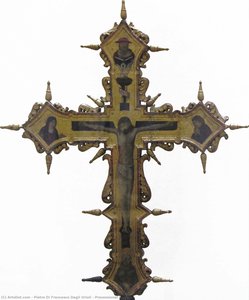
Pietro di Francesco degli Orioli (c.1458-1496) stands as a singular figure within the artistic landscape of Siena during the Renaissance, representing a fascinating confluence of stylistic influences that distinguished him from his contemporaries in Florence and Rome. Born in Siena itself—a city renowned for its late medieval masters like Duccio di Buoninsegna and Simone Martini—Orioli emerged into an era where Sienese art was experiencing a subtle shift away from the dominant classical aesthetic, yet retaining echoes of the opulent Gothic traditions that had shaped its artistic heritage. This delicate balance is precisely what characterizes Orioli’s oeuvre and secures his place as one of Siena's most important artists of the fifteenth century. His formative years coincided with the ascension of Cardinal Aeneas Sylvius Piccolomini to the papacy—Pope Pius II—a pivotal moment that propelled Siena into a period of considerable cultural vibrancy. The patronage afforded by the papal court fueled artistic innovation, albeit often tempered by anxieties about maintaining Sienese identity amidst the burgeoning influence of Florentine humanist ideals and artistic experimentation. Orioli’s artistic trajectory was shaped by his apprenticeship under Matteo di Giovanni, a prominent exponent of the Quattrocento sienese school—a movement that sought to synthesize Florentine realism with Sienese decorative splendor. Furthermore, he collaborated closely with Francesco di Giorgio, sculptor extraordinaire and former pupil of il Vecchietta, cementing his position within Siena’s artistic elite. This interconnectedness underscores Orioli's immersion in a milieu deeply rooted in Sienese tradition—a tradition that nevertheless acknowledged the broader currents shaping European art during this transformative period. Orioli’s artistic style is immediately identifiable by its distinctive blend of Florentine and Gothic elements. Unlike many artists of his time who embraced the meticulous observation of classical anatomy and perspective championed by Florence, Orioli prioritized expressive gesture and spiritual contemplation over precise representation. His figures possess a palpable dynamism—a characteristic often attributed to the influence of Flemish painters—yet they retain an ethereal quality reminiscent of Gothic iconography. This fusion is particularly evident in works such as “Christ Washing the Feet of the Apostles” (1489), where Christ’s posture conveys profound humility and compassion, while simultaneously embodying a solemn grandeur that transcends mere physicality. The painting's luminous coloration and subtly textured surfaces contribute to its mystical atmosphere—a hallmark of Sienese art during Pius II’s reign. Among Orioli’s most celebrated paintings are “Madonna and Child with Saint Jerome” (c. 1490) and “Nativity” (c. 1494–96). These compositions demonstrate Orioli's masterful command of color and drapery—techniques honed through collaboration with Francesco di Giorgio—and reveal a preoccupation with themes of piety and divine grace. The Madonna’s serene countenance and Saint Jerome’s contemplative gaze invite viewers to contemplate the spiritual significance of the depicted scene, mirroring the broader artistic ethos of Siena during Pius II's papacy. Similarly, “The Baptism of Christ” showcases Orioli’s ability to convey emotion through stylized figures—a stylistic choice that aligns with the Gothic tradition’s emphasis on conveying spiritual truths rather than literal accuracy. Pietro di Francesco degli Orioli tragically perished in 1496 at the young age of thirty-seven, curtailing his artistic career prematurely. Despite his brief activity as an independent artist, Orioli left behind a legacy of remarkable paintings—particularly “The Resurrection” and “Processional Crucifix”—that continue to captivate audiences today. His work stands as testament to Siena’s artistic vitality during Pius II's papacy—a period marked by a courageous assertion of regional identity amidst the dominant forces shaping European art. Orioli’s enduring contribution lies not merely in his technical skill but also in his ability to synthesize disparate stylistic influences into a singular vision—a vision that embodies the spirit of Sienese Renaissance art and secures his place as one of Siena's most poignant artistic voices.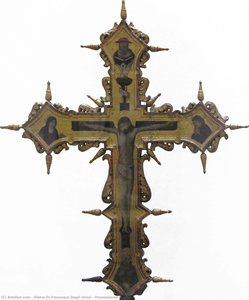
pietro di francesco degli orioli
1458 - 1496
Quick Facts
- Artistic Movement Or Style: Renaissance
- Artists Or Movements Influenced By This Artist: ['Botticelli Style']
- Artists Who Influenced This Artist: ['Matteo di Giovanni']
- Date Of Death: 1496
- Full Name: Pietro di Francesco degli Orioli
- Nationality: Italian
- Notable Artworks:
- Christ Washing Feet
- Madonna and Child with Saint Jerome
- Nativity
- Adoration
- Place Of Birth: Siena, Tuscany