

 Preview
 Send
Send Share
Share
 Details

 Download
 Similars
 X-Ray
X-Ray Diaporama
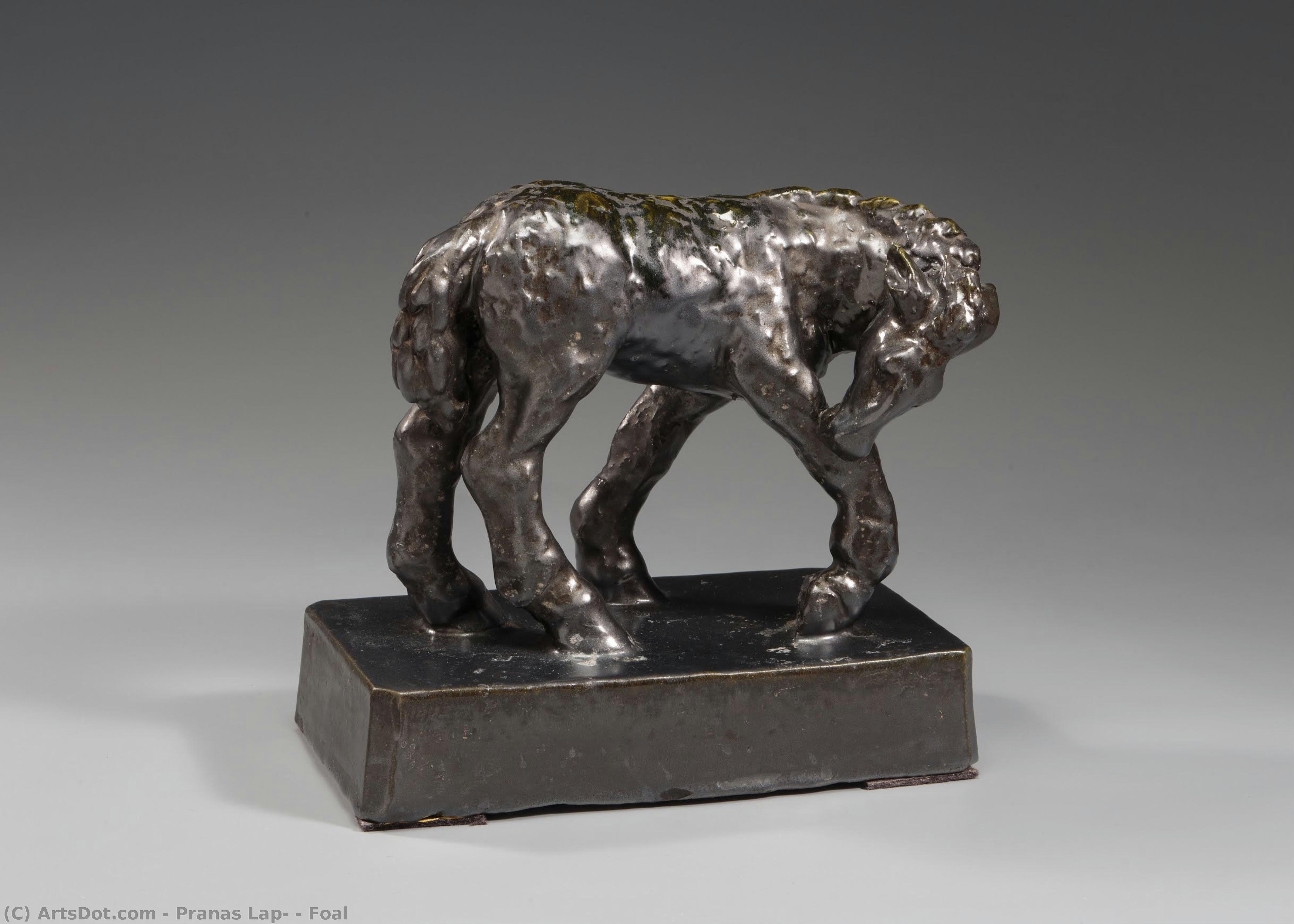
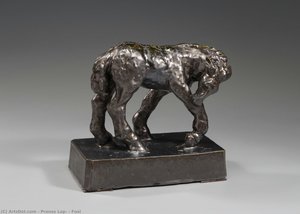
Foal
 1942
1942 22.0 x 13.0 cm
 Lithuanian Art Fund
 Read More
Giclée / Art Print
Museum-quality giclée or canvas print with fast production and flexible finish options. ( Buy Hand Made Painting Buy Image)




































Pick from our preset sizes that match the artwork's original proportions.

You may enter your own dimensions to fit a specific frame or space. If your selected size does not match the original image's proportions, we will either crop the artwork or extend the image with a mirrored or solid-fill edge. A digital mockup will be sent for your approval before production begins.
Please note that the on-screen preview does not reflect the actual cropping or extension. Only the mockup will accurately show the final composition.
While custom sizes are available, we recommend selecting a dimension from the predefined list to preserve the original proportions.
Worldwide Delivery () in 2 weeks instead of standard 4/5 weeks. (18 August)

Free Worldwide Express Shipping

High-Quality Linen Canvas

Full Shipping Insurance

Customs Tax Refund Guarantee

True Color Matching Guarantee

60-Day Return Policy (Defects Only)

100% Money-Back Guarantee

Bulk Discount Offer
 Glass option is only available in size under 110 CM

Foal
Giclée / Art Print
Reproduction Size
-


Total Price
$ 63
Related Artworks
Artist Biography
The Soul of the Earth: The Expressive Journey of Pranas Lapė
Pranas Lapė (1921–2010) was a painter who existed in the delicate space between memory and abstraction, a figure whose life story was as much a masterpiece of resilience as his canvases. Born in the coastal city of Klaipėda, Lithuania, his early years were shaped by the shifting political tides of pre-war Poland and the looming shadow of Soviet occupation. This turbulent beginning instilled in him a profound connection to his ancestral roots—a quiet, stubborn strength that would later define his artistic identity. While his formal education at the Kaunas Art Institute provided the technical scaffolding for his talent, it was the necessity of flight that truly expanded his horizons. Escaping the encroaching darkness of Nazi Germany and eventually finding refuge in Sweden in 1945, Lapė entered a period of intense metamorphosis, where the modernist currents of Stockholm began to mingle with his deep-seated Lithuanian heritage.
The trajectory of his life took a dramatic transatlantic turn in 1949, as he established himself within the vibrant, pulsing energy of New York City and later Connecticut. This era of exile was not merely a geographical shift but an intellectual awakening. Immersed in the American cultural landscape, Lapė found himself drawn to the raw power of Abstract Expressionism. He drew profound inspiration from the heavy, emotive brushwork of masters like Willem de Kooning and the lyrical abstraction of Arshile Gorky. Yet, despite his immersion in the New York art scene, he remained a žemaitis at heart, famously asserting that he had never truly departed from Lithuania. His work became a bridge between worlds, blending the sophisticated language of international modernism with the elemental textures of his homeland.
A Language of Monochrome and Intuition
To encounter a painting by Pranas Lapė is to witness a deliberate rejection of the superficial. He famously eschewed the vibrant color palettes favored by many of his contemporaries, choosing instead to master a minimalist, almost ascetic, gamut of colors. His canvases are often dominated by bold black and white hues, punctuated by earthy tones of brown and gray—colors that evoke the ruggedness of stone cliffs, the deep shadows of a forest, and the somber beauty of the Baltic seaside. This achromatic harmony creates a sense of permanence and stability, offering a visual sanctuary for those seeking something eternal in an era of fleeting trends.
His technique was characterized by a remarkable lack of premeditation. Lapė was a painter who distrusted the safety of the sketch; he preferred the spontaneous improvisation of freehand execution. He often described his creative process through a beautiful metaphor: “While painting I feel like Columbus, who sailed for India, but discovered America.” This sense of discovery allowed him to capture the raw essence of his subjects—whether they were the structural strength of nature or the ephemeral movement of light. His surfaces are frequently enriched with textures that mimic the organic variety of the earth itself, making each piece feel less like a flat image and more like a tactile artifact of the imagination.
Legacy and Cultural Significance
Beyond the canvas, Lapė was a multifaceted creator whose influence touched many disciplines. His prolific career included:
- Graphic Art and Illustration: He contributed to the visual landscape of literature, illustrating more than 300 book covers for prestigious Swedish, American, and Lithuanian publishing houses, including Random House and Scribner’s.
- Public Art: During his time in Sweden, he demonstrated his ability to scale his vision, creating large-scale wall paintings for public spaces that brought abstract beauty into the communal sphere.
- Cultural Ambassadorship: Through his active participation in the Lithuanian Artists’ Union and various international exhibitions, he served as a vital link between the displaced Lithuanian diaspora and their homeland.
The recognition of his lifelong dedication to the arts was formally cemented in 2008 when he was awarded the prestigious Order of the Grand Duke Gediminas, an honor celebrating his immense contribution to Lithuanian culture. Today, Pranas Lapė is remembered not just as a representative of abstract expressionism, but as a philosopher of the brush—an artist who transformed the trauma of displacement into a universal language of profound, introspective beauty.
Pranas Lapė
1921 - 2010 , Lithuania
Quick Facts
- Artistic Movement Or Style: Abstract Expressionism
- Date Of Birth: January 11, 1921
- Date Of Death: January 13, 2010
- Full Name: pranas lapė
- Nationality: Lithuanian
- Notable Artworks: ['Foal']
- Place Of Birth: Klaipeda, Lithuania

