

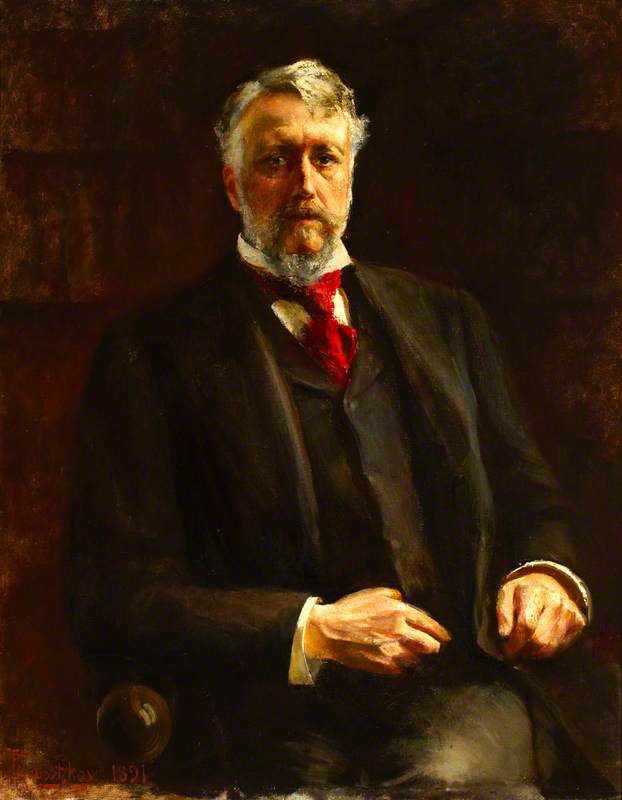
 Preview
 Send
Send Share
Share
 Details

 Download
 Similars
 X-Ray
X-Ray Diaporama
William MacCormac (1836–1901)
 1891
1891 111.0 x 85.0 cm
 Read More
Purchase a high-resolution, enhanced digital image, far superior to the online preview.
Each file is meticulously prepared by our in-house specialists using advanced tools and expert manual retouching. We ensure every image has exceptional clarity, precise color accuracy, and fine detail.
The final file is delivered via email within 72 hours, optimized for immediate use in professional, editorial, and print environments. This is the same quality trusted by top-tier design studios, publishers, and galleries.
Digital Image
Download a high-resolution file for personal display, printing, and creative projects. ( Buy Print Buy Hand Made Painting)
Included in Every Digital Image Order
Expert Digital Delivery, Guaranteed
When you choose ArtsDot.com, you're not just getting an image - you're receiving a professionally enhanced digital artwork, crafted with precision and backed by a satisfaction guarantee. Here's everything that comes with your order, automatically:

Fast Email Delivery
Your high-resolution digital image file will be emailed to you within 72 hours of ordering - ready for immediate use.

AI-Enhanced Digital File
Your artwork is professionally optimized using advanced AI tools and manual editing, ensuring maximum detail, clarity, and color accuracy.

Free Lifetime Re-Delivery
Accidentally deleted or lost your file? No worries - we'll resend it to you anytime, free of charge.

No Import Fees - Ever
Enjoy your artwork instantly with zero customs, duties, or delivery fees - digital downloads are always tax-free.

Color Accuracy Guarantee
We ensure your digital image reflects the original colors as closely as possible using professional tools and color management.

60-Day Satisfaction Guarantee
If you're not satisfied with your digital image, we'll revise it or refund 100% within 60 days - no questions asked.

100% Money-Back Guarantee
Not satisfied? Get a full refund within 60 days of receiving your digital file - no questions asked.

Bulk Order Discounts
Buy 3 images, save 10% - Buy 5, save 15% - Buy 10+, save 20%. Great for creative projects, galleries, and agencies.
Related Artworks








Artist Biography
Wassily Kandinsky: Pioneer of Abstraction
Wassily Wassilyevich Kandinsky (1866-1944) stands as a monumental figure in the history of art, widely recognized as one of the foremost pioneers of abstract painting. His journey from a classically trained artist to a revolutionary innovator profoundly shaped the course of 20th-century art and continues to inspire artists today. Born in Moscow amidst a rich cultural heritage – his lineage tracing back through Russian nobility and connections to Mongolia – Kandinsky’s early life was marked by exposure to diverse artistic traditions, including music, architecture, and theater. This broad foundation would later inform his unique approach to visual expression.
Initially pursuing a legal career at the University of Moscow, Kandinsky's passion for art eventually took precedence. He enrolled in the Imperial Academy of Arts, studying anatomy, drawing, and sculpture – skills that provided a crucial grounding before he began to dismantle traditional artistic conventions. His early works reflected a more conventional style, featuring landscapes and portraits rendered with meticulous detail. However, it was his experiences during travels through Europe—particularly Venice, Rome, and Florence—that ignited a transformative shift in his artistic vision. These journeys exposed him to the vibrant colors and expressive forms of Italian Renaissance art, subtly influencing his nascent desire to move beyond representational imagery.
Early Influences and Artistic Development
Kandinsky’s artistic development was a complex process of experimentation and intellectual exploration. He initially experimented with Impressionism and Post-Impressionism, absorbing the techniques of artists like Monet and Van Gogh. However, he soon became dissatisfied with these styles' reliance on depicting external reality. A pivotal moment arrived in 1896 when he moved to Munich, Germany, where he studied at Anton Ažbe’s private school and later at the Academy of Fine Arts. During this period, he encountered a burgeoning artistic community that embraced new ideas and challenged established norms – including Gabriele Münter, with whom he formed a significant creative partnership. This environment proved crucial in fostering his evolving aesthetic sensibilities.
The influence of music was particularly profound during this time. Kandinsky believed that art should evoke emotions and spiritual experiences akin to those elicited by musical compositions. He began to explore the use of color and form as expressive elements, seeking to create visual equivalents of musical harmonies and rhythms. His early works, such as *Picture with an Archer* (1909), demonstrate this nascent interest in abstraction, utilizing vibrant colors and simplified forms to convey a sense of movement and emotion—though still retaining recognizable subject matter.
The Blaue Reiter and the Rise of Abstraction
In 1911, Kandinsky co-founded the *Blaue Reiter* (Blue Rider) group in Munich, alongside Gabriele Münter and Franz Marc. This collective became a hotbed for artistic experimentation, bringing together artists who shared a desire to explore non-objective art—art that did not represent recognizable objects or figures. The Blaue Reiter’s exhibitions were groundbreaking events, showcasing works that pushed the boundaries of traditional representation and paved the way for abstract expressionism. Kandinsky's own paintings during this period became increasingly abstract, moving away from figurative forms towards purely expressive color combinations and geometric shapes.
Crucially, Kandinsky articulated his theoretical framework for abstraction in *Concerning the Spiritual in Art* (1911), a seminal text that outlined his belief that art should transcend the limitations of objective representation and tap into the realm of pure feeling. He argued that colors and forms possessed inherent spiritual qualities, capable of evoking emotions and conveying ideas directly to the viewer’s soul. This philosophical underpinning informed his artistic practice, guiding him towards increasingly abstract compositions.
Later Years and Legacy
Following World War I, Kandinsky spent time in Russia, where he played a key role in establishing the Museums of Painterly Culture and the Institute for Artistic Culture. However, his views clashed with the prevailing ideological climate, and he eventually returned to Germany in 1922, joining the faculty of the Bauhaus school in Weimar. The Bauhaus’s emphasis on functional design and geometric abstraction further influenced Kandinsky's artistic development. He later moved to France in 1933, escaping the rising tide of Nazism, where he continued to paint until his death in 1944.
Kandinsky’s legacy is immense. He is considered one of the pioneers of abstract art, profoundly influencing generations of artists who followed. His theoretical writings and innovative paintings continue to be studied and admired for their groundbreaking exploration of color, form, and spirituality. Kandinsky's work remains a testament to the power of art to transcend representation and communicate directly with the human soul.
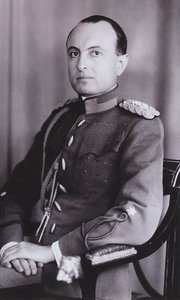
prince paul troubetzkoy
1866 - 1938
Quick Facts
- Artistic Movement Or Style:
- Abstraction
- Blaue Reiter
- Bauhaus
- Artists Or Movements Influenced By This Artist:
- Herbert Bayer
- Sonia Delaunay
- Artists Who Influenced This Artist:
- Anton Ažbe
- Gabriele Münter
- Date Of Birth: December 4, 1866
- Date Of Death: December 13, 1944
- Full Name: Wassily Wassilyevich Kandinsky
- Nationality: Russian, French
- Notable Artworks:
- Concerning the Spiritual in Art
- Komposition V
- Improvisation
- Place Of Birth: Moscow, Russia

