 Preview
 Send
Send Share
Share
 Details

 Download
 Similars
 X-Ray
X-Ray Diaporama
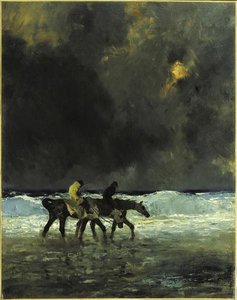
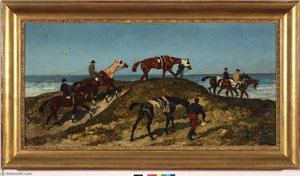
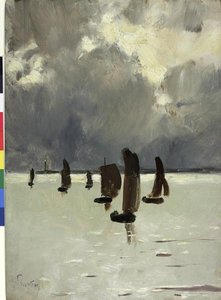
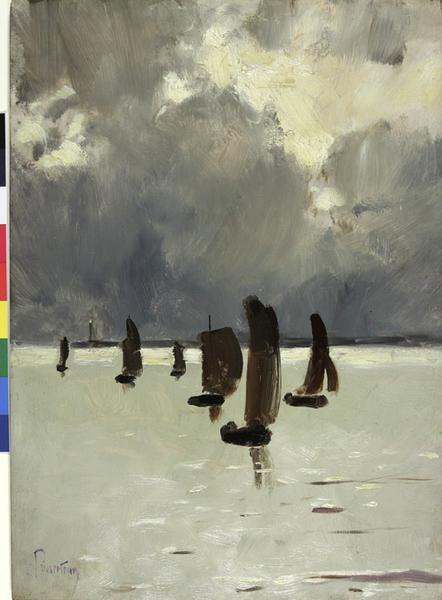
Sur le Bassin d'Arcachon
 Read More
Hand Made Oil Reproduction
Hand-painted oil on canvas in your size and frame, made to order by our artists. ( Buy Print Buy Image)




































Pick from our preset sizes that match the artwork's original proportions.

You may enter your own dimensions to fit a specific frame or space. If your selected size does not match the original image's proportions, we will either crop the artwork or extend the painting with additional hand-painted elements. A digital mockup will be sent for your approval before production begins.
Please note that the on-screen preview does not reflect the actual cropping or extension. Only the mockup will accurately show the final composition.
While custom sizes are available, we recommend selecting a dimension from the predefined list to preserve the original proportions.
After order, ArtsDot.com team will email client for instructions and provide a mockup preview
Worldwide Delivery () in 3/4 weeks instead of standard 5 weeks. (28 August). No compromise on quality.

Free Worldwide Express Shipping

High-Quality Linen Canvas

Full Shipping Insurance

Customs Tax Refund Guarantee

True Color Matching Guarantee

60-Day Return Policy (Defects Only)

100% Money-Back Guarantee

Bulk Discount Offer
 Glass option is only available in size under 110 CM

Sur le Bassin d'Arcachon
Reproduction Medium
Reproduction Size
-


Total Price
$ 263
Related Artworks









Artist Biography
The Silent Visionary of the French Landscape
In the annals of nineteenth-century French art, few figures possess a story as poignant and visually profound as René Pierre Charles Princeteau. Born in 1843 into a noble family in Libourne, Princeteau navigated a world devoid of sound, having been deaf and mute from birth. This silence, rather than acting as a barrier to expression, became the very crucible of his artistic genius. Without the distraction of auditory stimuli, his senses were heightened toward the visual and tactile, fostering an acute sensitivity to light, texture, and the subtle movements of the natural world. His early education at the Institut National de Jeunes Sourds de Paris provided him with the foundational tools to translate his internal perceptions into a tangible, visual language that would eventually captivate the Parisian art scene.
His journey into the heart of academic excellence began in earnest when he enrolled at the prestigious École nationale supérieure des Beaux-Arts. Under the rigorous guidance of the master sculptor Auguste Dumont, Princeteast developed a profound respect for anatomical precision and structural integrity. This early training in sculpture is evident in the muscularity and weight of the animals he later painted; even on canvas, his subjects possess a three-dimensional presence that suggests a deep understanding of form and volume. Alongside contemporaries like Dominique Fortuné Maggesi, he honed a technique rooted in academic realism, a style that demanded an unwavering commitment to truth in representation.
A Life Forged in Conflict and Nature
The trajectory of Princeteau’s life was irrevocly altered by the turbulence of the Franco-Prussian War. Enlisting in the artillery of the army of the Loire, he found himself immersed in the grit and motion of military life. This period of upheaval served as a vital catalyst for his creative evolution; the sketches and observations gathered in his notebooks during this time captured the raw energy of movement and the stark realities of the landscape under duress. It was through these wartime experiences that his ability to capture dynamic action—a hallmark of his later equestrian works—was truly forged.
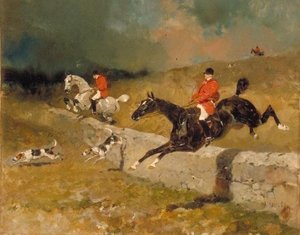
Following the war, Princeteau’s career ascended toward significant prominence. By 1885, he had risen to fame as a premier painter of horses, earning acclaim for his ability to breathe life into equine subjects. His repertoire was vast and varied, ranging from the high-stakes drama of racing and hunting scenes with hounds to the serene, pastoral beauty of rural landscapes. In 1883, a pivotal shift occurred when he left the bustling atmosphere of Paris to return to his roots in Libourne. Settling in the castle of Pontus, he entered a period of profound creative maturity, where his compositions began to celebrate the quiet majesty of French country life, blending his technical mastery with a deep, nostalgic reverence for the land.
Legacy of the Equestrian Master
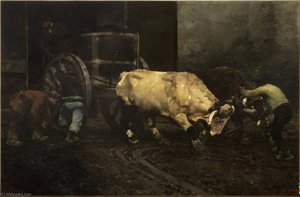
The historical significance of René Princeteau lies in his ability to bridge the gap between the rigid discipline of academic realism and the emotive power of naturalism. His work does not merely document animals or landscapes; it captures the very essence of their vitality. Whether depicting a powerful horse charging through a storm or the tranquil arrival at a wine press, his brushwork conveys a sense of movement and atmosphere that remains timeless.
His artistic circle was equally illustrious, boasting connections to figures such as Alphonse de Toulouse-Lautrec, whom he famously tutored. This intersection with the avant-garde of the late nineteenth century places Princeteau at the heart of a transformative era in art history. Today, his contributions are preserved in esteemed institutions like the National Gallery of Art, serving as a testament to a man who, through the mastery of sight, spoke more eloquently than words ever could. His oeuvre remains a vital study in:
- Anatomical Precision: The sculptural influence of his training visible in every equine muscle and sinew.
- Atmospheric Realism: The ability to render light, weather, and the shifting moods of the French countryside.
- Narrative Depth: Capturing the dignity of rural labor and the spirited energy of the hunt.
Quick Facts
- Artistic Movement Or Style: Barbizon
- Artists Or Movements Influenced By This Artist: ['Henri de Toulouse-Lautrec']
- Artists Who Influenced This Artist:
- Auguste Dumont
- Dominique Fortuné Maggesi
- Date Of Birth: 1843
- Date Of Death: 1914
- Full Name: René Pierre Charles Princeteau
- Nationality: French
- Notable Artworks: ['Dos-a-dos']
- Place Of Birth: Libourne