 Preview
 Send
Send Share
Share
 Details

 Download
 Similars
 X-Ray
X-Ray Diaporama
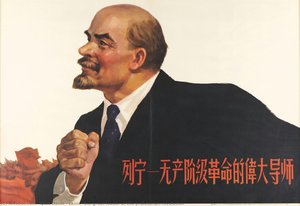
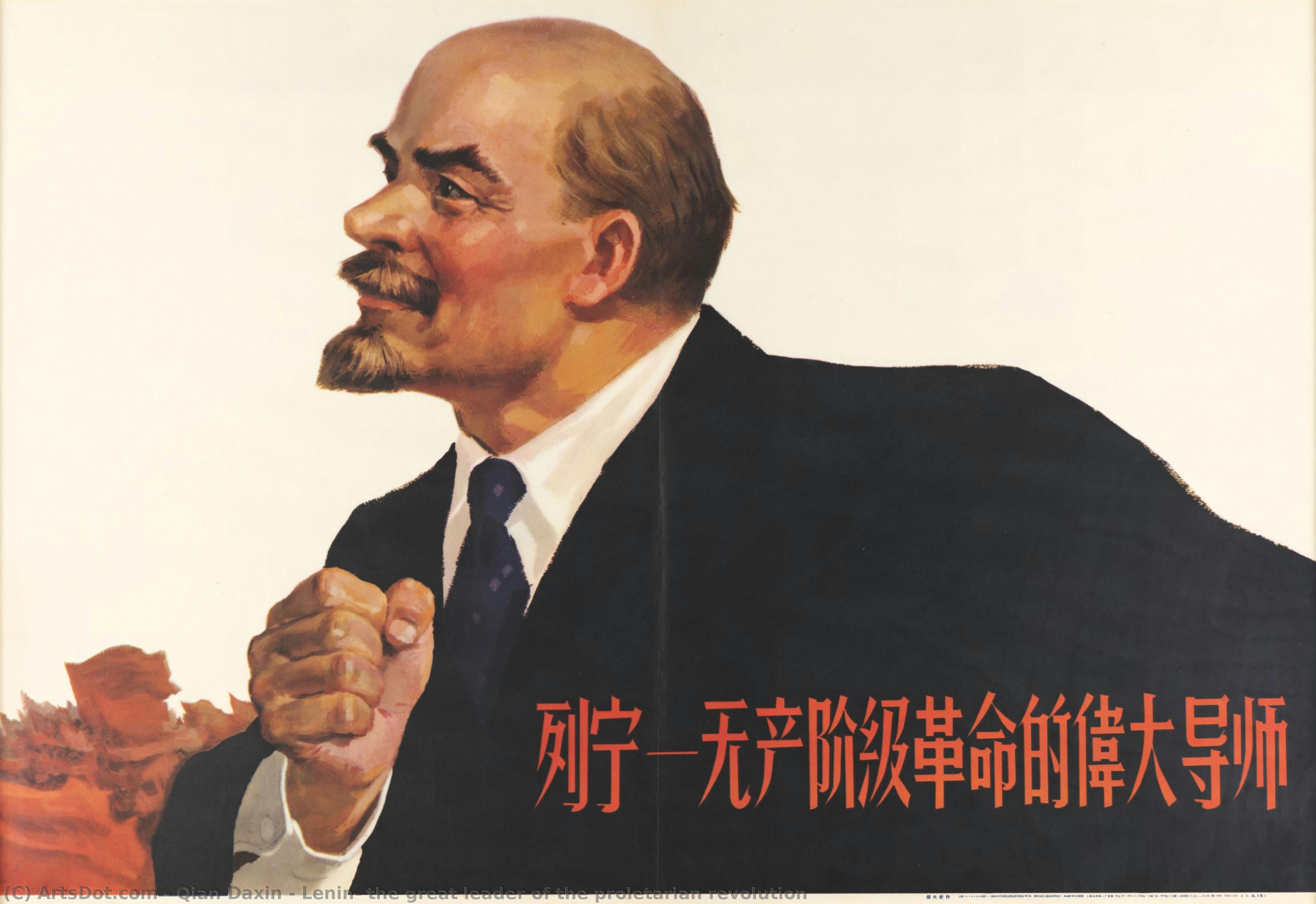
Lenin, the great leader of the proletarian revolution

 Read More
Hand Made Oil Reproduction
Hand-painted oil on canvas in your size and frame, made to order by our artists. ( Buy Print Buy Image)




































Pick from our preset sizes that match the artwork's original proportions.

You may enter your own dimensions to fit a specific frame or space. If your selected size does not match the original image's proportions, we will either crop the artwork or extend the painting with additional hand-painted elements. A digital mockup will be sent for your approval before production begins.
Please note that the on-screen preview does not reflect the actual cropping or extension. Only the mockup will accurately show the final composition.
While custom sizes are available, we recommend selecting a dimension from the predefined list to preserve the original proportions.
After order, ArtsDot.com team will email client for instructions and provide a mockup preview
Worldwide Delivery () in 3/4 weeks instead of standard 5 weeks. (7 September). No compromise on quality.

Free Worldwide Express Shipping

High-Quality Linen Canvas

Full Shipping Insurance

Customs Tax Refund Guarantee

True Color Matching Guarantee

100-Day Return Policy (Defects Only)

100% Money-Back Guarantee

Bulk Discount Offer
 Glass option is only available in size under 110 CM

Lenin, the great leader of the proletarian revolution
Reproduction Medium
Reproduction Size
-


Total Price
$ 263
Related Artworks






Artist Biography
The Quiet Architect of Qing Dynasty Scholarship
In the grand, sweeping tapestry of the Qing Dynasty, where many sought glory through the edge of a blade or the prestige of political maneuvering, Qian Daxin (1728–1804) carved his name into history with the delicate precision of a scholar’s brush. Born in the scholarly enclave of Waigang, Jiading, his life was not defined by the clamor of battle, but by the profound, silent resonance of ancient texts and the meticulous reconstruction of the past. He emerged as a figure whose intellectual influence stretched far beyond the borders of his era, acting as a bridge between the classical wisdom of antiquity and the rigorous analytical demands of a changing China.
Qian’s journey began in an environment saturated with the scent of old ink and the weight of tradition. Raised in a family steeped in academic excellence, his early years were spent immersed in the Confucian classics, a pursuit that would eventually evolve from mere study into a revolutionary methodology. His early brilliance led him to prestigious intellectual sanctuaries, such as the Gu's Family Library, where he honed his skills in philology and historiography. This period of intense preparation was not merely about memorizing the past, but about learning to interrogate it, setting the stage for a career that would challenge the very foundations of how history was interpreted by his contemporaries.
A Revolution of Reason: The Kaozheng Approach
As Qian Daxin ascended through the imperial bureaucracy, gaining recognition from the Qianlong Emperor himself, he began to implement a transformative way of thinking known as the kaozheng (考證) method. At a time when many scholars were content with "praise and blame" interpretations—moralizing historical events to fit contemporary ethical frameworks—Qian sought something more objective and enduring. He believed that the true value of history lay in its empirical truth, rather than its capacity for moral instruction. This shift toward evidentiary research was nothing short of a scholarly revolution, demanding that historians treat the Spring and Autumn Annals with the same rigorous scrutiny applied to linguistic and archaeological evidence.
His work within the Hanlin Academy allowed him to exert this influence on a grand scale. As a member of this elite institution, he was tasked with revising and editing the empire's most vital literary and historical records. It was during this period that his passion for physical evidence became evident; he famously gathered over three hundred rubbings of stone inscriptions from the Han and Tang dynasties. To Qian, these rubbings were not merely artifacts but living voices from a lost era, providing the raw, unadulterated data necessary to strip away centuries of subjective bias and reveal the authentic pulse of ancient China.
Legacy of the Scholar-Official
The significance of Qian Daxin’s life extends far beyond his administrative roles as a commissioner of education or a secretary of the cabinet. He fundamentally altered the trajectory of Chinese intellectual life by elevating the importance of historical research to be equal with that of the classical canons. His legacy is one of intellectual integrity, characterized by a refusal to accept easy answers and a devotion to the painstaking labor of textual analysis.
Even as the world around him shifted, his contributions remained a cornerstone for future generations of linguists and historians. His life stands as a testament to the power of the Han Learning movement, proving that through meticulous research and an unwavering commitment to truth, one can shape the intellectual landscape of an entire civilization. Today, he is remembered not just as a scholar-official of the Qing Dynasty, but as a pioneer who taught the world how to listen to the silent whispers of history.
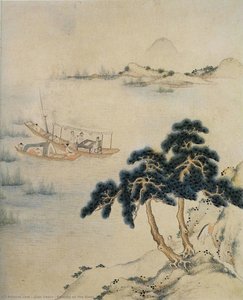
qian daxin
1728 - 1804 , China
Quick Facts
- Artistic Movement Or Style: Han Confucianism
- Artists Or Movements Influenced By This Artist: ['Wang Chang']
- Artists Who Influenced This Artist: ['Dai Zhen']
- Date Of Birth: Feb. 16, 1728
- Date Of Death: Nov. 21, 1804
- Full Name: Qian Daxin
- Nationality: Chinese
- Notable Artworks: ['Examination of Variances in the Twenty-Two Dynastic Histories']
- Place Of Birth: Beijing, China