

 Preview
 Send
Send Share
Share
 Details

 Download
 Similars
 X-Ray
X-Ray Diaporama
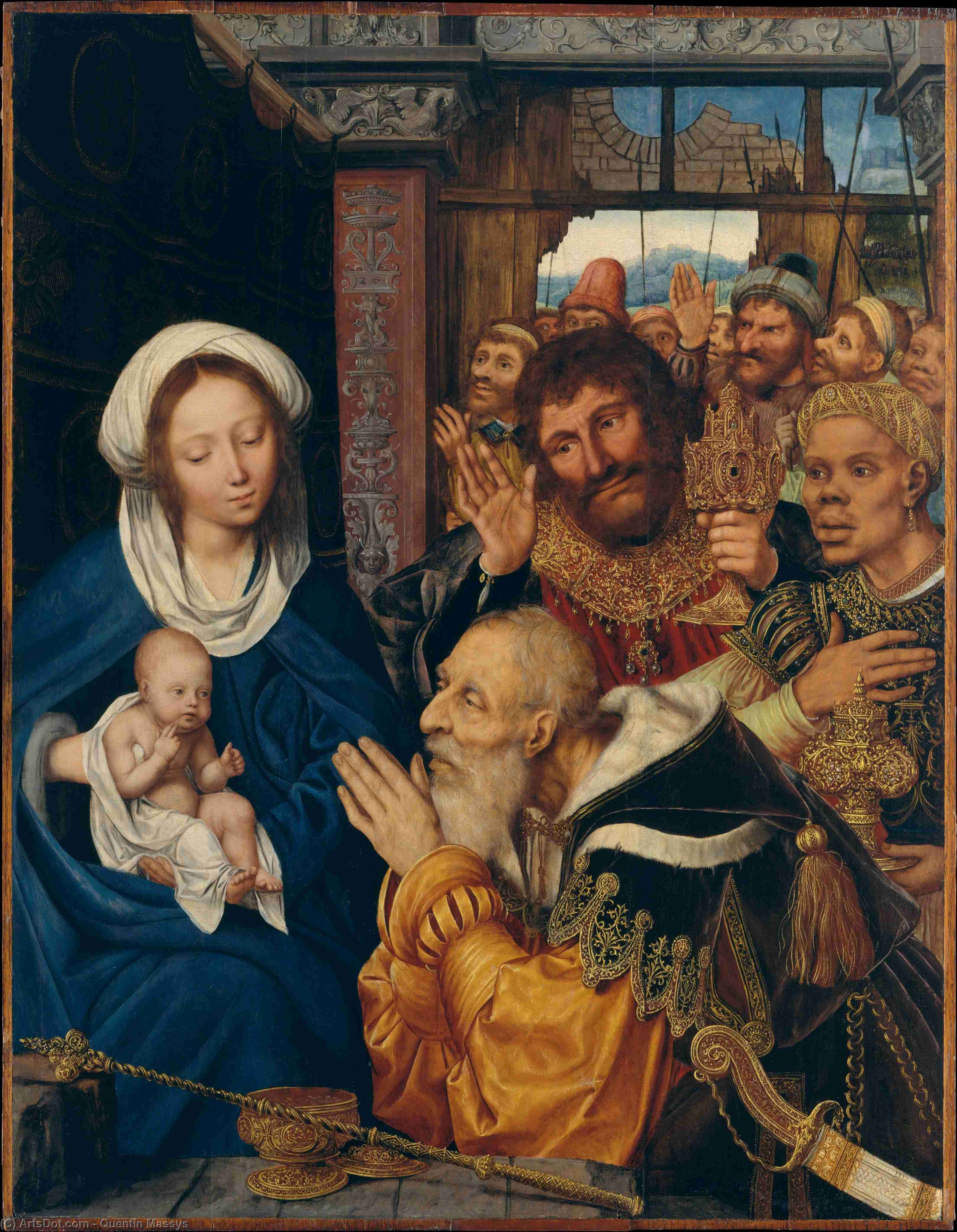
The Adoration of the Magi
 Tempera On Panel
- Antwerp Renaissance
 1526
1526- Renaissance
 103.0 x 80.0 cm
 Metropolitan Museum of Art
 Read More
Purchase a high-resolution, enhanced digital image, far superior to the online preview.
Each file is meticulously prepared by our in-house specialists using advanced tools and expert manual retouching. We ensure every image has exceptional clarity, precise color accuracy, and fine detail.
The final file is delivered via email within 72 hours, optimized for immediate use in professional, editorial, and print environments. This is the same quality trusted by top-tier design studios, publishers, and galleries.
Digital Image
Download a high-resolution file for personal display, printing, and creative projects. ( Buy Print Buy Hand Made Painting)
Included in Every Digital Image Order
Expert Digital Delivery, Guaranteed
When you choose ArtsDot.com, you're not just getting an image - you're receiving a professionally enhanced digital artwork, crafted with precision and backed by a satisfaction guarantee. Here's everything that comes with your order, automatically:

Fast Email Delivery
Your high-resolution digital image file will be emailed to you within 72 hours of ordering - ready for immediate use.

AI-Enhanced Digital File
Your artwork is professionally optimized using advanced AI tools and manual editing, ensuring maximum detail, clarity, and color accuracy.

Free Lifetime Re-Delivery
Accidentally deleted or lost your file? No worries - we'll resend it to you anytime, free of charge.

No Import Fees - Ever
Enjoy your artwork instantly with zero customs, duties, or delivery fees - digital downloads are always tax-free.

Color Accuracy Guarantee
We ensure your digital image reflects the original colors as closely as possible using professional tools and color management.

60-Day Satisfaction Guarantee
If you're not satisfied with your digital image, we'll revise it or refund 100% within 60 days - no questions asked.

100% Money-Back Guarantee
Not satisfied? Get a full refund within 60 days of receiving your digital file - no questions asked.

Bulk Order Discounts
Buy 3 images, save 10% - Buy 5, save 15% - Buy 10+, save 20%. Great for creative projects, galleries, and agencies.
Collectible Description
A Devotional Gathering: The Adoration of the Magi
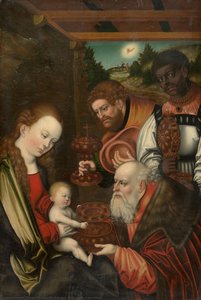
To gaze upon this depiction of The Adoration of the Magi is to step directly into a moment suspended in time—a tableau vivant brimming with piety, wonder, and profound human connection. Quentin Massys has masterfully captured not merely an event from sacred scripture, but the very essence of devotion itself. Mary cradles the divine infant Jesus, the focal point around which all gazes converge. The composition is richly populated; a gathering of at least thirteen figures—men and women—are arranged with such naturalism that one feels they might breathe life back into the aged wood panel. The air seems thick with hushed reverence as these figures approach to pay their respects, creating an atmosphere both intimate and grand in scope.
Mastery of the Northern Renaissance Palette
Technically, this work speaks volumes about Massys’s command over his medium. Executed in tempera on wood panel, the surface bears the beautiful patina of age, lending it an undeniable historical gravitas that only time can bestow. Yet, despite its antiquity suggested by the material, the colors remain remarkably rich and vibrant. Massys employs a palette characteristic of the Antwerp School—vibrant yet deeply saturated tones that lend life to every fold of drapery and every expressive face. His handling of light is particularly noteworthy; it seems to emanate from the divine child himself, illuminating the faces of the worshippers and giving depth to the surrounding crowd.
Symbolism and Spiritual Resonance
The narrative weight of the Adoration of the Magi is immense, symbolizing not only the recognition of Christ by the Gentile kings but also humanity’s journey toward spiritual enlightenment. Each figure contributes a layer of meaning: the awe in their expressions, the careful gestures of offering gifts—these are universal symbols of faith and acknowledgment. The grouping itself suggests a community united by belief. For the modern admirer or collector, this piece offers more than mere decoration; it is a contemplation point, an invitation to pause amidst the clamor of daily life and reflect upon deeper matters of devotion.
A Timeless Presence for Any Interior
Considering its dimensions of 103 x 80 cm, this painting possesses a substantial yet balanced presence. Whether adorning a formal reception hall, lending spiritual depth to a chapel-like study, or serving as the centerpiece in a richly decorated living space, its impact is undeniable. Acquiring a high-quality reproduction allows one to bring the luminous drama and meticulous craftsmanship of the 1526 period into contemporary life. It serves as an enduring testament to the power of Renaissance artistry—a piece that speaks eloquently of faith, human connection, and unparalleled artistic skill.
CLASSIFICATION: ReligiousRelated Artworks

![Adoration Of The Magi — The Younger Zurich Carnation Master [nelkenmeister], Early Renaissance](/media/artworks/images-thumb/2f/6d/2f6d73ec5fc9c27e013112f02083ff54.jpg)
Artist Biography
The Architect of the Antwerp School
In the vibrant, burgeoning landscape of the sixteenth-century Low Countries, few names resonate with as much foundational importance as Quentin Massys. Often heralded as the pioneer of the Antwerp School, Massys was a painter who bridged the gap between the meticulous, spiritual devotion of the Early Netherlandish tradition and the burgeoning humanism of the Northern Renaissance. Born around 1466 in Leuven, Belgium, his early life remains a tapestry of legend and historical fragments. It is widely whispered in art history that before he ever grasped a fine brush, he was trained as an ironsmith—a detail that lends a profound, tactile weight to his later mastery of texture and material. This background in metalworking likely instilled in him a unique reverence for the physical world, allowing him to render the sheen of silk, the cold glint of coin, and the weathered skin of humanity with unparalleled precision.
As he transitioned from the academic atmosphere of Leuven to the bustling commercial hub of Antwerp around 1490, Massys began to weave his own distinct thread into the fabric of Flemish art. His early training, potentially under the guidance of Dirk Bouts, connected him to the lineage of masters like Hans Memling and Rogier van der Weyden. From these predecessors, he inherited a devotion to verisimilitude—the pursuit of truth in representation. Yet, Massys was far from a mere imitator. While he maintained the exquisite detail characteristic of his ancestors, he infused his work with a new, burgeoning vitality and a willingness to explore the complexities of the human condition through both religious solemnity and biting social commentary.
A Mastery of Devotion and Satire
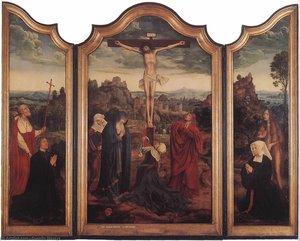
The brilliance of Massys lies in his remarkable ability to navigate two seemingly disparate worlds: the sacred and the profane. On one hand, his religious compositions serve as profound meditations on faith. In works such as Christ on the Cross with Donors, he captures the raw, emotional gravity of the crucifixion, utilizing a High Renaissance sensibility to present a scene that is both deeply moving and technically flawless. His ability to depict the divine through the lens of human suffering allowed his religious subjects to resonate with a visceral intimacy, making the spiritual palpable to the viewer.
Conversely, Massys was a master of the satirical genre, using his brush to hold a mirror up to the shifting social morals of his era. He possessed a keen eye for the foibles of humanity, often creating scenes that blended realism with a subtle, mocking wit. This duality is perhaps most evident in his approach to portraiture and genre painting, where he could pivot from the serene beauty of a Virgin and Child to the more complex, morally layered depictions of contemporary life. His work often explored themes of greed, vanity, and the tension between material wealth and spiritual purity, making him a precursor to the great genre painters who would follow in the centuries to come.
Legacy and Artistic Significance
The historical significance of Quentin Massys cannot be overstated; he was the catalyst for an artistic revolution in Antwerp. By introducing new motifs and techniques while remaining anchored in the rich traditions of his homeland, he provided the blueprint for a school of painting that would dominate Flanders throughout the sixteenth century. His influence can be traced through the evolution of Northern European art, as he paved the way for a more expressive, observational style that embraced the complexities of the modernizing world.
Today, we remember Massys not just as a craftsman, but as a storyteller who captured the soul of an era. His legacy is preserved in the enduring power of his imagery:
- Technical Innovation: The seamless integration of metalworking-inspired precision with the fluid grace of Renaissance oil painting.
- The Antwerp School: Establishing a lasting artistic movement that prioritized both realism and moral narrative.
- Humanist Perspective: A unique ability to blend the profound sanctity of religious icons with the sharp, observational wit of social satire.

Quentin Massys
1466 - 1530 , Belgium
Quick Facts
- Artistic Movement Or Style: Antwerp School
- Artists Or Movements Influenced By This Artist: ['Hans Memling']
- Artists Who Influenced This Artist: ['Dirk Bouts']
- Date Of Birth: Leuven, Belgium (c. 1466)
- Date Of Death: 1530
- Full Name: Quentin Massys
- Nationality: Flemish
- Notable Artworks:
- St Anne Altarpiece
- The Moneylender and His Wife
- Place Of Birth: Leuven

