

 Preview
 Send
Send Share
Share
 Details

 Download
 Similars
 X-Ray
X-Ray Diaporama
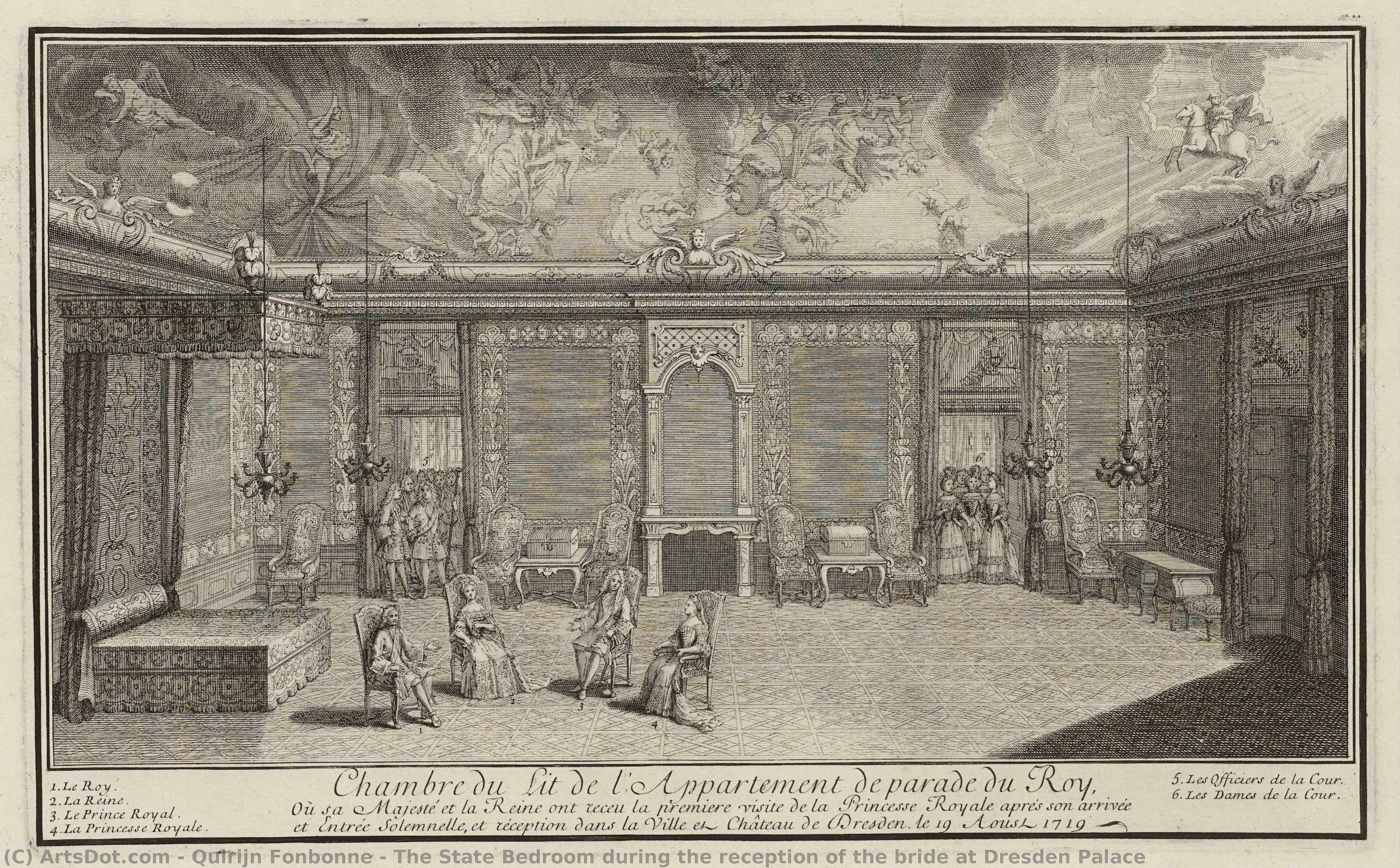
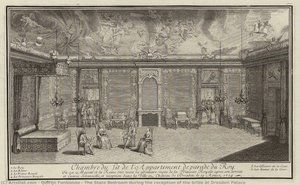
The State Bedroom during the reception of the bride at Dresden Palace
 1728
1728 369.0 x 226.0 cm
 Kupferstich-Kabinett
 Read More
Hand Made Oil Reproduction
Hand-painted oil on canvas in your size and frame, made to order by our artists. ( Buy Print Buy Image)




































Pick from our preset sizes that match the artwork's original proportions.

You may enter your own dimensions to fit a specific frame or space. If your selected size does not match the original image's proportions, we will either crop the artwork or extend the painting with additional hand-painted elements. A digital mockup will be sent for your approval before production begins.
Please note that the on-screen preview does not reflect the actual cropping or extension. Only the mockup will accurately show the final composition.
While custom sizes are available, we recommend selecting a dimension from the predefined list to preserve the original proportions.
After order, ArtsDot.com team will email client for instructions and provide a mockup preview
Worldwide Delivery () in 3/4 weeks instead of standard 5 weeks. (3 September). No compromise on quality.

Free Worldwide Express Shipping

High-Quality Linen Canvas

Full Shipping Insurance

Customs Tax Refund Guarantee

True Color Matching Guarantee

60-Day Return Policy (Defects Only)

100% Money-Back Guarantee

Bulk Discount Offer
 Glass option is only available in size under 110 CM

The State Bedroom during the reception of the bride at Dresden Palace
Reproduction Medium
Reproduction Size
-


Total Price
$ 263
Related Artworks




Artist Biography
A Master of Detail: The Legacy of Quirijn Fonbonne
In the vibrant, bustling atmosphere of early 18th-century Amsterdam, a period where the echoes of the Dutch Golden Age still resonated through the streets and studios, the name Quirijn Fonbonne emerged as a symbol of technical precision and historical documentation. Though the biographical fragments of his life remain as delicate as the etchings he produced, Fonbonne’s presence in the annals of art history is undeniably profound. As an engraver active around 1728, he occupied a vital niche in the European artistic ecosystem, serving as a bridge between the grand visual narratives of royal courts and the widespread dissemination of art through the medium of printmaking.
The life of Fonbonne was deeply rooted in the industrious spirit of the Netherlands. Born in the late 1680s, he came of age during a time when Amsterdam served as the intellectual and commercial heart of Europe. It was within this crucible of trade and culture that he honed his craft, mastering the arduous and exacting discipline of engraving. This profession required not only immense physical stamina to manipulate metal plates but also an extraordinary eye for light, shadow, and architectural grandeur. While much of his early development remains shrouded in mystery, one can sense the lingering influence of the great Dutch masters, particularly Rembrandt van Rijn. The dramatic use of chiaroscuro—the interplay of intense light and deep shadow—that defined the previous century clearly informed Fonbonne’s approach to composition, lending his prints a sense of theatricality and depth.
The Grandeur of the Dresden Palace Engravings
Fonbonne’s most enduring contribution to the visual record lies in his monumental work documenting the arrival of Archduchess Maria Josepha at the Dresden Palace. This commission was far more than a mere artistic exercise; it was a high-stakes historical recording of a pivotal moment in European diplomacy and royal lineage. Through his meticulous lines, Fonbonne captured the formal reception of the Habsburg heir apparent by Frederick Augustus II, King of Saxony, transforming a fleeting political event into an eternal monument of print.
The technical brilliance required for such a feat cannot be overstated. To translate the sprawling complexity of a palace courtyard and the intricate regalia of a royal procession onto a metal plate demands a mastery of scale and detail. In his work, one finds:
- Architectural Precision: The ability to render the imposing structures of the Dresden Palace with a sense of permanence and weight.
- Narrative Depth: A sophisticated use of shading that guides the viewer's eye through the crowded, ceremonial landscape.
- Historical Veracity: An unwavering commitment to capturing the textures of silk, the gleam of armor, and the solemnity of the royal presence.
Through these engravings, Fonbonne achieved a level of fame that established him as one of Amsterdam’s most respected engravers. His ability to take the ephemeral—a moment of celebration, a royal arrival, a fleeting glance—and freeze it in the indelible medium of ink and metal allowed his work to travel far beyond the borders of Saxony, reaching collectors and connoisseurs across the continent. He did not merely draw scenes; he constructed windows into the heart of European power, ensuring that the splendor of the era would remain etched in the collective memory of history.
Quirijn Fonbonne
1680 - 1739 , Netherlands
Quick Facts
- Artistic Movement Or Style: Dutch Golden Age Engraving
- Date Of Birth: Netherlands (1680)
- Date Of Death: 1739
- Full Name: quirijn fonbonne
- Nationality: Dutch
- Notable Artworks: ['The State Bedroom during the reception of the bride at Dresden Palace']
- Place Of Birth: Netherlands

