

 Preview
 Send
Send Share
Share
 Details

 Download
 Similars
 X-Ray
X-Ray Diaporama
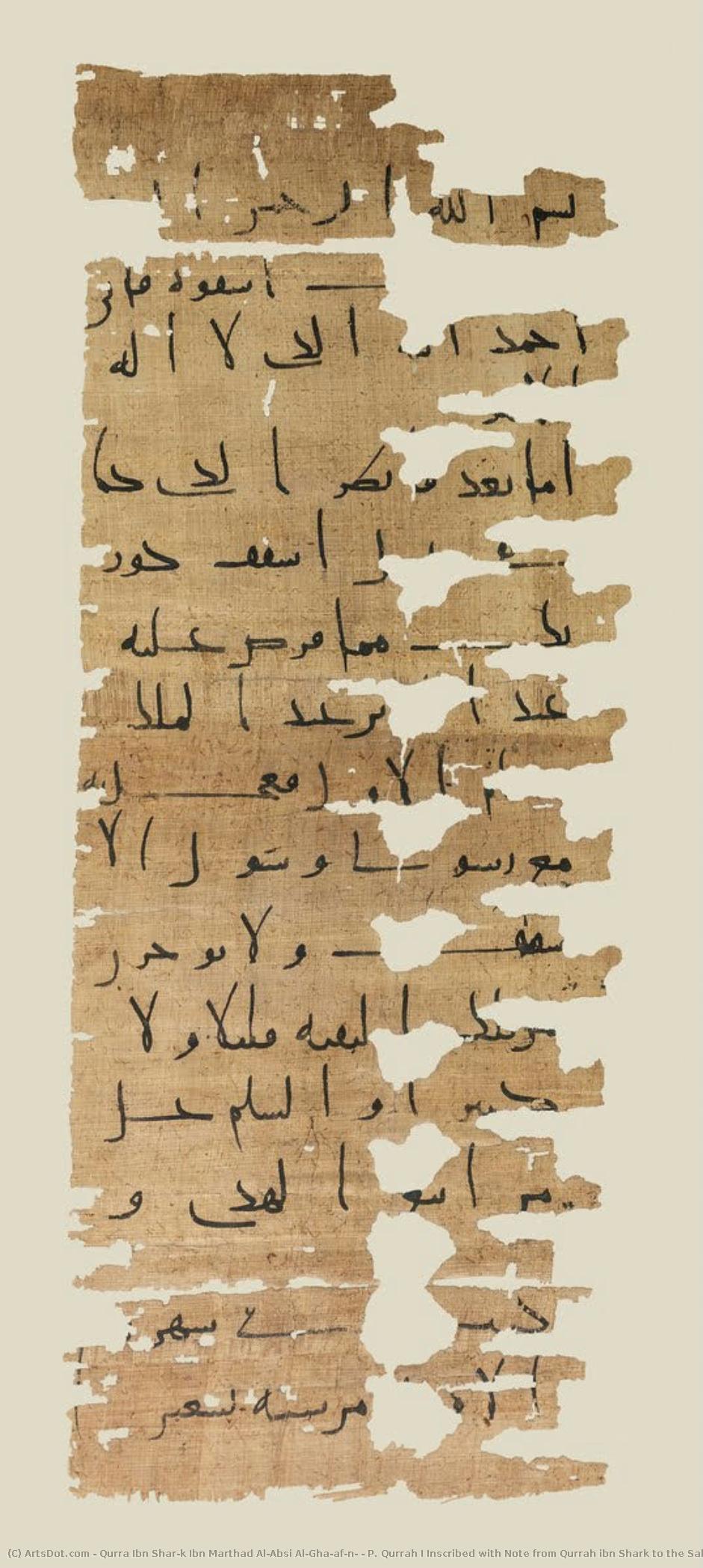
P. Qurrah I Inscribed with Note from Qurrah ibn Shark to the Sahib of Ashkauh
 35.0 x 20.0 cm
 Institute for the Study of Ancient Cultures Museum
 Read More
Purchase a high-resolution, enhanced digital image, far superior to the online preview.
Each file is meticulously prepared by our in-house specialists using advanced tools and expert manual retouching. We ensure every image has exceptional clarity, precise color accuracy, and fine detail.
The final file is delivered via email within 72 hours, optimized for immediate use in professional, editorial, and print environments. This is the same quality trusted by top-tier design studios, publishers, and galleries.
Digital Image
Download a high-resolution file for personal display, printing, and creative projects. ( Buy Print Buy Hand Made Painting)
Included in Every Digital Image Order
Expert Digital Delivery, Guaranteed
When you choose ArtsDot.com, you're not just getting an image - you're receiving a professionally enhanced digital artwork, crafted with precision and backed by a satisfaction guarantee. Here's everything that comes with your order, automatically:

Fast Email Delivery
Your high-resolution digital image file will be emailed to you within 72 hours of ordering - ready for immediate use.

AI-Enhanced Digital File
Your artwork is professionally optimized using advanced AI tools and manual editing, ensuring maximum detail, clarity, and color accuracy.

Free Lifetime Re-Delivery
Accidentally deleted or lost your file? No worries - we'll resend it to you anytime, free of charge.

No Import Fees - Ever
Enjoy your artwork instantly with zero customs, duties, or delivery fees - digital downloads are always tax-free.

Color Accuracy Guarantee
We ensure your digital image reflects the original colors as closely as possible using professional tools and color management.

60-Day Satisfaction Guarantee
If you're not satisfied with your digital image, we'll revise it or refund 100% within 60 days - no questions asked.

100% Money-Back Guarantee
Not satisfied? Get a full refund within 60 days of receiving your digital file - no questions asked.

Bulk Order Discounts
Buy 3 images, save 10% - Buy 5, save 15% - Buy 10+, save 20%. Great for creative projects, galleries, and agencies.
Related Artworks








Artist Biography
A Legacy of Governance: The Life and Influence of Qurra ibn Sharik
In the grand, sweeping tapestry of the Umayyad Caliphate, few figures emerge with as much administrative clarity and historical resonance as Qurra ibn Sharik ibn Marthad al-Absi. To contemplate his life is to step into a world of shifting tribal loyalties, burgeoning empires, and the delicate art of statecraft during the early 8th century. A man of noble lineage, Qurra was a scion of the Bighad branch of the Banu Abs tribe, a prominent Qaysi group that inhabited the fertile landscapes of northern Syria and Upper Mesopotamia. His very identity was woven from the threads of this prestigious tribal fabric, providing him with a social standing that would later serve as the foundation for his ascent within the highest echelons of Islamic governance.
The early years of Qurra’s life remain partially veiled by the mists of time, yet the echoes of his influence are unmistakable in the historical chronicles. Before he became a central figure in the administration of Egypt, he navigated the complex political terrains of Jund Qinnasrin and potentially Armenia. Serving as a governor in these frontier regions during the twilight of Caliph Abd al-Malik’s reign, he honed the skills of a diplomat and an administrator. This period of his life was not merely about territorial management but about understanding the intricate balance between tribal representation and imperial authority—a skill that would define his later achievements as the katib, or chief scribe, to Caliph Al-Walid I.
The Architect of Order in Egypt
The zenith of Qurra’s career arrived with his appointment as the Governor of Egypt in 709. Tasked with replacing the corrupt predecessor Abd Allah, Qurra entered a province struggling under the weight of famine and administrative decay. What followed was not merely a period of rule, but a profound era of reconstruction and reorganization. He approached governance with the precision of a scholar and the vision of a builder, leaving behind a legacy that is still studied by historians today. His work was characterized by a deep commitment to the structural integrity of the state, most notably through his reorganization of the dīwān—the vital army registers that ensured the equitable distribution of government salaries.
Beyond the ledger and the scroll, Qurra’s impact was etched into the very landscape of Egypt. He understood that true stability required more than just political decree; it required the nourishment of the land and the spiritual fortification of its people. His monumental efforts included:
- The Restoration of Faith: The rebuilding of the mosque of Fustat, a gesture that reinforced the Islamic identity of the province.
- Hydraulic Innovation: The initiation of essential irrigation works in the desert, which sought to combat famine and revitalize agricultural productivity.
- Administrative Transparency: The meticulous management of provincial records, ensuring that the machinery of the Caliphate functioned with renewed efficiency.
Historical Significance and the Written Word
The historical significance of Qurra ibn Sharik extends far beyond his physical achievements in Egypt; it lives on through the fragments of the past he helped preserve. Because of his rigorous administrative standards, his era provides one of the richest collections of administrative papyri in existence. These fragile, ancient documents serve as a window into the judicial and economic life of the 8th century, offering scholars unparalleled insights into how law and commerce were conducted under Umayyad rule. His correspondence, such as his letters to the pagarch of Aphrodito, acts as a vital primary source for understanding the complexities of provincial justice.
Though he passed away in office in 715, the shadow cast by his governance remained long. He represents a rare moment in history where tribal prestige and imperial bureaucracy converged to create a period of relative stability and documented progress. In the annals of Islamic history, Qurra ibn Sharik stands not just as a governor, but as a master architect of early Islamic administration, a man whose dedication to order and infrastructure helped shape the enduring character of a burgeoning civilization.
qurra ibn sharīk ibn marthad al-absi al-ghaṭafānī
Syrian Arab Republic
Quick Facts
- Date Of Death: 715
- Full Name: Qurra ibn Sharik ibn Marthad al-Absi al-Ghaṭafānī
- Nationality: Arabian
- Notable Artworks: ['P. Qurrah I Inscribed with Note from Qurrah ibn Shark to the Sahib of Ashkauh']
- Place Of Birth: Syrian Arab Republic

