 Preview
 Send
Send Share
Share
 Details

 Download
 Similars
 X-Ray
X-Ray Diaporama
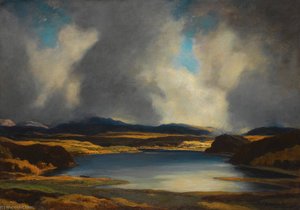
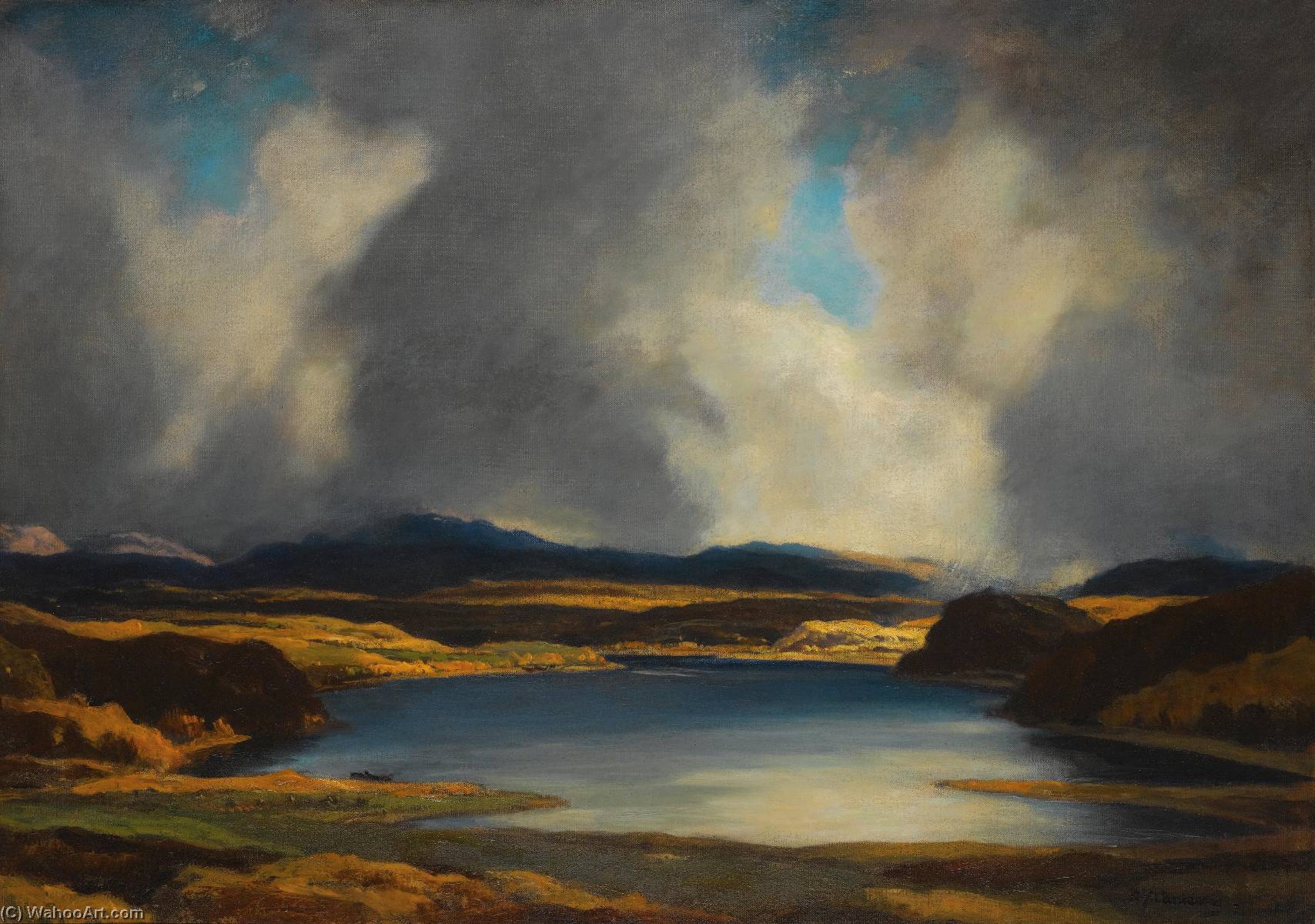
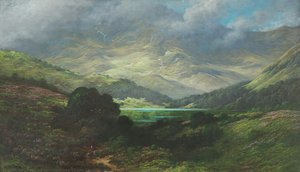
The Wilds of Lorne
 Read More
Hand Made Oil Reproduction
Hand-painted oil on canvas in your size and frame, made to order by our artists. ( Buy Print Buy Image)




































Pick from our preset sizes that match the artwork's original proportions.

You may enter your own dimensions to fit a specific frame or space. If your selected size does not match the original image's proportions, we will either crop the artwork or extend the painting with additional hand-painted elements. A digital mockup will be sent for your approval before production begins.
Please note that the on-screen preview does not reflect the actual cropping or extension. Only the mockup will accurately show the final composition.
While custom sizes are available, we recommend selecting a dimension from the predefined list to preserve the original proportions.
After order, ArtsDot.com team will email client for instructions and provide a mockup preview
Worldwide Delivery () in 3/4 weeks instead of standard 5 weeks. (23 August). No compromise on quality.

Free Worldwide Express Shipping

High-Quality Linen Canvas

Full Shipping Insurance

Customs Tax Refund Guarantee

True Color Matching Guarantee

60-Day Return Policy (Defects Only)

100% Money-Back Guarantee

Bulk Discount Offer
 Glass option is only available in size under 110 CM

The Wilds of Lorne
Reproduction Medium
Reproduction Size
-


Total Price
$ 263
Related Artworks








Artist Biography
The Master of Light and Line: The Life of Sir David Young Cameron
Born in the vibrant atmosphere of Glasgow in 1865, Sir David Young Cameron RA emerged as one of the most distinguished figures of the British Etching Revival. The son of the Reverend Robert Cameron, his early years were shaped by the rigorous academic traditions of the Glasgow Academy and later the prestigious Glasgow School of Art and Edinburgh Schools of Fine Art. This formal foundation provided him with the technical precision that would become his hallmark, yet it was his innate ability to capture the ephemeral qualities of light and shadow that truly set him apart from his contemporaries. As a painter and etcher, Cameron possessed a rare sensitivity to the architectural soul of his subjects, transforming stone, wood, and water into poetic meditations on permanence and change.
The trajectory of Cameron’s career was marked by an extraordinary ascent within the artistic community of his era. By the 1890s, he had already garnered international acclaim, a feat solidified by his election as an Associate of the Royal Society of Painter-Etchers in 1889 and subsequently as a Fellow in 1895. His early work was deeply informed by the aesthetic movements of his time, drawing significant inspiration from the Glasgow Boys and the tonal mastery of the Hague School. These influences are evident in his ability to balance decorative elegance with a profound sense of atmospheric depth, particularly in his celebrated series of etchings such as "The Clyde Set," "The North Holland Set," and "The North Italian Set."
A Mastery of Etching and the Art of the State
While Cameron was a prolific painter in oils and watercolors, it was through the medium of printmaking that he achieved his most enduring legacy. He became a virtuoso of the etching needle, utilizing the technique of drypoint to create works of breathtaking delicacy. His prints are often characterized by a dramatic interplay between profound darkness and piercing highlights, a chiaroscuro effect that lends a spiritual weight to his architectural studies. In his later years, he turned toward the barren landscapes of Scotland, using the feathery, light touch of drypoint to contrast the rugged textures of rock and water with an almost ethereal softness.
One of the most fascinating aspects of Cameron’s technical prowess was his dedication to the evolution of a single image. He was known for producing an unprecedented number of states within his prints, exploring every possible nuance of line and tone. It is widely believed that he holds a remarkable record in this regard, having produced as many as twenty-eight different states for a single plate. This obsessive pursuit of perfection allowed him to capture the subtle shifts in light and mood, making each print a unique chapter in a larger visual narrative. His popularity among collectors was immense, sustained by this relentless experimentation and his ability to evoke deep emotion through minimal, yet masterful, linework.
Legacy and Historical Significance
The later years of Cameron’s life were shadowed by the economic volatility of the early 20th century. The Great Crash of 1929 brought a devastating collapse to the market for prints, significantly impacting the livelihoods of many etchers, including himself. Despite these challenges, his contribution to the history of British art remains unshakeable. He bridged the gap between the decorative traditions of the late 19th century and the more stark, atmospheric realism that would define much of early 20th-century printmaking.
Today, Sir David Young Cameron is remembered not merely as a skilled craftsman, but as an artist who could find the sublime within the structural. His work continues to resonate with those drawn to the quiet dignity of church interiors and the haunting beauty of the Scottish landscape. His legacy lives on through:
- Technical Innovation: His pioneering use of drypoint to achieve atmospheric lightness.
- Architectural Vision: A unique ability to imbue man-made structures with organic, emotional depth.
- The Etching Revival: His role as a central figure in elevating printmaking to a high art form alongside his peers.
- Tonal Mastery: The sophisticated use of contrast to create movement and drama within static subjects.
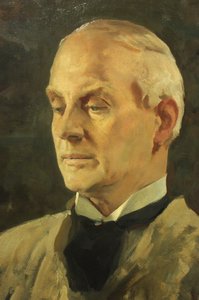
ra sir david young cameron
1865 - 1945
Quick Facts
- Artistic Movement Or Style: Etching Revival, Glasgow Boys, Hague School
- Artists Who Influenced This Artist:
- Glasgow Boys
- Hague School
- Date Of Birth: 1865
- Date Of Death: 1945
- Full Name: Sir David Young Cameron RA
- Nationality: Scottish
- Notable Artworks:
- The Clyde Set
- The North Holland Set
- The North Italian Set
- Place Of Birth: Glasgow, Scotland