

 Preview
 Send
Send Share
Share
 Details

 Download
 Similars
 X-Ray
X-Ray Diaporama
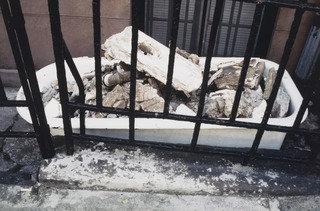
Furniture Bath Tub
 1992
1992 16.0 x 24.0 cm
 Read More
Purchase a high-resolution, enhanced digital image, far superior to the online preview.
Each file is meticulously prepared by our in-house specialists using advanced tools and expert manual retouching. We ensure every image has exceptional clarity, precise color accuracy, and fine detail.
The final file is delivered via email within 72 hours, optimized for immediate use in professional, editorial, and print environments. This is the same quality trusted by top-tier design studios, publishers, and galleries.
Digital Image
Download a high-resolution file for personal display, printing, and creative projects. ( Buy Print Buy Hand Made Painting)
Included in Every Digital Image Order
Expert Digital Delivery, Guaranteed
When you choose ArtsDot.com, you're not just getting an image - you're receiving a professionally enhanced digital artwork, crafted with precision and backed by a satisfaction guarantee. Here's everything that comes with your order, automatically:

Fast Email Delivery
Your high-resolution digital image file will be emailed to you within 72 hours of ordering - ready for immediate use.

AI-Enhanced Digital File
Your artwork is professionally optimized using advanced AI tools and manual editing, ensuring maximum detail, clarity, and color accuracy.

Free Lifetime Re-Delivery
Accidentally deleted or lost your file? No worries - we'll resend it to you anytime, free of charge.

No Import Fees - Ever
Enjoy your artwork instantly with zero customs, duties, or delivery fees - digital downloads are always tax-free.

Color Accuracy Guarantee
We ensure your digital image reflects the original colors as closely as possible using professional tools and color management.

60-Day Satisfaction Guarantee
If you're not satisfied with your digital image, we'll revise it or refund 100% within 60 days - no questions asked.

100% Money-Back Guarantee
Not satisfied? Get a full refund within 60 days of receiving your digital file - no questions asked.

Bulk Order Discounts
Buy 3 images, save 10% - Buy 5, save 15% - Buy 10+, save 20%. Great for creative projects, galleries, and agencies.
Related Artworks









Artist Biography
A Sculptor of Absence and Memory
Rachel Whiteread, born in Ilford, England, in 1963, stands as a pivotal figure in contemporary sculpture, renowned for her hauntingly beautiful explorations of absence, memory, and the spaces that surround us. Her work isn’t about what *is* there, but rather what *isn't*, a subtle yet profound shift in sculptural thinking that propelled her to international acclaim and cemented her place within the influential Young British Artists (YBA) movement. Whiteread’s artistic journey began amidst a creatively stimulating environment; her mother, Patricia Whiteread, was also an artist, instilling an early appreciation for visual expression, while her father, Thomas Whiteread, fostered a strong sense of social awareness that would later permeate her work. The personal losses of both parents during her career undoubtedly deepened the emotional resonance found within her sculptures, imbuing them with a palpable sense of melancholy and reflection.Formative Years and Artistic Development
Whiteread’s formal training laid the groundwork for her unique artistic vision. She studied at Brighton Polytechnic from 1982 to 1985, followed by the prestigious Slade School of Art, University College London, where she earned an MA in sculpture in 1987. A crucial turning point came during a workshop led by sculptor Richard Wilson, which sparked her fascination with casting techniques and their potential for artistic expression. This exploration wasn’t about replicating form, but rather capturing the void—the negative space left behind when an object is removed. Early works like “Closet” (1988) exemplified this nascent approach. A plaster cast of a wardrobe's interior, draped in black felt, evoked childhood memories and the comforting darkness of hidden spaces, hinting at the psychological weight objects can carry. This fascination with domesticity and personal history became a recurring theme throughout her career.The Art of Casting Negative Space
Whiteread’s signature technique revolves around casting negative space—the areas *around* objects rather than the objects themselves. She employs materials like plaster, concrete, and resin to create casts of spaces surrounding everyday items – furniture, architectural details, even entire rooms. This innovative approach challenges traditional notions of sculpture by focusing on what is absent, creating a sense of mystery and evoking feelings of loss or memory. Her sculptures aren’t simply representations; they are ghostly presences, echoes of lives lived and spaces occupied. Whiteread believes her casts retain “the residue of years and years of use,” imbuing them with a sense of history and human presence. This isn't merely about the physical form but also the intangible traces left behind by those who interacted with it. The resulting works are profoundly evocative, prompting viewers to contemplate the significance of what is not immediately present.Landmark Works and Lasting Legacy
Whiteread’s career has been punctuated by several groundbreaking works that have garnered international acclaim. “Ghost” (1990), a monumental plaster cast of an entire room, captured the atmosphere of a demolished house, establishing her reputation and attracting the attention of Charles Saatchi. However, it was "House" (1993) that truly catapulted her to fame—and controversy. This large concrete cast of the interior of a Victorian terraced house, exhibited on-site before being controversially demolished by the local council, sparked public debate about urban development and preservation. The work earned her the prestigious Turner Prize in 1993, making her the first woman to receive the award. Further demonstrating her ability to engage with significant social issues, “Judenplatz Holocaust Memorial” (2000) in Vienna consists of concrete casts of library shelves with pages turned inwards, a poignant symbol of the loss of knowledge and identity during the Holocaust. "Untitled Monument" (2001), a massive resin cast of the empty fourth plinth in Trafalgar Square, London, offered a unique perspective on public space and civic engagement. Whiteread’s contribution to contemporary art is significant for redefining sculpture, exploring memory and loss, offering social commentary, and influencing countless artists to explore new forms of expression. Her work continues to resonate with audiences worldwide, reminding us of the power of absence and the enduring weight of memory.Recognition and Continued Influence
- Turner Prize (1993): Awarded for “House,” solidifying her position as a leading figure in contemporary art.
- Venice Biennale (1997): First woman to present a solo exhibition at the British Pavilion, receiving the Best Young Artist award.
- Dame Commander of the Order of the British Empire (DBE) (2019): Honored for her services to art, recognizing her significant contribution to the cultural landscape.
- Ongoing Exhibitions and Collections: Whiteread’s work is featured in major museums and galleries worldwide, including the Tate Modern, Museum of Modern Art (MoMA), and National Gallery of Art.
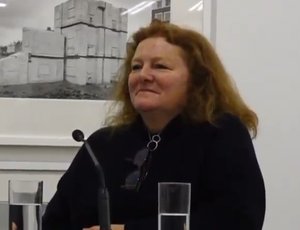
Rachel Whiteread
1963 - , United Kingdom
Quick Facts
- Artistic Movement Or Style: Young British Artists
- Artists Or Movements Influenced By This Artist: ['Contemporary sculpture']
- Artists Who Influenced This Artist: ['Richard Wilson']
- Date Of Birth: 1963
- Full Name: Rachel Whiteread
- Nationality: British
- Notable Artworks:
- Ghost
- House
- Untitled Monument
- Place Of Birth: Ilford, UK

