 Preview
 Send
Send Share
Share
 Details

 Download
 Similars
 X-Ray
X-Ray Diaporama
 Stats
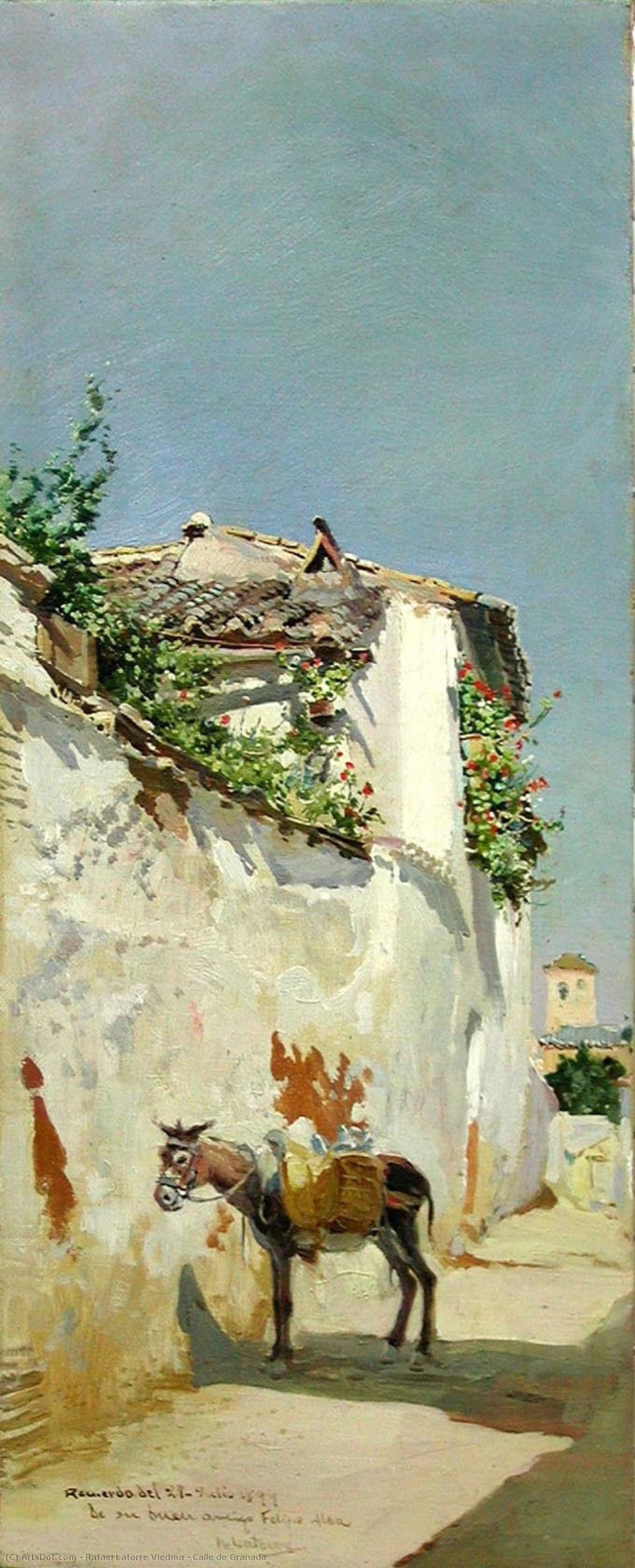
StatsCalle de Granada

 Read More
Hand Made Oil Reproduction
Hand-painted oil on canvas in your size and frame, made to order by our artists. ( Switch to Print Switch to Digital Image)




































Pick from our preset sizes that match the artwork's original proportions.

You may enter your own dimensions to fit a specific frame or space. If your selected size does not match the original image's proportions, we will either crop the artwork or extend the painting with additional hand-painted elements. A digital mockup will be sent for your approval before production begins.
Please note that the on-screen preview does not reflect the actual cropping or extension. Only the mockup will accurately show the final composition.
While custom sizes are available, we recommend selecting a dimension from the predefined list to preserve the original proportions.
After order, ArtsDot.com team will email client for instructions and provide a mockup preview
Worldwide Delivery () in 3/4 weeks instead of standard 5 weeks. (9 September). No compromise on quality.

Free Worldwide Express Shipping

High-Quality Linen Canvas

Full Shipping Insurance

Customs Tax Refund Guarantee

True Color Matching Guarantee

100-Day Return Policy (Defects Only)

100% Money-Back Guarantee

Bulk Discount Offer
 Glass option is only available in size under 110 CM

Calle de Granada
Reproduction Medium
Reproduction Size
-


Total Price
$ 263
Related Artworks









Artist Biography
A Granadine Master: The Life and Art of Rafael Latorre Viedma
Rafael Latorre Viedma, born in Granada, Spain, in 1873 and passing away in 1960, stands as a pivotal figure within the ‘Escuela Granadina de Pintura’ – the Granadine School of Painting that flourished from 1850 to 1950. His life was deeply interwoven with the artistic fabric of his hometown, a commitment he maintained throughout his career despite opportunities for wider recognition. Latorre wasn't merely a painter; he embodied a multifaceted role as restorer, professor, and antiquarian, dedicating himself to preserving and promoting Granada’s rich cultural heritage. His earliest artistic explorations began in 1890 with an exhibition at the ‘Exposición Local de Arte Moderno’, marking the initial public acknowledgement of his burgeoning talent. This early showing signaled a trajectory focused on capturing the unique beauty of Granada, particularly its most iconic landmark: the Alhambra and its associated museum.The Alhambra as Muse: A Painterly Obsession
Latorre Viedma’s artistic identity became inextricably linked with the Alhambra. He didn't simply depict the palace-fortress; he *lived* within it, studying its intricate details, absorbing its atmosphere, and translating its ethereal beauty onto canvas. His paintings of the Alhambra are not merely topographical representations but rather deeply felt evocations of a place steeped in history, romance, and architectural splendor. He captured the play of light on the delicate stucco work, the lush gardens reflecting in tranquil pools, and the imposing grandeur of the palace walls. These works weren’t simply about visual accuracy; they were imbued with a sense of reverence for the Moorish artistry that defined Granada's past. He understood the Alhambra not just as stone and tile but as a symbol of cultural confluence—a testament to centuries of artistic exchange. His dedication extended beyond painting, actively participating in the preservation efforts within the museum itself, ensuring its legacy for future generations.Beyond the Brush: Restoration, Teaching & Antiquarian Pursuits
While celebrated for his paintings, Latorre Viedma’s contributions to Granadine art were far broader. His skills as a restorer were highly sought after, entrusted with the delicate task of preserving numerous historical artworks and artifacts within the region. This work demanded not only technical proficiency but also a deep understanding of artistic techniques and materials—knowledge he generously shared as a professor. He dedicated years to educating aspiring artists, fostering a new generation committed to upholding the traditions of the Escuela Granadina. His role as an antiquarian further solidified his position as a guardian of Granada’s cultural past, meticulously researching and documenting its history and artistic treasures. This holistic approach—painter, restorer, professor, and antiquarian—defined Latorre Viedma as a true Renaissance figure within his local context.A Lasting Legacy: Historical Significance & Continued Appreciation
Rafael Latorre Viedma’s work has been consistently presented at auction, demonstrating enduring interest in his paintings. While not achieving widespread international fame during his lifetime, his significance within Spanish art—particularly the Granadine School—is undeniable. His paintings offer a valuable glimpse into the Alhambra as it appeared during the late 19th and early 20th centuries, providing both artistic beauty and historical documentation. The Frick Collection’s research database acknowledges his importance, highlighting his place within the broader timeline of Spanish artists. More recently, exhibitions dedicated to his work—such as the tribute held at the Archaeological Museum of Granada in 2010 on the occasion of the 50th anniversary of his death—have served to reintroduce his art to a wider audience and cement his position as a master of Granadine painting. His dedication to preserving and celebrating the artistic heritage of his region ensures that Rafael Latorre Viedma’s legacy will continue to inspire for generations to come.
rafael latorre viedma
1873 - 1960 , Spain
Quick Facts
- Artistic Movement Or Style: Granadine School
- Date Of Birth: 1873
- Date Of Death: 1960
- Full Name: Rafael Latorre Viedma
- Nationality: Spanish
- Notable Artworks:
- Paintings of Alhambra
- Museum Paintings
- Place Of Birth: Granada, Spain