

 Preview
 Send
Send Share
Share
 Details

 Download
 Similars
 X-Ray
X-Ray Diaporama
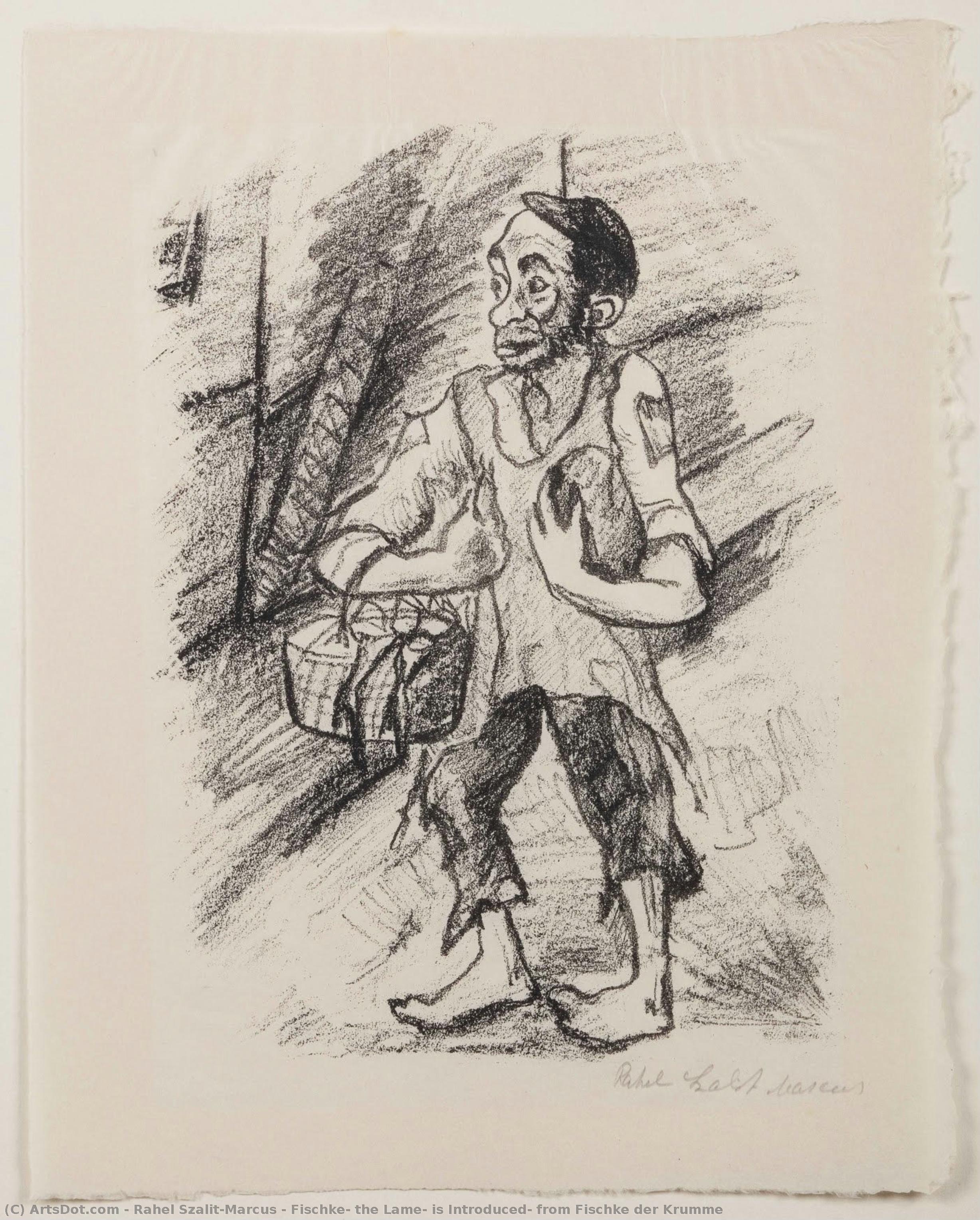
Fischke, the Lame, is Introduced, from Fischke der Krumme
 Expressionism
 1922
1922 31.0 x 26.0 cm
 Derfner Judaica Museum + The Art Collection
 Read More
Purchase a high-resolution, enhanced digital image, far superior to the online preview.
Each file is meticulously prepared by our in-house specialists using advanced tools and expert manual retouching. We ensure every image has exceptional clarity, precise color accuracy, and fine detail.
The final file is delivered via email within 72 hours, optimized for immediate use in professional, editorial, and print environments. This is the same quality trusted by top-tier design studios, publishers, and galleries.
Digital Image
Download a high-resolution file for personal display, printing, and creative projects. ( Buy Print Buy Hand Made Painting)
Included in Every Digital Image Order
Expert Digital Delivery, Guaranteed
When you choose ArtsDot.com, you're not just getting an image - you're receiving a professionally enhanced digital artwork, crafted with precision and backed by a satisfaction guarantee. Here's everything that comes with your order, automatically:

Fast Email Delivery
Your high-resolution digital image file will be emailed to you within 72 hours of ordering - ready for immediate use.

AI-Enhanced Digital File
Your artwork is professionally optimized using advanced AI tools and manual editing, ensuring maximum detail, clarity, and color accuracy.

Free Lifetime Re-Delivery
Accidentally deleted or lost your file? No worries - we'll resend it to you anytime, free of charge.

No Import Fees - Ever
Enjoy your artwork instantly with zero customs, duties, or delivery fees - digital downloads are always tax-free.

Color Accuracy Guarantee
We ensure your digital image reflects the original colors as closely as possible using professional tools and color management.

60-Day Satisfaction Guarantee
If you're not satisfied with your digital image, we'll revise it or refund 100% within 60 days - no questions asked.

100% Money-Back Guarantee
Not satisfied? Get a full refund within 60 days of receiving your digital file - no questions asked.

Bulk Order Discounts
Buy 3 images, save 10% - Buy 5, save 15% - Buy 10+, save 20%. Great for creative projects, galleries, and agencies.
Related Artworks
Artist Biography
Rahel Szalit-Marcus: A Voice of East European Jewish Life
Rahel Szalit-Marcus (1888-1942) stands as a poignant and largely forgotten figure in the history of 20th-century art. Born into a traditional Jewish family in Telz, Lithuania—then part of the Russian Empire—her life was tragically cut short during the Holocaust, yet her artistic legacy endures through a small but significant body of work that powerfully captured the spirit, resilience, and quiet dignity of East European Jewish communities.
Szalit’s early years were marked by exposure to both traditional Jewish culture and burgeoning artistic influences. Her family encouraged her talent, and she received initial training in Munich, Germany, before relocating to Berlin in 1916. This move proved pivotal, placing her within the vibrant and experimental circles of the Weimar Republic—a period of immense social and artistic change. She became associated with the November Group, a collective of young artists pushing against established conventions, and forged connections with prominent figures like Henri Epstein and Marcel Słodski, both fellow Jewish artists navigating the complexities of a rapidly shifting cultural landscape.
The Expressionist Palette: Capturing Human Experience
Szalit’s artistic style is best described as deeply expressive, leaning heavily into the tenets of Expressionism. Her charcoal drawings, etchings, and lithographs are characterized by dramatic lighting, distorted forms, and a palpable sense of emotion. She wasn't interested in idealized beauty; instead, she sought to portray the realities of everyday life—the poverty, hardship, and quiet moments of connection within her subject matter. This is vividly illustrated in works like “Fischke, the Lame,” (1922) and “Faibushke Notices the Hunchback,” (1922), both depicting scenes of Jewish life with a raw honesty that exposed vulnerability and resilience. These pieces aren’t simply portraits; they are windows into the souls of her subjects, conveying their struggles and hopes with remarkable sensitivity.
Her illustrations for works by Sholem Aleichem, Leo Tolstoy, Mendele Mocher Sforim, and Heinrich Heine further demonstrate this ability to imbue literary narratives with visual depth. The lithograph “The Drive to the Rabbi” (1922), from *Motl, the Cantor’s Son*, is particularly striking—a study in contrasts of light and shadow that speaks volumes about faith, tradition, and the complexities of family life.
Parisian Exile and a Lost Legacy
Following the rise of Nazism in 1933, Szalit-Marcus sought refuge in Paris, joining the thriving artistic community of Montparnasse. Despite facing significant challenges as an émigré artist, she continued to create, exhibiting her work and maintaining connections with fellow artists and intellectuals. Her time in Paris solidified her commitment to portraying Jewish life, reflecting both the anxieties of displacement and the enduring strength of cultural identity.
Tragically, her journey ended abruptly in July 1942 when she was arrested during the Vel d’Hiv Roundup—a horrific event in which thousands of Jews were rounded up and deported to concentration camps. She perished at Auschwitz in August of that year, along with much of her artistic output. Her studio was ransacked, and many of her original paintings vanished, leaving behind only a handful of surviving prints and lithographs.
Rediscovering a Forgotten Voice
Despite the loss of so much of her work, Rahel Szalit-Marcus’s legacy has been slowly but surely being rediscovered. Recent scholarship, spearheaded by Kerry Wallach's book *Traces of a Jewish Artist*, is shedding light on her life and artistic contributions. Her illustrations offer a unique and invaluable perspective on East European Jewish culture during a tumultuous period in history—a testament to the enduring power of art to capture human experience, even in the face of unimaginable adversity. Her work serves as a poignant reminder of the countless artists who perished during the Holocaust, and their voices deserve to be heard.
Resources for further exploration include the Fritz Ascher Society website (https://fritzaschersociety.org/exhibition-event/rahel-szalit/) and Wikipedia’s entry on her life and work.
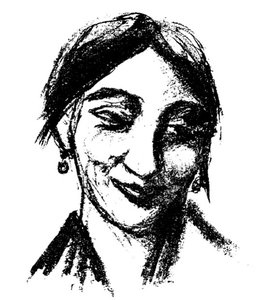
Rahel Szalit-Marcus
1888 - 1942 , Lithuania
Quick Facts
- Artistic Movement Or Style: Expressionism
- Date Of Birth: July 2, 1888
- Date Of Death: August 1942
- Full Name: Rahel Szalit-Marcus
- Nationality: Jewish (Lithuanian)
- Notable Artworks:
- Faibushke Notices the Hunchback
- Fischke, the Lame, is Introduced
- Place Of Birth: Tczew, Lithuania

