

 Preview
 Send
Send Share
Share
 Details

 Download
 Similars
 X-Ray
X-Ray Diaporama
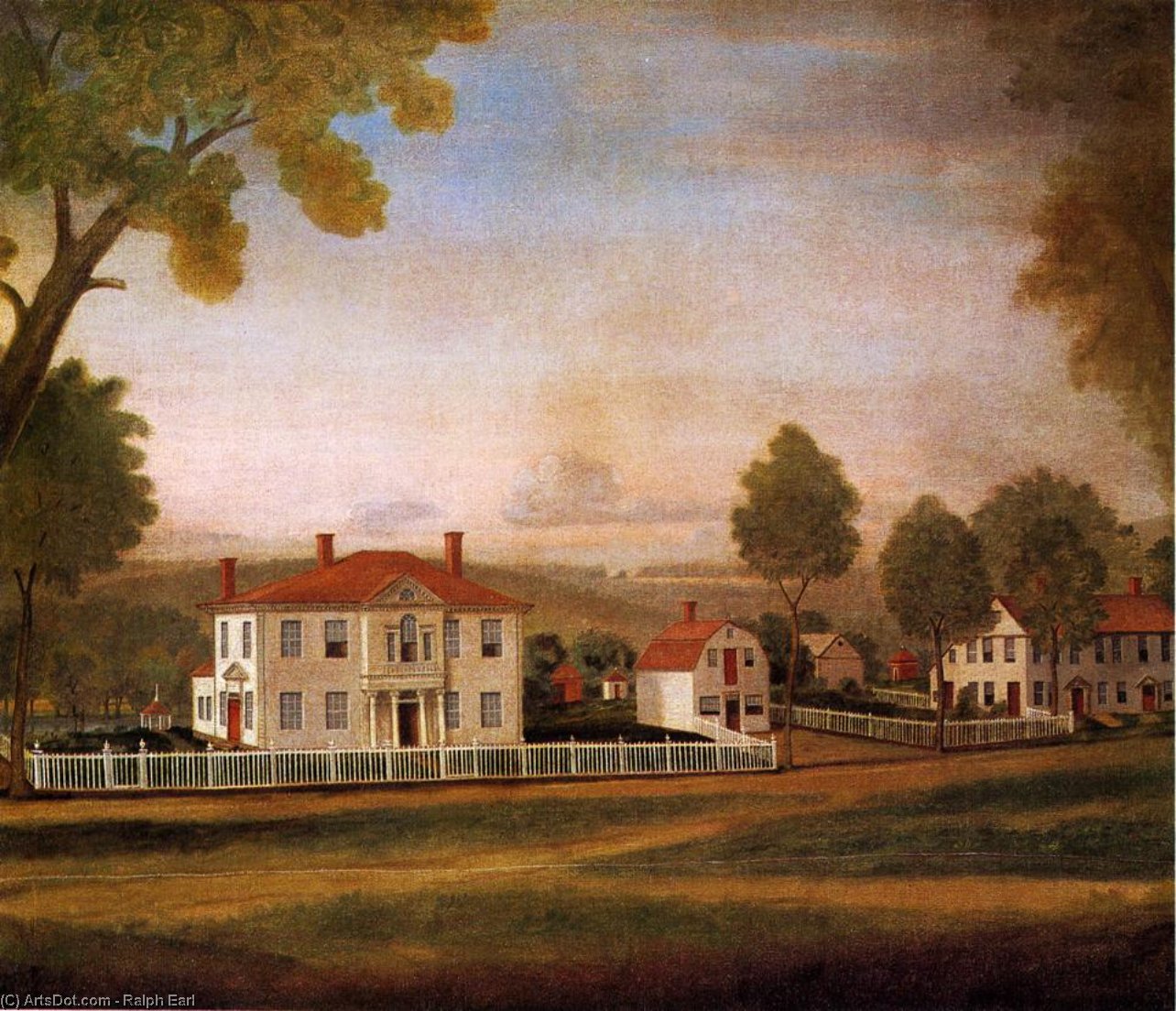
Houses Fronting New Milford Green


 Read More
Purchase a high-resolution, enhanced digital image, far superior to the online preview.
Each file is meticulously prepared by our in-house specialists using advanced tools and expert manual retouching. We ensure every image has exceptional clarity, precise color accuracy, and fine detail.
The final file is delivered via email within 72 hours, optimized for immediate use in professional, editorial, and print environments. This is the same quality trusted by top-tier design studios, publishers, and galleries.
Digital Image
Download a high-resolution file for personal display, printing, and creative projects. ( Buy Print Buy Hand Made Painting)
Included in Every Digital Image Order
Expert Digital Delivery, Guaranteed
When you choose ArtsDot.com, you're not just getting an image - you're receiving a professionally enhanced digital artwork, crafted with precision and backed by a satisfaction guarantee. Here's everything that comes with your order, automatically:

Fast Email Delivery
Your high-resolution digital image file will be emailed to you within 72 hours of ordering - ready for immediate use.

AI-Enhanced Digital File
Your artwork is professionally optimized using advanced AI tools and manual editing, ensuring maximum detail, clarity, and color accuracy.

Free Lifetime Re-Delivery
Accidentally deleted or lost your file? No worries - we'll resend it to you anytime, free of charge.

No Import Fees - Ever
Enjoy your artwork instantly with zero customs, duties, or delivery fees - digital downloads are always tax-free.

Color Accuracy Guarantee
We ensure your digital image reflects the original colors as closely as possible using professional tools and color management.

60-Day Satisfaction Guarantee
If you're not satisfied with your digital image, we'll revise it or refund 100% within 60 days - no questions asked.

100% Money-Back Guarantee
Not satisfied? Get a full refund within 60 days of receiving your digital file - no questions asked.

Bulk Order Discounts
Buy 3 images, save 10% - Buy 5, save 15% - Buy 10+, save 20%. Great for creative projects, galleries, and agencies.
Collectible Description
Ralph Earl’s “Houses Fronting New Milford Green”: A Window Into Georgian Landscape Painting
The painting "Houses Fronting New Milford Green," created by American artist Ralph Earl in 1796, stands as a quintessential example of Georgian landscape painting—a genre that flourished during Britain's reign over America and sought to capture the sublime beauty of the natural world through meticulous observation and idealized representation. Currently residing at the Metropolitan Museum of Art in New York City, this oil on canvas offers more than just a picturesque vista; it’s a glimpse into the artistic sensibilities and intellectual currents of its time.A Vision of Tranquility and Order
Earl's stylistic approach is characterized by an unwavering commitment to detail and a masterful manipulation of color—primarily warm hues like ochre, crimson, and amber—to imbue the scene with a palpable sense of warmth and luminosity. Unlike later Romantic landscapes that prioritized dramatic emotion, Earl’s vision prioritizes harmony and balance. The composition deliberately arranges the houses and trees in a carefully considered manner, reflecting the Enlightenment preoccupation with rational order and geometric precision. This isn't merely depicting what is seen; it's constructing an idealized representation of rural life—a deliberate choice intended to convey serenity and contentment.Technique and Detail: Earl’s Painterly Skill
Earl employed a technique known as sfumato, subtly blending colors and tones to create soft edges and atmospheric haze. This method lends the painting an ethereal quality, blurring distinctions between foreground and background and enhancing the illusion of depth. Notice particularly the rendering of the white house—a prominent feature of the composition—which is illuminated with radiant light, emphasizing Earl’s ability to capture the subtleties of natural illumination. The artist meticulously observed the textures of bark, foliage, and stone, translating these observations onto canvas with remarkable accuracy. Small details like the bench positioned near the center of the image contribute to the overall sense of realism and invite contemplation.Historical Context: Reflections of Georgian Society
“Houses Fronting New Milford Green” emerged during a period marked by significant social and intellectual transformation—the Georgian era (1714-1830). This period witnessed an obsession with classical ideals, reflected in architectural designs and artistic conventions. Earl’s depiction of the rural landscape served as a counterpoint to the grandeur of urban centers, celebrating the virtues of simplicity and pastoral tranquility. The painting embodies the Enlightenment's belief in reason and observation—Earl painstakingly documented the natural world through careful study and skillful execution. Furthermore, it speaks to the Georgian fascination with moral virtue and domestic harmony—themes that resonated deeply within the artistic community of the time.Symbolism: Beyond Mere Representation
Beyond its aesthetic beauty, “Houses Fronting New Milford Green” carries symbolic weight. The house itself represents stability and permanence—a cornerstone of Georgian values—while the trees symbolize growth, resilience, and connection to nature. Earl’s deliberate choice of color palettes reinforces these themes, conveying a sense of optimism and spiritual contemplation. The painting invites viewers to consider not only what is seen but also what it signifies—a reflection of the broader cultural preoccupations of its era.A Legacy of Elegance: Reproductions Today
Today, reproductions of “Houses Fronting New Milford Green” grace homes across the globe, allowing admirers of Earl’s artistry to experience the painting's captivating beauty firsthand. As a handmade oil painting reproduction, it offers an unparalleled opportunity to appreciate the original work's nuanced textures and luminous colors—a testament to Earl’s enduring legacy as one of America’s foremost landscape painters.Related Artworks
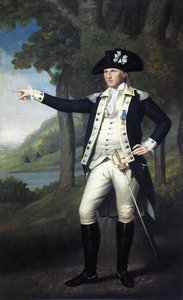
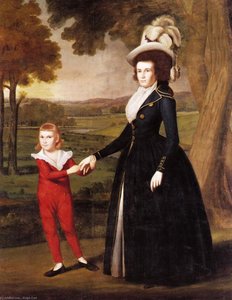
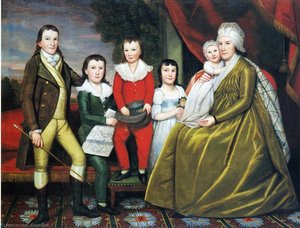

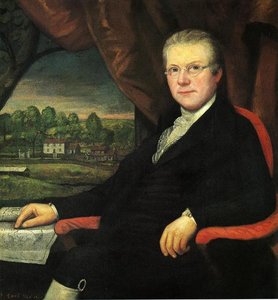
Artist Biography
A Colonial Visionary: The Life and Legacy of Ralph Earl
In the tapestry of early American art, few threads are as vibrant or as uniquely textured as those woven by Ralph Earl. A self-taught master who emerged from the rugged landscapes of colonial New England, Earl possessed a rare ability to capture both the intimate dignity of the individual and the sweeping grandeur of the burgeoning American wilderness. Born in 1751 in the Massachusetts countryside, his journey was one of profound transformation—from an itinerant craftsman navigating the uncertainties of a young nation to a sophisticated portraitist whose work would eventually command the attention of the colonial elite.
Earl’s early years were defined by a restless pursuit of skill and a deep connection to the visual pulse of his era. Without the benefit of formal academic training, he developed a distinctive style characterized by a meticulous attention to detail and a certain rhythmic vitality. His establishment of a studio in New Haven, Connecticut, around 1774 marked the beginning of a prolific period of portraiture. These works were more than mere likenesses; they were carefully constructed symbols of status, character, and the burgeoning identity of a people on the precipice of revolution. Through his brush, the faces of the colonial era were immortalized with a sense of permanence and grace.
Artistry Amidst Revolution
The turbulent atmosphere of the American Revolution served as both a backdrop and a catalyst for Earl’s creative evolution. As the fires of conflict ignited at Lexington and Concord, Earl did not merely observe from the sidelines; he translated the chaos of war into powerful visual narratives. His collaboration with engraver Amos Doolittle resulted in a series of dramatic battle scenes that functioned as potent propaganda for the revolutionary cause. These prints, disseminated widely, demonstrated Earl’s capacity to use art as a tool for social commentary and political expression, blending his technical prowess with a profound sense of historical urgency.
Seeking to refine his burgeoning talent, Earl undertook a daring and transformative voyage to England in 1778. Legend suggests he traveled under the guise of a servant to a British captain, a testament to the resourcefulness and determination that defined his character. This period of exposure to European traditions provided him with invaluable insights into the classical techniques of portraiture and landscape. Upon his return to American shores, his work began to exhibit a newfound sophistication, blending the rugged honesty of his American roots with the refined elegance of the Old World.
The Panoramic Spirit and Historical Significance
While his portraits remain cornerstone achievements of his career, Earl’s contribution to the American landscape tradition is nothing short of monumental. He possessed an extraordinary eye for the sublime, most notably evidenced in his breathtaking depictions of Niagara Falls. In these panoramic visions, he moved beyond simple documentation, instead capturing the overwhelming power and spiritual majesty of the natural world. His ability to scale his vision from the intimate details of a sitter's lace collar to the thundering expanse of a waterfall demonstrates a versatility that few of his contemporaries could match.
The historical significance of Ralph Earl lies in his role as a bridge between the colonial past and the emerging American identity. His oeuvre serves as a visual archive of a nation in flux, documenting the faces, the politics, and the landscapes that shaped the United States. Through his work, we encounter the quiet strength of the colonial subject and the untamed beauty of the American frontier. Today, Earl is remembered not just as a painter, but as a visionary who helped define the visual language of a new era, leaving behind a legacy that continues to resonate with the spirit of discovery and resilience.
Ralph Earl
1751 - 1801 , United States of America
Quick Facts
- Artistic Movement Or Style: Neoclassical
- Artists Or Movements Influenced By This Artist: ['Romanticism']
- Artists Who Influenced This Artist: ['Benjamin West']
- Date Of Birth: May 11, 1751
- Date Of Death: August 16, 1801
- Full Name: Ralph Earl
- Nationality: American
- Notable Artworks:
- Niagara Falls Panorama
- Portrait of Martha Rogers
- Place Of Birth: Shrewsbury, United States of America

